


Description
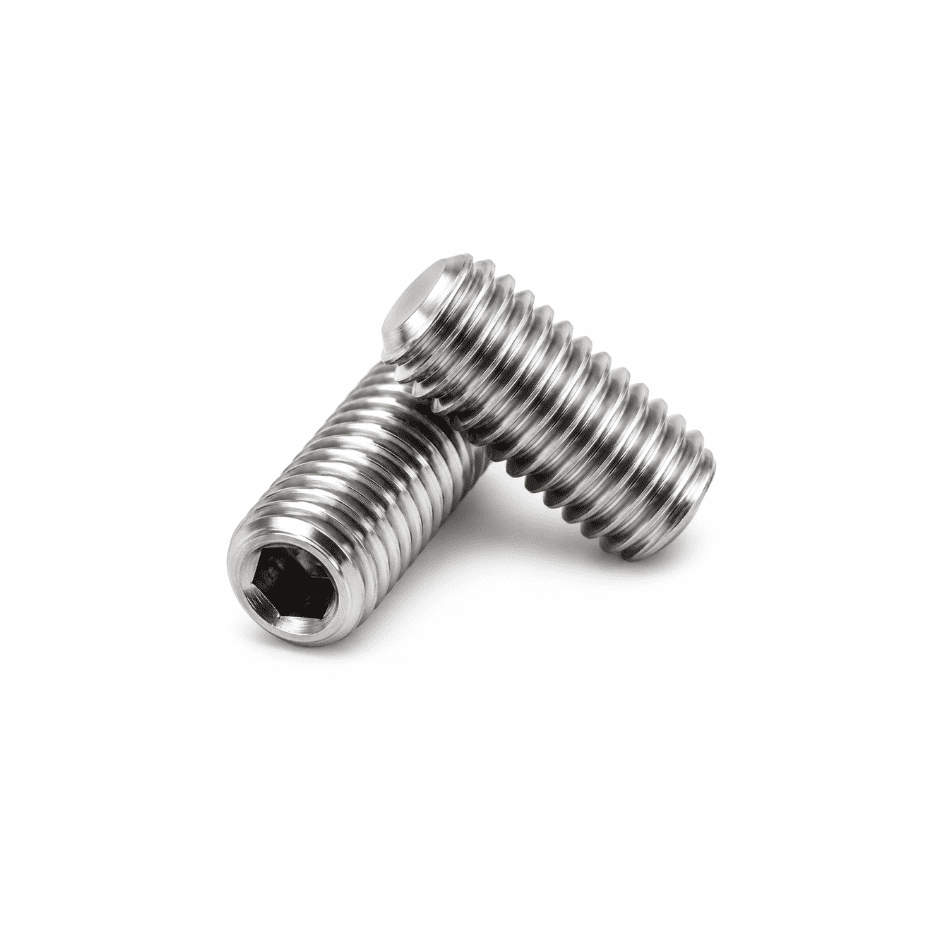
AM Steel Allen Grub Screws – Cup Point are headless set screws driven entirely by an internal hexagon (Allen) socket, with a distinctive recessed cup point – a concave tip with a sharp circular biting edge – at the working end. Manufactured under the AM Steel brand to DIN 916 (ISO 4029), these socket set screws (widely known as grub screws or cup point set screws) are the most common set screw for locking a rotating component onto a shaft, where the cup edge bites into the shaft surface to resist both rotation and axial slippage.
Because the grub screw sits flush inside a tapped hole and grips via its point rather than a head, AM Steel cup point grub screws are well suited to securing pulleys, gears, sprockets, collars, knobs, and couplings onto shafts, and to any assembly where a fastener must lock without protruding. The cup point is the general-purpose choice – its sharp annular edge digs into the shaft for high holding power, and it’s often used against a shaft that has been spotted or slightly flatted to prevent marring and improve grip. The internal hex socket allows controlled, high-torque tightening deep inside a bore or recess with a standard Allen key or hex bit. AM Steel cup point grub screws are available in high-tensile alloy steel (typically grade 45H, in a black oxide or plain finish) for maximum hardness and holding power, and in stainless steel (A2/304 and A4/316, the latter considered marine-grade) for outdoor, hygienic, or corrosion-prone environments.
Whether you’re locking a pulley or gear onto a drive shaft, securing a shaft collar or knob, setting a coupling, or handling any assembly that needs a flush, non-protruding locking fastener, AM Steel cup point grub screws deliver the biting grip, controlled torque, and consistent quality needed for shaft-locking and set-screw applications. As with all AM Steel products, this grub screw is available in a range of metric sizes (typically M3 to M12 per DIN 916, lengths from 3mm to 30mm), in multiple grades, materials, and finishes to suit both industrial-grade and everyday fastening needs.
Key features:
- Headless (set screw) design that sits flush inside a tapped hole with nothing protruding
- Recessed cup point with a sharp circular edge that bites into the shaft for high holding power
- Internal hexagon (Allen) socket for controlled, high-torque tightening in bores and recesses
- Manufactured to DIN 916 / ISO 4029 dimensional standards
- Available in high-tensile alloy steel (grade 45H) and stainless steel (A2/304, A4/316)
- General-purpose point ideal for locking pulleys, gears, collars, and knobs onto shafts
- Backed by the quality assurance of AM Steel
Ideal For
AM Steel Allen Grub Screws – Cup Point are ideal for:
- Machine builders locking pulleys, gears, sprockets, and couplings onto drive shafts
- Shaft collar and knob assembly where a flush, biting set screw secures the component against rotation
- Power-transmission and drive assemblies needing high holding power against both rotation and axial slip
- Fabricators and maintenance trades setting components onto shafts in a flush, non-protruding tapped hole
- General machinery and equipment assembly requiring a reliable, high-torque locking set screw
Choosing the Right Allen Grub Screw – Cup Point
Selecting the correct cup point grub screw from the AM Steel range depends on several factors:
- Material – Stainless steel (A2/304 or A4/316) for outdoor, hygienic, or corrosion-prone applications; high-tensile alloy steel (grade 45H) for maximum hardness and holding power in general machinery.
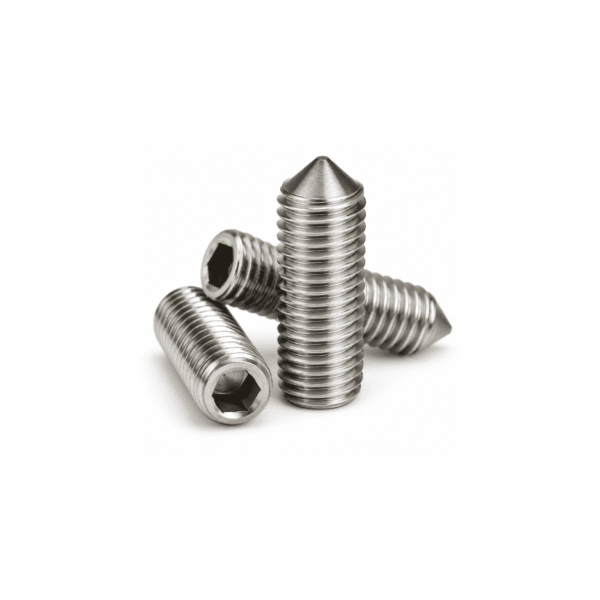
- Point Type Suitability – Cup point is the general-purpose choice for locking onto shafts; consider a flat, cone, dog, or knurled cup point if the application needs minimal marring, deep penetration, permanent location, or vibration resistance respectively.
- Size & Length – Choose a diameter matching the tapped hole and a length that seats fully without bottoming out or protruding, factoring in the depth of the bore.
- Shaft Preparation – For best grip, tighten against a spotted, dimpled, or slightly flatted shaft; the cup edge bites more securely and resists slipping.
- Thread Fit – Confirm coarse or fine metric thread compatibility with the tapped hole in the collar, hub, or component.
- Drive Size – Ensure the Allen key or hex bit matches the internal socket and can reach fully into the bore or recess.
Strategies to Choose the Right Product
- Use cup point as the default shaft-lock – Its sharp biting edge gives high holding power against rotation and axial slip for most pulley, gear, and collar applications.
- Flat the shaft for a more secure hold – Tightening the cup point against a spotted or flatted section of shaft improves grip and makes removal and repositioning cleaner.
- Match material to environment – Use stainless steel (A2/304 or A4/316) for outdoor, washdown, or coastal work; alloy steel (45H) for maximum holding power in general dry machinery.
- Check the thread pitch – Confirm coarse or fine metric thread to ensure a correct match with the tapped hole in the hub or collar.
- Prioritize certified standards – Look for DIN 916 / ISO 4029 compliance for guaranteed dimensional and hardness consistency.
- Consider bulk vs. individual packs – Bulk packs suit production machine assembly and repeat builds; smaller packs suit repairs, servicing, or single jobs.
Mechanical Properties
AM Steel Allen Grub Screws – Cup Point are manufactured to meet recognized mechanical and dimensional standards, ensuring reliability across shaft-locking, power-transmission, and general machine-assembly applications:
| Property | Specification |
|---|---|
| Material Grades | Alloy Steel (Grade 45H), Stainless Steel (A2/304, A4/316) |
| Governing Standard | DIN 916 / ISO 4029 (Hexagon Socket Set Screws with Cup Point) |
| Head Style | Headless (set screw) |
| Drive Type | Internal hexagon socket (Allen / hex key) |
| Point Type | Cup point (recessed, sharp-edged biting tip) |
| Thread Type | Metric machine-screw thread (coarse or fine) per ISO 261 / ISO 262 |
| Size Range | M3 to M12 (metric), lengths from 3mm to 30mm |
| Corrosion Resistance | Moderate (black oxide / plain alloy steel) to high (A2/A4 stainless steel) |
| Common Alternate Names | Grub screw, socket set screw, cup point set screw, headless set screw |
| Typical Applications | Locking pulleys, gears, collars, knobs, and couplings onto shafts |
| Surface Finish | Black oxide, plain, plain or passivated stainless steel |
These mechanical ratings confirm that AM Steel cup point grub screws deliver strong, biting shaft-locking performance suited to power-transmission and general machine-assembly applications – tighten against a spotted or flatted shaft for the most secure hold.
Frequently Asked Questions (FAQs)
1. What is a cup point grub screw used for?
It’s used to lock a rotating component – a pulley, gear, collar, knob, or coupling – onto a shaft, with its sharp-edged cup point biting into the shaft to resist rotation and axial slippage, driven flush by an internal hex socket.
2. What is a grub screw?
A grub screw is a headless set screw driven entirely by an internal hexagon (Allen) socket; it sits flush inside a tapped hole and grips via its point rather than clamping under a head, so nothing protrudes.
3. What is a cup point and why is it the most common?
A cup point is a recessed, concave tip with a sharp circular edge that digs into the shaft for high holding power; it’s the general-purpose choice for most shaft-locking applications, balancing grip and ease of use.
4. Are AM Steel cup point grub screws different from generic ones?
AM Steel grub screws are manufactured and quality-tested under the AM Steel brand, ensuring consistent hardness, point geometry, socket dimensions, and finish across every batch, per DIN 916 / ISO 4029.
5. What’s the difference between cup, flat, cone, and dog point grub screws?
Cup point bites into the shaft for general locking; flat point minimizes shaft marring and suits frequent adjustment; cone point penetrates deep for permanent, high-holding location; and dog point locates into a hole or slot for precise positioning.
6. Should I flat the shaft before using a cup point grub screw?
For the most secure hold, yes – tightening the cup point against a spotted, dimpled, or slightly flatted section of shaft improves grip, resists slipping, and makes repositioning cleaner.
7. What sizes do cup point grub screws come in?
AM Steel cup point grub screws are available in a range of sizes, typically M3 to M12 in metric, with lengths from 3mm to 30mm, per DIN 916.
8. What tool do I need to install a cup point grub screw?
An Allen key (hex key) or hex bit matching the internal socket size is used, since grub screws are driven entirely through an internal hexagon socket rather than an external head.
9. Are cup point grub screws corrosion-resistant?
Yes, especially AM Steel stainless steel versions (A2/304 or A4/316), which resist rust in outdoor, hygienic, or coastal environments; black oxide alloy steel offers basic protection for indoor and dry conditions.
10. What grade are alloy steel grub screws?
AM Steel alloy steel grub screws are typically supplied to grade 45H – a hardened set-screw grade that gives the point the hardness needed to bite securely into a shaft without deforming.
11. Can cup point grub screws be reused?
Yes, in most applications they can be removed and reinstalled, provided the internal socket isn’t rounded out and the point isn’t excessively worn; seat the hex key fully to avoid stripping the drive.
12. Do grub screws come in coarse and fine thread?
Yes, they are commonly available in both coarse and fine metric thread pitches – confirm the required pitch to ensure a correct match with the tapped hole in the hub or collar.
13. What’s the difference between A2 and A4 stainless steel grub screws?
A2 (304) stainless offers good general corrosion resistance for most indoor and outdoor use, while A4 (316), considered marine-grade, provides superior resistance to chlorides and coastal or chemical environments.
Reviews
There are no reviews yet.