


Description
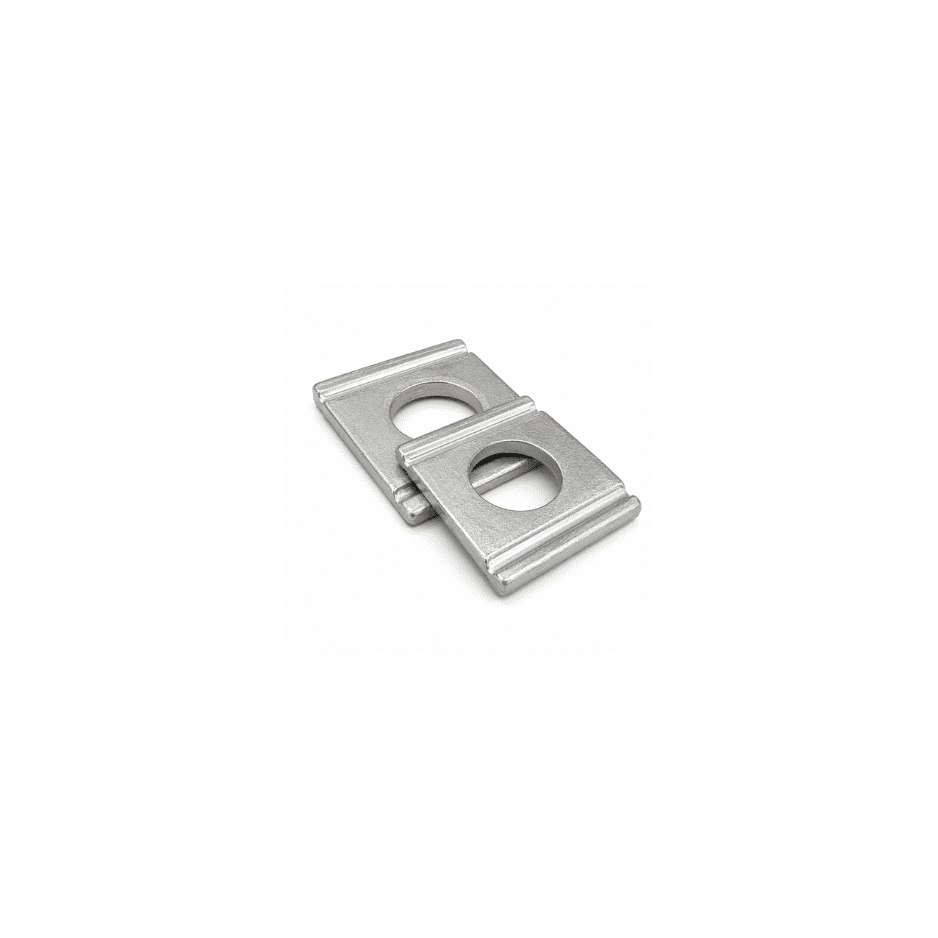
AM Steel Taper Washers are wedge-shaped (beveled) washers with one flat face and one angled face, designed to sit against the sloped inner flange surface of standard rolled steel sections – I-beams and U-channels – where the flange surface is not parallel to the bolt axis. Manufactured under the AM Steel brand to DIN 434 (square taper washers for U-channel sections) and DIN 435 (taper washers for I-sections), these washers compensate for that structural flange slope, presenting a flat, perpendicular bearing surface to the bolt head or nut so the fastener tightens evenly rather than bearing unevenly against an angled surface.
Without a taper washer, a bolt or nut tightened directly against a sloped flange would concentrate stress on one edge, risk bending the bolt shank, and reduce the effective clamping force of the joint. AM Steel taper washers address this with an approximately 8% taper (matching the standard flange slope of most structural I-beam and channel sections), and DIN 434 square taper washers typically include two grooves running the length of the washer, perpendicular to the taper, to improve grip against the flange. These washers are widely used in structural steel connections, bridge construction, offshore platforms, and heavy machinery mounted on I-beam or channel bases, wherever a bolted connection must span a sloped structural surface.
AM Steel taper washers are manufactured in carbon steel (with zinc-plated or hot-dip galvanized finishes for outdoor structural use) and stainless steel (A2/A4) for corrosive or marine environments. They’re typically heat-treated for added hardness and load-bearing performance, and are commonly paired with a standard flat washer (DIN 125) on the opposite side of the joint for enhanced load distribution in high-stress structural connections. As with all AM Steel products, this taper washer is available in metric sizing (matching common structural bolt diameters per DIN 434/435), in multiple grades and finishes to suit both industrial-grade structural anchoring and general fastening needs.
Key features:
- Wedge-shaped design (typically 8% taper) compensates for sloped I-beam and channel flanges
- Available as DIN 434 (square, U-channel) and DIN 435 (I-section) configurations
- Grooved surface (DIN 434) improves grip against the flange
- Heat-treated for enhanced hardness and load-bearing performance
- Available in carbon steel (zinc-plated, HDG) and stainless steel (A2/A4)
- Backed by the quality assurance of AM Steel
Ideal For
AM Steel Taper Washers are ideal for:
- Structural steel contractors bolting connections to I-beam and channel section flanges
- Bridge and railway engineers requiring stable, code-compliant fastening on structural sections
- Heavy machinery installers mounting equipment bases to I-beam or channel steel frames
- Offshore and marine construction crews needing corrosion-resistant taper washers for angled structural connections
- General fabrication and construction wherever a bolted joint must span a non-parallel or sloped surface
Choosing the Right Taper Washer
Selecting the correct taper washer from the AM Steel range depends on several factors:
- Section Type – DIN 434 square taper washers for U-channel sections; DIN 435 taper washers for I-section beams – confirm which structural section you’re bolting to.
- Taper Angle Match – Confirm the washer’s taper (typically 8%) matches the actual flange slope of the specific structural section being used.
- Material – Stainless steel (A2/A4) for corrosive, marine, or offshore environments; carbon steel (zinc-plated or hot-dip galvanized) for general structural and construction use.
- Bolt Grade Compatibility – Use taper washers rated for the same strength class as the bolt (e.g., 8.8, 10.9) to prevent washer deformation under load.
- Size – Match the washer’s inner diameter and dimensions to the structural bolt diameter being used.
- Pairing with Flat Washers – Consider pairing a taper washer with a standard flat washer (DIN 125) on the opposite side of the joint for enhanced load distribution in high-stress connections.
Strategies to Choose the Right Product
- Confirm section type before ordering – Always verify whether the application involves an I-section or U-channel, since DIN 434 and DIN 435 washers are not interchangeable between the two.
- Match bolt grade to washer capability – Use taper washers rated for the bolt’s strength class (e.g., Class 8.8 or 10.9) to avoid deformation or reduced clamping performance under load.
- Match material to environment – Choose stainless steel (A2/A4) for corrosive, marine, or offshore environments; zinc-plated or hot-dip galvanized carbon steel for general outdoor structural use.
- Pair with a flat washer for high-stress joints – Use a standard flat washer (DIN 125) on the nut side alongside the taper washer for improved load distribution in demanding structural applications.
- Ensure correct orientation during installation – Place the flat side of the washer against the bolt head or nut, with the tapered side seated against the sloped flange surface.
- Consider bulk vs. individual packs – Bulk packs suit large structural steel or bridge construction projects; smaller packs suit repairs or smaller installations.
Mechanical Properties
AM Steel Taper Washers are manufactured to meet recognized mechanical and dimensional standards, ensuring reliability across structural steel, bridge, and heavy machinery applications:
| Property | Specification |
|---|---|
| Material Grades | Carbon Steel, Stainless Steel (A2, A4) |
| Governing Standards | DIN 434 (square, U-channel sections), DIN 435 (I-sections) |
| Taper Angle | Approximately 8% (matching standard structural I-beam/channel flange slope) |
| Surface Detail (DIN 434) | Two grooves running the length of the washer, perpendicular to the taper, for grip |
| Manufacturing Process | Hot forged, cold forged, or warm forged; heat-treated (hardened and tempered) |
| Bolt Grade Compatibility | Should match the strength class of the bolt used (e.g., Class 8.8, 10.9) |
| Common Applications | Structural steel connections, bridges, offshore platforms, machinery bases on I-beam/channel frames |
| Corrosion Resistance | Moderate (zinc-plated steel) to high (hot-dip galvanized steel, A2/A4 stainless steel) |
| Surface Finish | Zinc-plated, hot-dip galvanized (HDG), plain/bare steel, passivated stainless steel |
These mechanical ratings confirm that AM Steel taper washers provide reliable load distribution and alignment correction for structural bolted connections – always confirm section type (I-section vs. U-channel) and bolt grade compatibility before installation.
Frequently Asked Questions (FAQs)
1. What is a taper washer used for? A taper washer is used to compensate for the sloped inner flange surface of I-beams and U-channels, providing a flat, perpendicular bearing surface so a bolt or nut can be tightened evenly rather than against an angled surface.
2. What’s the difference between DIN 434 and DIN 435 taper washers? DIN 434 covers square taper washers designed for U-channel sections, while DIN 435 covers taper washers designed for I-section beams – the two are matched to different structural profiles and are not interchangeable.
3. Are AM Steel taper washers different from generic taper washers? AM Steel taper washers are manufactured and quality-tested under the AM Steel brand, ensuring consistent taper angle, dimensions, and hardness across every batch, per DIN 434/435.
4. What happens if I don’t use a taper washer on a sloped flange? Without a taper washer, a bolt or nut tightened directly against a sloped flange concentrates stress unevenly, risks bending the bolt shank, and can reduce the effective clamping force of the joint.
5. What taper angle do standard taper washers use? Standard DIN 434/435 taper washers typically use an approximately 8% taper, matching the standard flange slope found on most structural I-beam and channel sections.
6. Are taper washers corrosion-resistant? Yes, especially AM Steel stainless steel taper washers (A2/A4), which resist rust in marine, offshore, or corrosive environments; hot-dip galvanized carbon steel also provides strong outdoor protection.
7. What sizes do taper washers come in? AM Steel taper washers are available in a range of sizes matching common structural bolt diameters, per DIN 434 and DIN 435 standards.
8. Should I match the taper washer’s grade to my bolt’s grade? Yes – using a taper washer rated for the same strength class as the bolt (e.g., Class 8.8 or 10.9) helps prevent washer deformation under load and ensures reliable clamping performance.
9. How should a taper washer be oriented during installation? The flat side of the washer should be placed against the bolt head or nut, with the tapered side seated flush against the sloped flange surface.
10. Can taper washers be used with a standard flat washer? Yes, pairing a taper washer with a standard flat washer (DIN 125) on the opposite side of the joint is a common practice for enhanced load distribution in high-stress structural connections.
11. Can taper washers be reused? Generally yes, provided the washer shows no deformation, cracking, or excessive wear; taper washers used in critical structural joints should be inspected before reuse.
12. What’s the difference between A2 and A4 stainless steel taper washers? A2 stainless offers good general corrosion resistance for most outdoor and structural use, while A4 stainless provides superior resistance to chlorides and marine or offshore environments.
13. What industries commonly use taper washers? Common applications include structural steel and building construction, bridge and railway engineering, offshore platforms, and heavy machinery installations mounted on I-beam or channel steel frames.
Reviews
There are no reviews yet.