


Description
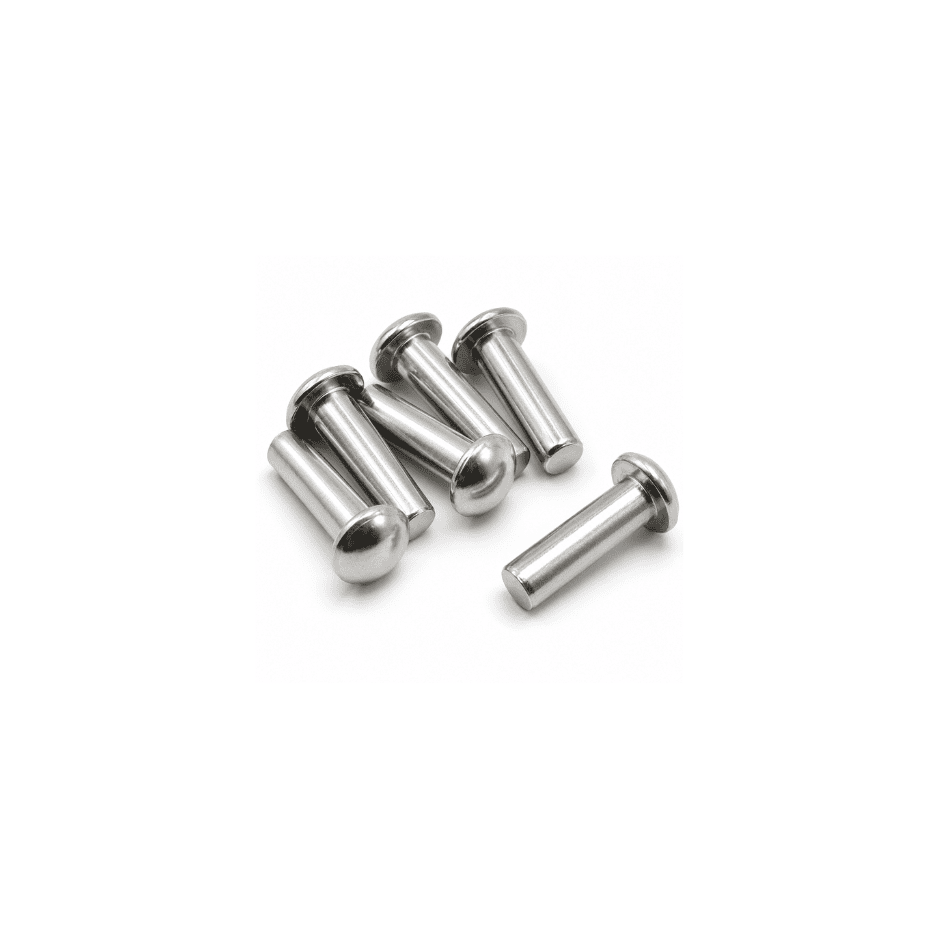
AM Steel Solid Rivets are the simplest and oldest type of rivet: a single, solid shaft with a formed head at one end. During installation, the rivet is inserted through pre-drilled, aligned holes in the materials being joined, and the plain end protruding through the far side is deformed – using a hammer, rivet gun, or hydraulic squeezer – to form a second head, permanently clamping the joint together. Manufactured under the AM Steel brand to DIN 660 (round head, equivalent to ISO 1051B) and DIN 661 (flat countersunk head, equivalent to ISO 1051A), solid rivets require access to both sides of the joint during installation, unlike a blind (pop) rivet.
Because the tail end is fully formed into a solid second head rather than relying on a mandrel and expanding sleeve, solid rivets generally provide the strongest and most reliable joint of any rivet type, which is why they remain the standard choice in applications where maximum joint integrity matters, such as aircraft and aerospace structures, heavy structural steelwork, boiler and pressure vessel fabrication, and bridge construction – though modern structural steel connections have increasingly shifted toward high-strength (HV/HR) bolted connections or welding in many of these applications. Round head (DIN 660) rivets provide a higher load-bearing capacity, while countersunk head (DIN 661) rivets sit flush with the surface but support comparatively lower loads, making the choice between them a genuine trade-off between strength and a flush finish.
AM Steel solid rivets are available in steel, stainless steel (A2/304, A4/316), aluminum, and copper – aluminum being especially valued for its light weight, natural corrosion resistance, and excellent electrical and thermal conductivity, making it a common choice in aerospace and electrical applications. Whether you’re working on structural steelwork, heavy fabrication, boiler construction, or general metalworking requiring a maximum-strength permanent joint, AM Steel solid rivets provide dependable, time-tested performance. As with all AM Steel products, this solid rivet is available in metric sizing (approximately M1 to M8 diameter, lengths up to 60mm, per DIN 660/661), in multiple materials and finishes to suit both industrial-grade and specialized fastening needs.
Key features:
- Single-piece shaft-and-head design, deformed with a hammer or rivet gun to form a second head
- Manufactured to DIN 660 (round head) and DIN 661 (countersunk head)
- Generally provides greater joint strength than blind (pop) rivets
- Available in steel, stainless steel (A2/304, A4/316), aluminum, and copper
- Round head for maximum load capacity; countersunk head for a flush finish
- Backed by the quality assurance of AM Steel
Ideal For
AM Steel Solid Rivets are ideal for:
- Aerospace and aircraft structure fabricators requiring maximum joint strength and reliability, particularly with aluminum rivets
- Structural steel and heavy fabrication shops completing riveted connections where both-side access is available
- Boiler and pressure vessel manufacturers needing a proven, high-strength permanent joint
- Bridge and heavy infrastructure construction using traditional riveted steel connections
- General metalworking and restoration projects matching original rivet-based construction on legacy structures
Choosing the Right Solid Rivet
Selecting the correct solid rivet from the AM Steel range depends on several factors:
- Head Style – Round head (DIN 660) for maximum load-bearing capacity; countersunk head (DIN 661) for a flush finish where the head cannot project, accepting a lower load rating.
- Material – Aluminum for lightweight, corrosion-resistant, aerospace, or electrical applications; steel for general strength; stainless steel (A2/304, A4/316) for corrosion resistance; copper for electrical or specialized use.
- Both-Side Access – Confirm the joint allows tool access to both sides, since solid rivets (unlike blind rivets) require forming the second head from the reverse side.
- Size – Match the rivet diameter and length to the combined thickness of the materials being joined, allowing enough protruding shaft to properly form the second head.
- Load Requirements – Choose round head over countersunk head where maximum joint strength is the priority over a flush appearance.
- Installation Method – Confirm whether hand-hammering, a pneumatic rivet gun, or a hydraulic squeezer is appropriate for the rivet size and material being set.
Strategies to Choose the Right Product
- Choose round head for strength, countersunk for finish – Use DIN 660 round head rivets where maximum load capacity matters; use DIN 661 countersunk rivets only where a flush surface is required, accepting the reduced load rating.
- Match material to the application – Use aluminum for lightweight and aerospace/electrical work, stainless steel for corrosion resistance, and steel for general structural strength.
- Confirm both-side access before specifying – Solid rivets require forming a second head from the reverse side, so verify this access is available before choosing over a blind rivet.
- Size for proper head formation – Ensure enough rivet length protrudes beyond the joint to fully form a proper second head without over- or under-filling the hole.
- Buy in matched sets – Purchase solid rivets alongside the correct rivet gun, hammer, or bucking tool suited to the rivet’s material and diameter.
- Consider bulk vs. individual packs – Bulk packs suit structural, aerospace, or heavy fabrication production runs; smaller packs suit repairs or restoration work.
Mechanical Properties
AM Steel Solid Rivets are manufactured to meet recognized mechanical and dimensional standards, ensuring reliability across structural, aerospace, and heavy fabrication applications:
| Property | Specification |
|---|---|
| Material Grades | Steel, Stainless Steel (A2/304, A4/316), Aluminum, Copper |
| Governing Standards | DIN 660 (round head, ≡ ISO 1051B), DIN 661 (countersunk head, ≡ ISO 1051A) |
| Head Styles | Round head (higher load capacity), Flat countersunk head (flush finish, lower load capacity) |
| Installation Method | Hammer, pneumatic rivet gun, or hydraulic squeezer; requires access to both sides of the joint |
| Size Range (DIN 660) | M2 to M6 diameter; lengths up to approximately 40mm |
| Size Range (DIN 661) | M2 to M8 diameter; lengths from 5mm to approximately 60mm |
| Access Requirement | Both-side access required (unlike blind/pop rivets) |
| Corrosion Resistance | Moderate (plain steel) to high (aluminum, A2/A4 stainless steel, copper) |
| Surface Finish | Plain steel, passivated stainless steel, mill finish aluminum, plain copper |
These mechanical ratings confirm that AM Steel solid rivets provide a proven, maximum-strength permanent joint – always confirm both-side access and choose head style based on the required balance of strength versus flush appearance.
Frequently Asked Questions (FAQs)
1. What is a solid rivet used for? A solid rivet is used to create a maximum-strength, permanent mechanical joint by deforming its solid shaft into a second head – commonly used in aerospace structures, structural steelwork, boiler fabrication, and heavy metalworking.
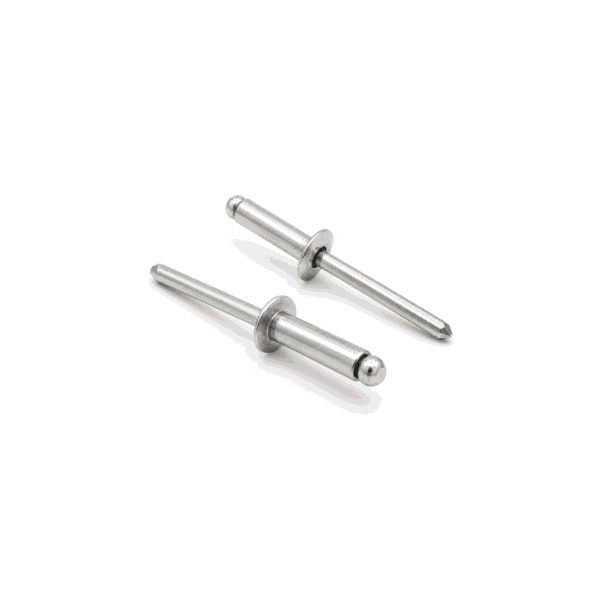
2. What’s the difference between a solid rivet and a blind (pop) rivet? A solid rivet requires access to both sides of the joint to hammer or press the tail end into a second head, generally providing greater strength, while a blind rivet can be installed from one side only using a break-mandrel mechanism, offering more convenience at somewhat lower strength.
3. Are AM Steel solid rivets different from generic solid rivets? AM Steel solid rivets are manufactured and quality-tested under the AM Steel brand, ensuring consistent shaft dimensions, head geometry, and material quality across every batch, per DIN 660/661.
4. What’s the difference between DIN 660 and DIN 661 rivets? DIN 660 covers round head solid rivets, which provide higher load-bearing capacity, while DIN 661 covers flat countersunk head solid rivets, which sit flush with the surface but support comparatively lower loads.
5. Are solid rivets corrosion-resistant? Yes, especially AM Steel aluminum, stainless steel (A2/304 or A4/316), or copper solid rivets, all of which offer good natural or inherent corrosion resistance; plain steel offers the least protection without additional coating.
6. What sizes do solid rivets come in? AM Steel solid rivets are available in a range of sizes – DIN 660 round head rivets typically from M2 to M6 diameter, and DIN 661 countersunk rivets from M2 to M8 diameter, with lengths up to approximately 60mm.
7. What tools do I need to install a solid rivet? A hammer and bucking bar, a pneumatic rivet gun, or a hydraulic squeezer is used to deform the protruding shaft end into a second head, depending on the rivet size, material, and production volume.
8. Why are solid rivets still used when other joining methods exist? Solid rivets remain the standard in applications like aerospace structures and pressure vessel fabrication where maximum joint strength and reliability are critical, though many structural steel applications have shifted toward high-strength bolts or welding in recent decades.
9. Can solid rivets be removed or reused? No – like blind rivets, solid rivets are a permanent fastener; the formed head must be drilled or ground off to remove the rivet, and a new rivet is required if the joint needs to be reassembled.
10. Why is aluminum a popular material for solid rivets? Aluminum solid rivets are lightweight, naturally corrosion-resistant, and offer excellent electrical and thermal conductivity, making them a common choice in aerospace, aircraft, and certain electrical applications.
11. Can I use a solid rivet where I only have access to one side of the joint? No – solid rivets require forming a second head from the reverse side of the joint, so a blind (pop) rivet should be used instead wherever only one-sided access is available.
12. What’s the difference between A2 and A4 stainless steel solid rivets? A2 (304) stainless offers good general corrosion resistance for most indoor and outdoor use, while A4 (316) stainless provides superior resistance to chlorides and marine or washdown environments.
13. Should I choose round head or countersunk head for structural strength? Round head (DIN 660) solid rivets provide higher load-bearing capacity and are the better choice for maximum structural strength; countersunk head (DIN 661) rivets should be reserved for applications specifically requiring a flush surface.
Reviews
There are no reviews yet.