


Description
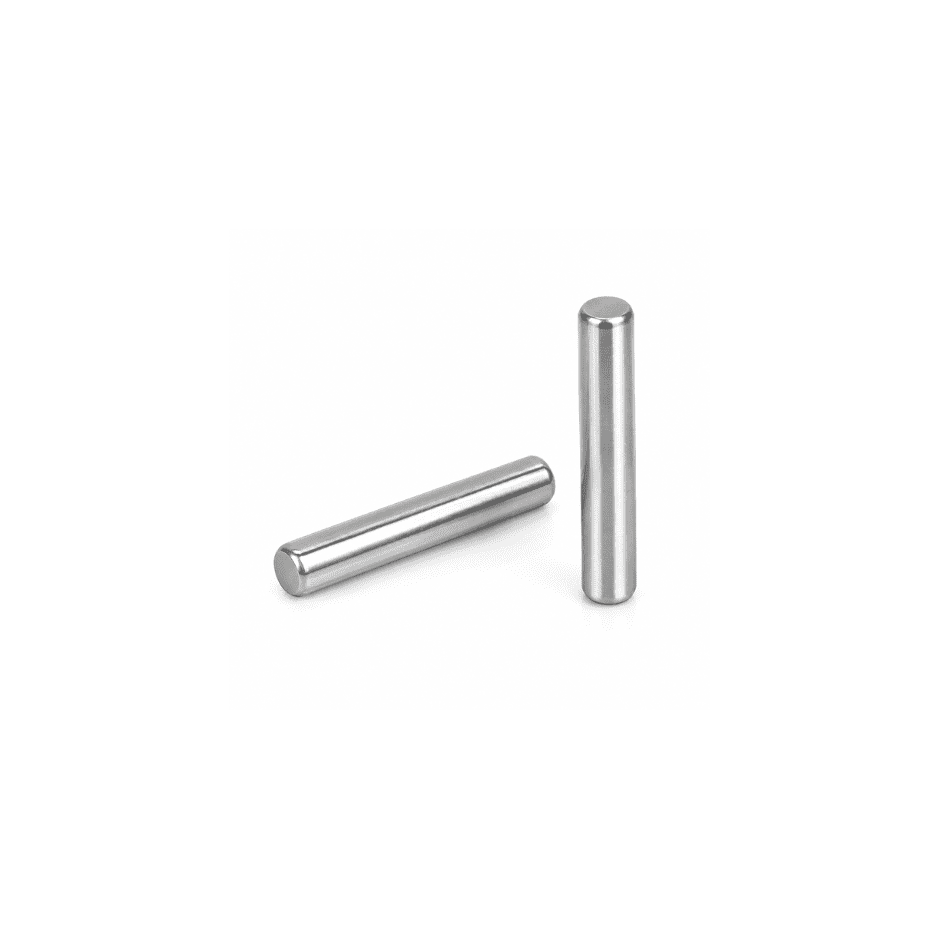
AM Steel Solid Dowel Pins are solid, headless cylindrical pins manufactured to a precise, uniform diameter, used to align two or more machine parts and hold them in a fixed position relative to each other. Manufactured under the AM Steel brand to ISO 2338 (essentially equivalent to DIN 7), each pin is chamfered at approximately 15° on one or both ends to ease insertion, and is pressed into a matching hole using a slight interference (press) fit – the resulting friction holds the pin securely in place without the need for adhesive or additional fastening.
AM Steel dowel pins are available in two standard tolerance classes: m6 (an oversized, “plus” tolerance typically used for interference/press-fit holes) and h8 (an undersized tolerance often used where a looser, slip fit is acceptable or preferred) – the correct choice depends on your specific hole tolerance and the type of fit required. It’s worth noting that ISO 2338/DIN 7 dowel pins are supplied unhardened, making them suitable for general alignment and removable structures rather than high-wear or repeated press-fit applications; for hardened, ground dowel pins intended for mold, die, and precision positioning applications subject to frequent removal and reinsertion, a separate hardened pin standard (such as ISO 8734/DIN 6325) should be specified instead, since direct substitution between the two pin types is not recommended.
AM Steel solid dowel pins are manufactured in carbon steel (plain finish, which can rust without protection) and stainless steel (A2/304 for general wet or outdoor use, A4/316 for maximum corrosion resistance in harsh environments), covering diameters from below 1mm up to 30mm and beyond. Whether you’re aligning jig and fixture components, precision machine parts, or general assemblies requiring accurate, repeatable positioning, AM Steel solid dowel pins provide a dependable, widely used solution. As with all AM Steel products, this dowel pin is available in metric sizing per ISO 2338/DIN 7, in multiple materials and tolerance classes to suit both precision engineering and general fastening needs.
Key features:
- Precision-manufactured, headless cylindrical design for accurate part alignment
- Manufactured to ISO 2338 / DIN 7, available in m6 (oversized) and h8 (undersized) tolerance classes
- Chamfered ends (~15°) to ease insertion into press-fit holes
- Unhardened design suited to general alignment and removable structures (not repeated press-fit wear)
- Available in carbon steel and stainless steel (A2/304, A4/316)
- Backed by the quality assurance of AM Steel
Ideal For
AM Steel Solid Dowel Pins are ideal for:
- Precision engineering and machine builders needing accurate, repeatable alignment between mating parts
- Jig and fixture makers locating and holding components in a fixed relative position
- General machine assembly wherever two or more parts need to be precisely aligned during manufacturing
- Hinge, wrist pin, and shaft applications requiring a precise, uniform-diameter pivot or locating pin
- Wet, outdoor, or mildly corrosive environments where stainless steel dowel pins provide added durability
Choosing the Right Solid Dowel Pin
Selecting the correct solid dowel pin from the AM Steel range depends on several factors:
- Tolerance Class – m6 (oversized, “plus” tolerance) for interference/press-fit holes; h8 (undersized) for a looser slip fit – match to your specific hole tolerance and drawing requirements.
- Material – Stainless steel (A2/304 or A4/316) for wet, outdoor, or corrosive environments; carbon steel for general indoor use at a lower cost.
- Hardness Requirements – Confirm ISO 2338/DIN 7 (unhardened) is appropriate for your application, or specify a hardened pin standard (ISO 8734/DIN 6325) if the application involves molds, dies, or frequent press-fit removal and reinsertion.
- Diameter – Match the pin diameter precisely to the drilled hole diameter and required fit type in both mating parts.
- Length – Choose a length sufficient to properly engage both parts being aligned, without excessive protrusion.
- Air Release Consideration – For blind holes, consider a pin with an air release flat ground along its length to prevent pressure buildup during insertion.
Strategies to Choose the Right Product
- Match tolerance class to your hole tolerance – Use m6 for interference/press fits and h8 for slip fits, always cross-checking against the specific hole tolerance called out on the drawing.
- Never substitute unhardened ISO 2338/DIN 7 pins for hardened applications – Specify ISO 8734/DIN 6325 hardened, ground dowel pins for molds, dies, or frequently disassembled precision fixtures instead.
- Match material to environment – Choose stainless steel (A2/304 or A4/316) for wet, outdoor, or mildly corrosive environments; carbon steel for general indoor use where corrosion isn’t a concern.
- Use an air release flat for blind holes – Specify this feature when press-fitting into a blind (non-through) hole to prevent trapped air pressure from ejecting or bursting the assembly.
- Avoid impact force during installation – Press dowel pins into position using controlled force; striking with a hammer can cause the pin to splinter or damage the mating hole.
- Buy in matched sets – Purchase dowel pins in consistent diameter, tolerance, and material across a production run for repeatable alignment results.
Mechanical Properties
AM Steel Solid Dowel Pins are manufactured to meet recognized dimensional and material standards, ensuring reliability across precision engineering, jig/fixture, and general machine assembly applications:
| Property | Specification |
|---|---|
| Material Grades | Carbon Steel (plain finish), Stainless Steel (A2/304, A4/316) |
| Governing Standards | ISO 2338, DIN 7 (essentially equivalent) |
| Tolerance Classes | m6 (oversized/interference fit), h8 (undersized/slip fit) |
| Hardness Condition | Unhardened (suited to general alignment; not for high-wear, repeated press-fit use) |
| End Form | Chamfered (~15°) on one or both ends to ease insertion |
| Size Range | Approximately 0.8mm to 30mm+ diameter (metric), per ISO 2338/DIN 7 |
| Length Measurement Note | Measured end-to-end including the chamfer (per ISO 2338), unlike some other dowel pin standards |
| Double Shear Strength | Varies by diameter and material — e.g., approx. 6.15 kN (mild steel) or 6.6 kN (A2 stainless) at 4mm diameter, per ISO 8749 testing |
| Corrosion Resistance | Low (plain carbon steel, can rust) to high (A2/A4 stainless steel) |
| Surface Finish | Plain (no rust protection), passivated stainless steel |
These specifications confirm that AM Steel solid dowel pins provide precise, repeatable alignment for general and precision applications — always confirm tolerance class and hardness condition match your specific application before use.
Frequently Asked Questions (FAQs)
1. What is a solid dowel pin used for? A solid dowel pin is used to align and locate two or more machine parts in a fixed position relative to each other, commonly in jigs, fixtures, precision machinery, and general assembly work.
2. What’s the difference between m6 and h8 tolerance dowel pins? An m6 tolerance dowel pin is slightly oversized, designed for interference (press-fit) holes, while an h8 tolerance dowel pin is undersized, designed for a looser slip fit – the correct choice depends on the specific hole tolerance and type of fit required.
3. Are AM Steel solid dowel pins different from generic dowel pins? AM Steel solid dowel pins are manufactured and quality-tested under the AM Steel brand, ensuring consistent diameter, tolerance, and finish across every batch, per ISO 2338/DIN 7.
4. What’s the difference between ISO 2338/DIN 7 dowel pins and hardened dowel pins (ISO 8734/DIN 6325)? ISO 2338/DIN 7 dowel pins are unhardened, suited to general alignment and removable structures, while ISO 8734/DIN 6325 dowel pins are hardened and ground, designed for molds, dies, and precision positioning applications involving frequent press-fit removal and reinsertion — the two are not recommended as direct substitutes for each other.
5. Are dowel pins corrosion-resistant? Yes, especially AM Steel stainless steel dowel pins (A2/304 or A4/316), which resist rust in wet, outdoor, or mildly corrosive environments; plain carbon steel dowel pins can rust without additional coating or protection.
6. What sizes do solid dowel pins come in? AM Steel solid dowel pins are available in a wide range of sizes, typically from approximately 0.8mm up to 30mm in diameter and beyond, per ISO 2338/DIN 7.
7. How should a dowel pin be installed? Dowel pins should be pressed into position using controlled, steady force; impact force such as hammering should be avoided, as it can cause the pin to splinter or damage the surrounding material.
8. What is an air release flat, and when do I need one? An air release flat is a small ground flat running the length of the pin, used when press-fitting a dowel pin into a blind (non-through) hole to prevent trapped air pressure from ejecting the pin or bursting the component.
9. Can dowel pins be reused after removal? Since dowel pins rely on an interference (press) fit for holding power, repeated removal and reinsertion can reduce the fit’s effectiveness over time; for applications requiring frequent disassembly, a hardened dowel pin (ISO 8734/DIN 6325) is generally more appropriate.
10. What’s the difference between A2 and A4 stainless steel dowel pins? A2 (304) stainless offers good general corrosion resistance suited to most wet or outdoor environments, while A4 (316) stainless provides superior resistance to chlorides, salt water, and harsher chemical exposure.
11. How is the length of an ISO 2338 dowel pin measured? Length is measured end-to-end, including the chamfer, which differs from some other dowel pin standards (such as DIN 7, in certain references) where the chamfer may not be included in the nominal length measurement.
12. What common applications use solid dowel pins? Common applications include jig and fixture alignment, precision machine assembly, hinge and wrist pins, plug gauges, valve plungers, and general shaft or pivot applications requiring accurate positioning.
13. Should I choose carbon steel or stainless steel for my dowel pin? Choose stainless steel (A2/304 or A4/316) for wet, outdoor, or corrosive environments; carbon steel is a cost-effective option for general indoor use where rust isn’t a concern, though it should be protected or plated if any moisture exposure is expected.
Reviews
There are no reviews yet.