


Description
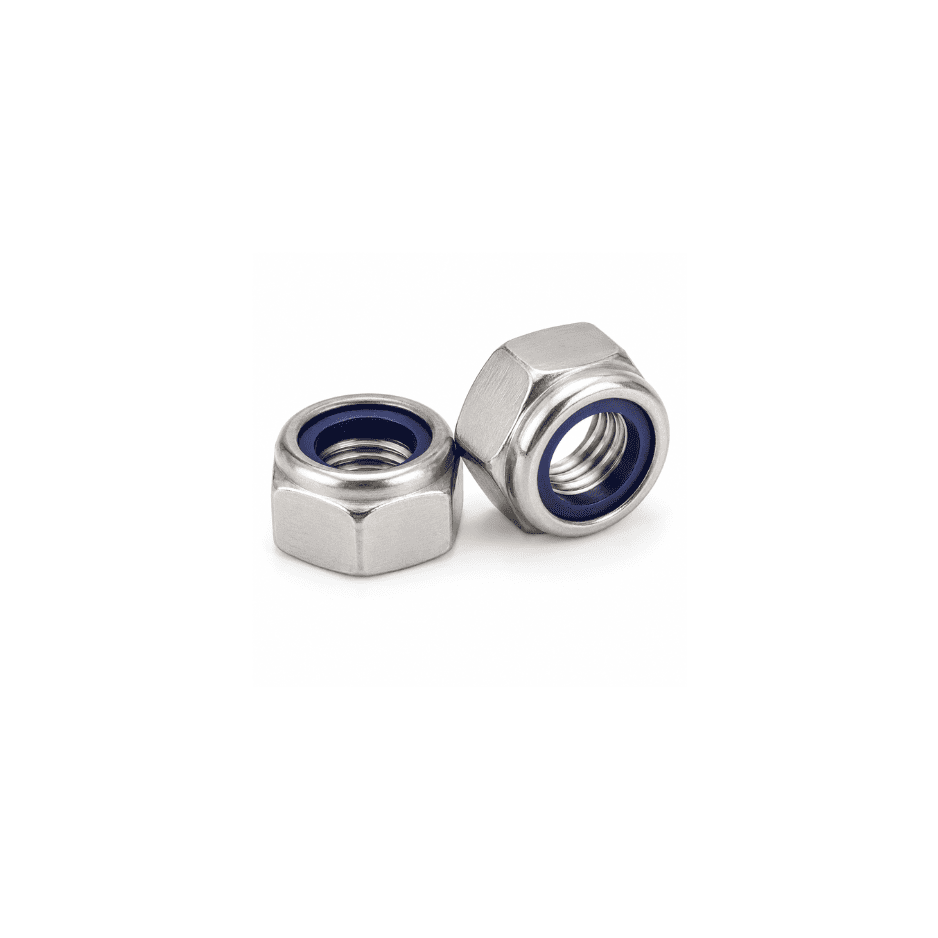
AM Steel Nylock Nuts are nylon insert lock nuts featuring an unthreaded nylon collar set into the top of the nut. As the nut is tightened onto a bolt, the bolt cuts its own path through the softer nylon, and the insert then clamps tightly around the thread – the friction of that grip resisting the loosening effect of vibration and dynamic load. Manufactured under the AM Steel brand to DIN 985 (ISO 10511), these nuts (commonly spelled both “nylock” and “nyloc,” and also called nylon insert nuts or self-locking nuts) are the most widely used self-locking nut in engineering, valued for their reliability and clean, one-piece installation.
Because the locking action comes from the nylon insert rather than from over-torquing or an add-on washer, AM Steel nylock nuts hold securely and consistently without any secondary locking device – saving time and parts while giving dependable vibration resistance. They’re used across machinery and equipment, automotive and transport, pumps, motors, fans, and any assembly exposed to movement or repeated loading. The range includes the standard-height nylock (DIN 985), a taller high-nylock (DIN 982) offering a larger insert for greater locking grip, and flanged nylock versions with an integrated washer face to spread load. Nylock nuts are matched by strength class to the bolt they’re used with – steel versions in property classes such as 8 and 10 – so the nut is never the weak point in the joint. AM Steel nylock nuts are available in carbon and high-tensile steel (zinc-plated or yellow-passivated) for general work, and in stainless steel (A2/304 and A4/316, the latter considered marine-grade) for outdoor, wet, and coastal environments where corrosion resistance is critical.
Whether you’re assembling machinery, working on automotive and transport equipment, fixing rotating machinery, or handling any joint exposed to vibration, AM Steel nylock nuts deliver the vibration-resistant grip, matched strength, and consistent quality needed for secure, long-lasting fastening. As with all AM Steel products, this nylock nut is available in a range of metric sizes (typically M3 to M20, with standard and high-profile options per DIN 985 / DIN 982), in multiple grades, materials, and finishes to suit both industrial-grade and everyday fastening needs.
Key features:
- Nylon insert grips the bolt thread to resist loosening under vibration and dynamic load
- Self-locking with no spring washer or thread-locking compound required
- Manufactured to DIN 985 / ISO 10511 dimensional standards
- Available in standard (DIN 985), high-profile (DIN 982), and flanged nylock versions
- Available in property classes 8 and 10 (steel) matched to bolt strength
- Available in carbon steel (zinc-plated, yellow-passivated) and stainless steel (A2/304, A4/316)
- Backed by the quality assurance of AM Steel
Ideal For
AM Steel Nylock Nuts are ideal for:
- Machinery and equipment assembly subject to vibration, movement, or repeated loading
- Automotive, transport, and mobile equipment connections that must not work loose in service
- Pumps, motors, fans, and rotating machinery where dynamic loads loosen standard nuts
- Maintenance and repair trades needing a reliable self-locking nut without extra washers or thread locker
- General assembly wherever a joint requires clean, vibration-resistant, long-term security
Choosing the Right Nylock Nut
Selecting the correct nylock nut from the AM Steel range depends on several factors:
- Height / Profile – Standard nylock (DIN 985) for general use; high-profile nylock (DIN 982) where a larger nylon insert and greater locking grip are wanted; flanged nylock where an integrated washer face is useful.
- Material – Stainless steel (A2/304 or A4/316) for outdoor, wet, or corrosion-prone applications; carbon or high-tensile steel for general work.
- Strength Class – Match the nut’s property class (e.g. class 8 or 10) to the bolt grade so the nut is never the weak point in the joint.
- Thread Size & Pitch – Choose the diameter and pitch (coarse or fine) to match the mating bolt, screw, or threaded rod exactly.
- Temperature – Nylock nuts are limited to moderate temperatures (typically up to around 120°C); above this, use an all-metal lock nut instead.
- Reuse Frequency – The nylon insert deforms on first use; for frequently disassembled joints, plan to fit a fresh nylock nut each time for a reliable lock.
Strategies to Choose the Right Product
- Fit a fresh nylock after removal – The insert deforms to the thread on first use, so for a reliable lock, replace the nut rather than reusing one that’s been taken off.
- Fit it the right way up – The nylon insert must face away from the joint, so the bolt enters the metal-threaded end first and reaches the nylon last; reversing it stops the insert locking.
- Match the nut class to the bolt grade – Pair the property class to the bolt (e.g. class 8 nut with an 8.8 bolt) so the joint reaches its intended strength.
- Mind the temperature limit – Keep nylock nuts within their moderate temperature range; where heat would soften the nylon, step up to an all-metal lock nut.
- Match material to environment – Use stainless steel (A2/304 or A4/316) for outdoor, wet, or coastal work; zinc-plated or yellow-passivated steel for general dry conditions.
- Guard against galling in stainless – When threading stainless nylock nuts onto stainless bolts, use an anti-seize lubricant to prevent thread galling and seizing.
Mechanical Properties
AM Steel Nylock Nuts are manufactured to meet recognized mechanical and dimensional standards, ensuring reliability across machinery, automotive, and vibration-prone assembly applications:
| Property | Specification |
|---|---|
| Material Grades | Carbon Steel, High-Tensile Steel (Property Class 8 / 10), Stainless Steel (A2/304, A4/316) |
| Governing Standard | DIN 985 / ISO 10511 (standard); DIN 982 (high-profile nylock) |
| Locking Type | Nylon insert (prevailing torque) |
| Shape | Six-sided (hexagonal) with nylon collar; standard, high, or flanged profile |
| Drive / Engagement | External hex flats — spanner, wrench, or socket |
| Thread Type | Internal metric thread (coarse or fine) per ISO 261 / ISO 262 |
| Size Range | M3 to M20 (metric), standard and high-profile options |
| Temperature Limit | Approx. 120°C (nylon insert) |
| Corrosion Resistance | Moderate (zinc/yellow-plated steel) to high (A2/A4 stainless steel) |
| Common Alternate Names | Nyloc nut, nylon insert nut, self-locking nut, prevailing-torque nut |
| Typical Applications | Machinery, automotive, pumps, motors, vibration-prone assembly |
| Surface Finish | Zinc-plated, yellow-passivated, plain or passivated stainless steel |
These mechanical ratings confirm that AM Steel nylock nuts deliver secure, vibration-resistant fastening suited to machinery, automotive, and dynamic-load applications – fit the nut the right way up, pair the property class to the bolt grade, and use a fresh nut after removal for a reliable lock.
Frequently Asked Questions (FAQs)
1. What is a nylock nut used for?
A nylock nut is used wherever a joint is exposed to vibration, movement, or repeated loading and a standard nut could work loose – its nylon insert keeps the connection tight in machinery, automotive, and dynamic-load assemblies without needing a separate locking device.
2. Is it spelled “nylock” or “nyloc”?
Both spellings refer to the same fastener – a nylon insert lock nut. “Nyloc” derives from the original trade name, while “nylock” is a very common alternative spelling; the product is identical either way.
3. How does a nylock nut work?
It has an unthreaded nylon collar at its top; as the nut is tightened, the bolt forms its own path through the nylon, and the insert grips the bolt thread, creating friction that resists loosening under vibration.
4. Are AM Steel nylock nuts different from generic ones?
AM Steel nylock nuts are manufactured and quality-tested under the AM Steel brand, ensuring consistent thread quality, insert grip, strength class, and finish across every batch, per DIN 985 / ISO 10511.
5. Can nylock nuts be reused?
The nylon insert deforms to the thread on first use and loses locking effectiveness once removed, so for a reliable lock it’s best to fit a new nylock nut rather than reuse one that’s been taken off.
6. Which way up does a nylock nut go?
The nylon insert must face away from the joint – the bolt should enter the metal-threaded end first and reach the nylon collar last; fitting it upside down prevents the insert from locking correctly.
7. What temperature can a nylock nut handle?
Nylock nuts are generally limited to around 120°C; above this the nylon can soften and lose its grip, so an all-metal lock nut should be used for higher-temperature applications.
8. What’s the difference between a standard and high nylock nut?
A standard nylock (DIN 985) suits general use, while a high-profile nylock (DIN 982) is taller with a larger nylon insert, giving greater locking grip for more demanding vibration resistance.
9. What sizes do nylock nuts come in?
AM Steel nylock nuts are available in a range of sizes, typically M3 to M20, in both standard and high-profile options and in coarse and fine thread, per DIN 985 / DIN 982.
10. Do I need a washer with a nylock nut?
The locking action doesn’t require a spring washer, but a plain washer is often still used to spread the clamping load and protect the surface, especially on softer materials – or choose a flanged nylock with an integrated washer face.
11. Are nylock nuts corrosion-resistant?
Yes, especially AM Steel stainless steel versions (A2/304 or A4/316), which resist rust in outdoor, wet, or coastal environments; zinc-plated and yellow-passivated steel offer protection for general and dry conditions.
12. What property class should my nylock nut be?
Match the nylock nut’s property class to the bolt grade – for example a class 8 nut with an 8.8 bolt, or class 10 with a 10.9 bolt – so the nut is never the weak point in the joint.
13. What’s the difference between A2 and A4 stainless steel nylock nuts?
A2 (304) stainless offers good general corrosion resistance for most indoor and outdoor use, while A4 (316), considered marine-grade, provides superior resistance to chlorides and coastal or chemical environments.
Reviews
There are no reviews yet.