


Description
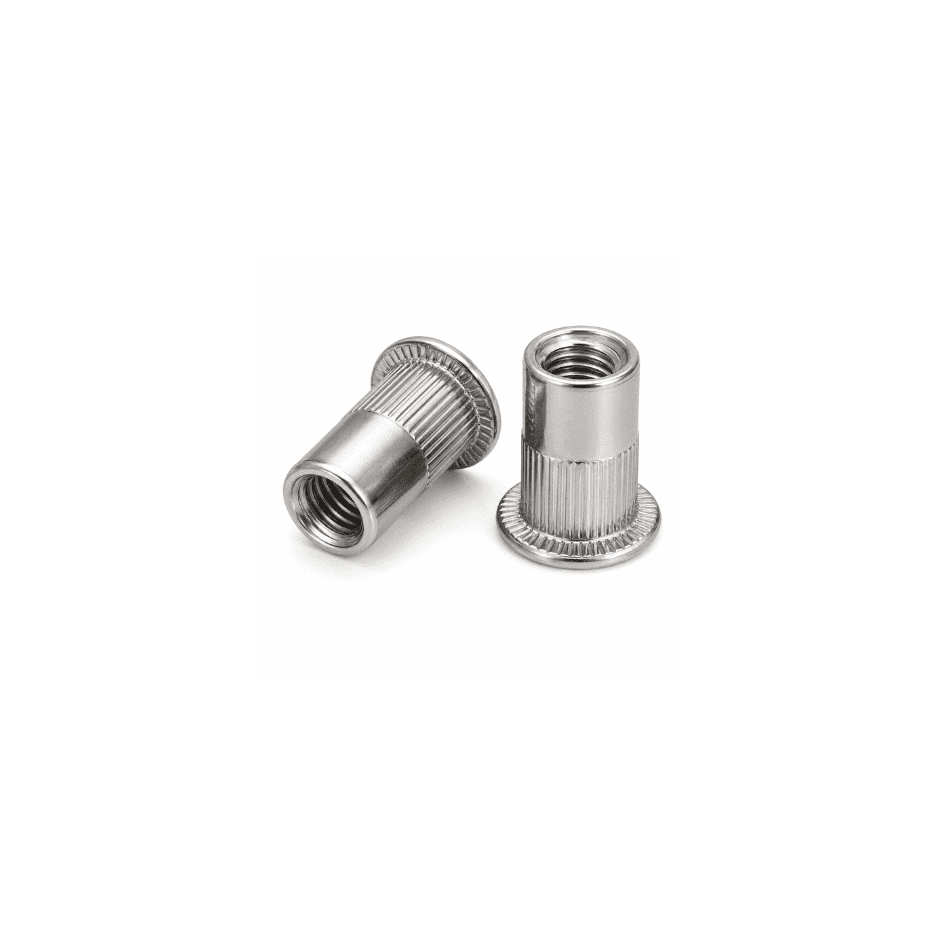
AM Steel Insert Nuts, commonly called Rivet Nuts, are internally threaded tubular fasteners designed to create a strong, load-bearing thread in thin materials where tapping isn’t possible and there’s access to only one side. Manufactured under the AM Steel brand, these fasteners (widely known as blind rivet nuts, threaded inserts, rivnuts, or nutserts) are installed by placing the insert into a pre-drilled or punched hole and drawing its threaded mandrel with a setting tool – this compresses and bulges the body’s shank behind the material, clamping it permanently in place and leaving a ready-to-use threaded hole flush with the surface.
Because they set from the accessible face alone, AM Steel rivet nuts are the go-to solution for adding threads to sheet metal, tube, extrusions, and hollow or enclosed sections where a weld nut can’t be reached and a standard nut can’t be held. They’re widely used in sheet-metal fabrication, electrical enclosures, automotive and transport panels, HVAC, signage, and general assembly. The range covers multiple body styles – round (general purpose), hexagonal (maximum spin-out resistance in a hex hole), and splined/knurled (anti-rotation in a round hole) – and head styles including flat/large flange (load spread on the surface) and countersunk (flush finish). AM Steel rivet nuts are available in steel (zinc-plated) for general strength, aluminium for light, corrosion-resistant, and non-magnetic use, and in stainless steel (A2/304 and A4/316, the latter considered marine-grade) for outdoor, wet, and coastal environments where corrosion resistance is critical.
Whether you’re adding threads to sheet-metal panels, fixing into tube and extrusions, building enclosures and cabinets, or handling any thin-material assembly where a captive thread is needed with one-sided access, AM Steel rivet nuts deliver the blind-set convenience, strong pull-out and torque resistance, and consistent quality needed for reliable threaded fixings. As with all AM Steel products, this rivet nut is available in a range of metric sizes (typically M3 to M12), in multiple body styles, head styles, materials, and grip ranges to suit both industrial-grade and everyday fastening needs.
Key features:
- Installed blind from one side with a setting tool – no welding or rear access needed
- Deforms behind the material to create a strong, permanent threaded hole in thin sheet or tube
- Available in round, hexagonal, and splined/knurled bodies for varying anti-rotation grip
- Head styles include large flange (load spread) and countersunk (flush finish)
- Selected by grip range to suit the material thickness being fixed
- Available in steel, aluminium, and stainless steel (A2/304, A4/316)
- Backed by the quality assurance of AM Steel
Ideal For
AM Steel Insert Nuts (Rivet Nuts) are ideal for:
- Sheet-metal fabricators adding strong, captive threads to thin panels that can’t be tapped or reached from behind
- Enclosure, cabinet, and switchgear assembly needing threaded fixing points with one-sided access
- Automotive, transport, and bodywork panels requiring blind-set threads in sheet and tube
- Tube, extrusion, and hollow-section fixing where no rear access is available for a nut or weld nut
- HVAC, signage, and general assembly needing a fast, tool-set threaded insert in thin material
Choosing the Right Insert Nut (Rivet Nut)
Selecting the correct rivet nut from the AM Steel range depends on several factors:
- Material – Stainless steel (A2/304 or A4/316) for outdoor, wet, or corrosion-prone applications; steel for general strength; aluminium for light, non-magnetic, corrosion-resistant use.
- Body Style – Round for general use, splined/knurled for anti-rotation in a round hole, hexagonal for maximum spin-out resistance in a matching hex hole.
- Head Style – Large/flat flange to spread load on the surface; countersunk where a flush finish is required.
- Grip Range – Match the rivet nut’s grip range to the thickness of the material being fixed, so it clamps correctly without being too tight or too loose.
- Hole Size – Drill or punch the hole to the specified diameter (and hex/shape) so the insert seats and grips reliably.
- Thread Size – Choose the internal thread (e.g. M3 to M12) to match the bolt or screw that will be fitted after setting.
Strategies to Choose the Right Product
- Match the grip range to the material thickness – This is the single most important choice; a rivet nut only clamps correctly when its grip range suits the panel thickness, so confirm both before setting.
- Choose the body style for anti-rotation – Use splined/knurled bodies for grip in a round hole, or hexagonal bodies in a matching hex hole where high tightening torque could otherwise spin the insert.
- Pick the head for the finish – Large flange to spread load on the surface, countersunk for a flush result in a countersunk hole.
- Match material to environment and base – Use stainless for outdoor/wet/coastal work, aluminium for light or non-magnetic needs, and match materials to avoid galvanic corrosion with the base panel.
- Drill the correct hole size and shape – Use the specified hole diameter (and hex or knurl-matching shape) so the insert seats squarely and resists spinning.
- Use the right setting tool – Set the insert fully with a matching hand, lever, or pneumatic rivet-nut tool so the body bulges correctly and clamps to its rated hold.
Mechanical Properties
AM Steel Insert Nuts (Rivet Nuts) are manufactured to meet recognized mechanical and dimensional standards, ensuring reliability across sheet-metal, tube, and enclosure fixing applications:
| Property | Specification |
|---|---|
| Material Grades | Steel (zinc-plated), Aluminium, Stainless Steel (A2/304, A4/316) |
| Fastener Type | Blind-installed internally threaded insert (rivet nut) |
| Installation Method | Set from one side with a rivet-nut setting tool (mandrel-drawn) |
| Body Styles | Round (plain), splined/knurled (anti-rotation), hexagonal |
| Head Styles | Large/flat flange, countersunk (flush) |
| Thread Type | Internal metric thread (coarse) per ISO 261 / ISO 262 |
| Size Range | M3 to M12 (metric), various grip ranges |
| Corrosion Resistance | Moderate (zinc-plated steel, aluminium) to high (A2/A4 stainless steel) |
| Common Alternate Names | Blind rivet nut, threaded insert, rivnut, nutsert, blind threaded insert |
| Typical Applications | Sheet metal, tube, extrusions, enclosures, automotive panels, signage |
| Surface Finish | Zinc-plated, plain aluminium, plain or passivated stainless steel |
These mechanical ratings confirm that AM Steel rivet nuts deliver strong, blind-set threaded fixings suited to sheet-metal, tube, and enclosure applications – match the grip range to the material thickness and set the insert fully with the correct tool for the best pull-out and torque resistance.
Frequently Asked Questions (FAQs)
1. What is a rivet nut used for?
A rivet nut is used to create a strong, permanent threaded hole in thin sheet, tube, or hollow sections where tapping isn’t possible and there’s access to only one side – common in sheet-metal fabrication, enclosures, and automotive panels.
2. How does a rivet nut work?
The insert is placed in a pre-drilled hole and a setting tool draws its threaded mandrel, compressing the body so it bulges out behind the material and clamps permanently in place, leaving a ready-to-use threaded hole flush with the surface.
3. What are the other names for a rivet nut?
Rivet nuts are also known as blind rivet nuts, threaded inserts, rivnuts, and nutserts – all describing the same blind-installed internally threaded fastener.
4. What’s the difference between a rivet nut and a weld nut?
A rivet nut is set mechanically from one side with a tool and needs no welding or rear access, while a weld nut must be resistance-welded onto the component – rivet nuts suit thin or coated materials and blind panels where welding isn’t practical.
5. Are AM Steel rivet nuts different from generic ones?
AM Steel rivet nuts are manufactured and quality-tested under the AM Steel brand, ensuring consistent thread quality, grip range, body dimensions, and finish across every batch.
6. How do I choose the right grip range?
Match the rivet nut’s grip range to the thickness of the material being fixed; the grip range states the minimum and maximum material thickness the insert will clamp correctly, and getting this right is essential for a secure set.
7. What’s the difference between round, splined, and hex rivet nuts?
Round bodies are general purpose, splined or knurled bodies resist rotation in a round hole, and hexagonal bodies give the maximum spin-out resistance when set in a matching hex hole – choose based on the tightening torque the thread must take.
8. Do I need a special tool to install a rivet nut?
Yes – a rivet-nut setting tool (hand, lever, or pneumatic) is used to draw the mandrel and deform the body; using the correct tool ensures the insert sets fully and reaches its rated pull-out and torque strength.
9. What sizes do rivet nuts come in?
AM Steel rivet nuts are available in a range of sizes, typically M3 to M12 in metric, in various grip ranges, body styles, and head styles.
10. Are rivet nuts corrosion-resistant?
Yes, especially AM Steel stainless steel versions (A2/304 or A4/316), which resist rust in outdoor, wet, or coastal environments; aluminium offers light corrosion-resistant use and zinc-plated steel suits general dry conditions.
11. Can rivet nuts spin in the hole?
A poorly chosen or under-set rivet nut can spin under high torque; using a splined, knurled, or hexagonal body in a correctly sized hole, and setting it fully, prevents spin-out and keeps the thread usable.
12. Can rivet nuts be used in tube or hollow sections?
Yes – because they set from one side, rivet nuts are ideal for tube, extrusions, and hollow or enclosed sections where there’s no rear access to fit or weld a conventional nut.
13. What’s the difference between A2 and A4 stainless steel rivet nuts?
A2 (304) stainless offers good general corrosion resistance for most indoor and outdoor use, while A4 (316), considered marine-grade, provides superior resistance to chlorides and coastal or chemical environments.
Reviews
There are no reviews yet.