


Description
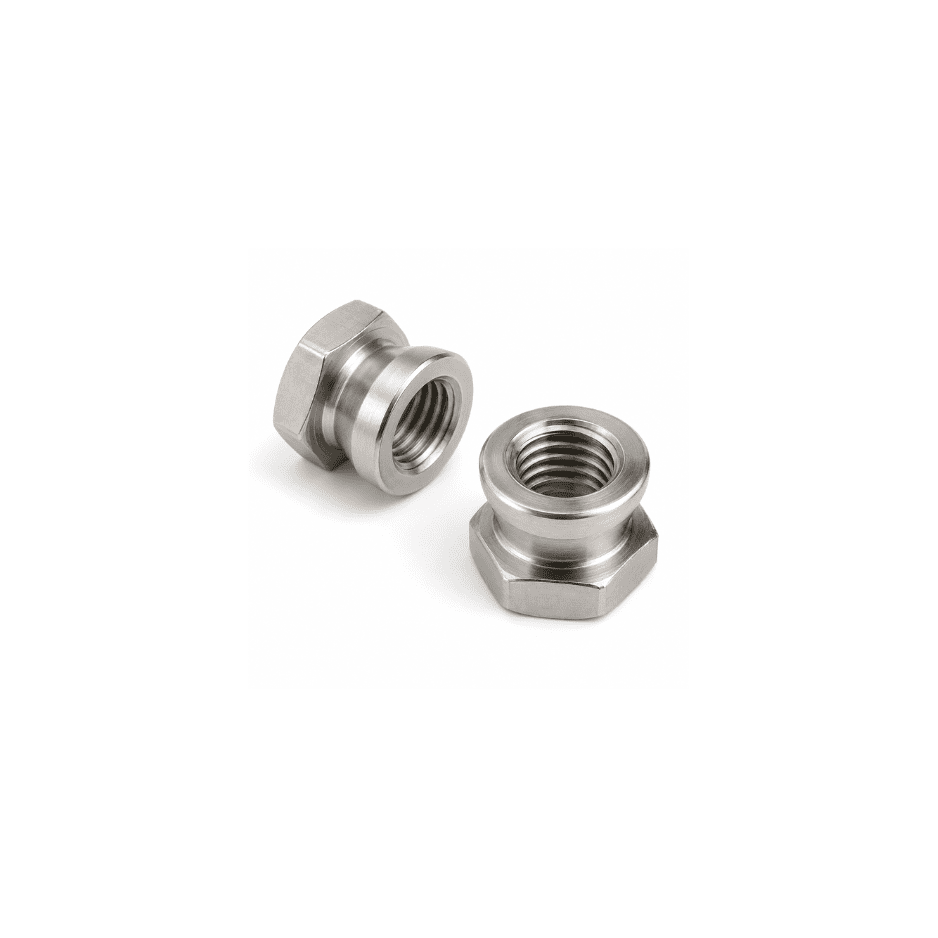
AM Steel Anti-Theft Nuts are security fasteners designed to make removal difficult or impossible without the correct matching tool, protecting exposed and unattended assets from theft, vandalism, and tampering. Manufactured under the AM Steel brand, these nuts (widely known as security nuts, tamper-proof nuts, or shear nuts) work on one of two principles: a permanent one-way design that can be driven on but presents no purchase for a spanner to undo, or a key-operated design whose unique drive pattern can only be turned with the matching security socket or key.
Because they resist casual removal, AM Steel anti-theft nuts are the go-to fixing for public and outdoor installations where standard nuts would be a target – street furniture, signage and gantries, gates and fencing, manhole and access covers, EV charging points, solar-panel mounting, CCTV and lighting columns, and transport infrastructure. Common types include the shear nut (a cone-shaped nut with a break-off section that snaps at a set torque, leaving a smooth dome with no grip for tools), the one-way (permanent) nut with ramped flats that a spanner slides off in the undo direction, and key-operated security nuts requiring a registered or uniquely patterned tool to remove. This range of options lets the installer choose between permanent fixings and serviceable ones that only authorized holders of the key can remove. AM Steel anti-theft nuts are available in carbon steel (zinc-plated or galvanized) for general use, and in stainless steel (A2/304 and A4/316, the latter considered marine-grade) for outdoor, wet, and coastal environments where corrosion resistance is critical.
Whether you’re securing public infrastructure, protecting signage and gantries, locking down gates and access covers, or safeguarding EV chargers, solar mounts, and outdoor equipment, AM Steel anti-theft nuts deliver the tamper resistance, weatherproof durability, and consistent quality needed to keep exposed fixings secure. As with all AM Steel products, this anti-theft nut is available in a range of metric sizes (typically M6 to M20), in permanent and key-operated types, and in multiple materials and finishes to suit both industrial-grade and everyday security needs.
Key features:
- Tightens normally but resists removal by standard spanners and sockets
- Available in permanent one-way / shear-off types and key-operated (serviceable) types
- Shear nut breaks off at a set torque, leaving a smooth dome with no grip for tools
- Deters theft, vandalism, and unauthorized dismantling of exposed assets
- Suited to public, outdoor, and unattended installations
- Available in carbon steel (zinc-plated, galvanized) and stainless steel (A2/304, A4/316)
- Backed by the quality assurance of AM Steel
Ideal For
AM Steel Anti-Theft Nuts are ideal for:
- Public infrastructure and street furniture – benches, bollards, railings, and shelters exposed to tampering
- Signage, gantries, and traffic installations that must resist vandalism and theft
- Gates, fencing, and access/manhole covers requiring secure, tamper-resistant fixings
- EV chargers, solar-panel mounts, CCTV, and lighting columns protecting valuable outdoor equipment
- Any exposed or unattended fixing where a standard nut would be vulnerable to removal
Choosing the Right Anti-Theft Nut
Selecting the correct anti-theft nut from the AM Steel range depends on several factors:
- Permanent vs Serviceable – Choose a shear-off or one-way nut for a permanent fixing that’s never meant to be removed; choose a key-operated nut where authorized maintenance access is needed.
- Security Level – Match the level of tamper resistance to the risk: shear/one-way nuts deter opportunist removal, while uniquely keyed or registered patterns raise the barrier further.
- Material – Stainless steel (A2/304 or A4/316) for outdoor, wet, or corrosion-prone applications; zinc-plated or galvanized carbon steel for general use.
- Thread Size & Pitch – Choose the diameter and pitch to match the mating bolt, screw, or threaded rod exactly.
- Tool Availability – For key-operated types, confirm the matching security socket or key is available to the authorized installer and controlled against duplication.
- Environment – For outdoor and coastal installs, prioritize stainless or galvanized to resist corrosion that could otherwise seize or weaken the fixing.
Strategies to Choose the Right Product
- Match the type to whether removal is ever needed – Shear-off and one-way nuts suit permanent, never-remove fixings; key-operated nuts suit assets that need authorized servicing.
- Escalate security to the risk level – For high-value or high-target assets, a uniquely keyed or registered pattern gives more protection than a common one-way design.
- Control the keys – For key-operated types, keep the matching tool secure and limit duplication, since the security depends on restricting access to the key.
- Match material to environment – Use stainless steel (A2/304 or A4/316) for outdoor, wet, or coastal work; zinc-plated or galvanized steel for general use.
- Pair with matching security fixings – For full protection, combine anti-theft nuts with security bolts or shear fixings so the whole joint resists tampering, not just one element.
- Confirm thread compatibility – Match the thread size and pitch to the mating bolt or stud so the security nut tightens correctly to its intended torque.
Mechanical Properties
AM Steel Anti-Theft Nuts are manufactured to meet recognized mechanical and dimensional standards, ensuring reliability across public infrastructure, signage, and outdoor equipment security applications:
| Property | Specification |
|---|---|
| Material Grades | Carbon Steel, Stainless Steel (A2/304, A4/316) |
| Fastener Type | Security / tamper-resistant nut |
| Security Mechanisms | Shear-off (break-away), one-way (permanent), key-operated (serviceable) |
| Drive / Engagement | Standard tightening; removal only via special tool or not at all |
| Thread Type | Internal metric thread (coarse or fine) per ISO 261 / ISO 262 |
| Size Range | M6 to M20 (metric) |
| Corrosion Resistance | Moderate (zinc-plated / galvanized steel) to high (A2/A4 stainless steel) |
| Common Alternate Names | Security nut, tamper-proof nut, shear nut, break-off nut |
| Typical Applications | Street furniture, signage, gates, covers, EV chargers, solar mounts, CCTV |
| Surface Finish | Zinc-plated, hot-dip galvanized, plain or passivated stainless steel |
These mechanical ratings confirm that AM Steel anti-theft nuts deliver dependable tamper resistance suited to public infrastructure, signage, and outdoor equipment – choose a permanent shear/one-way type where removal is never needed, or a key-operated type where authorized servicing is required.
Frequently Asked Questions (FAQs)
1. What is an anti-theft nut used for?
An anti-theft nut is used to secure exposed or unattended assets against theft, vandalism, and tampering – it tightens normally but resists removal by standard tools, protecting street furniture, signage, gates, EV chargers, and similar installations.
2. How does an anti-theft nut work?
Depending on type, it either presents no grip for a spanner in the undo direction (one-way), breaks off a cone at a set torque to leave a smooth dome with nothing to grip (shear nut), or requires a unique matching key or security socket to remove (key-operated).
3. What’s a shear nut?
A shear nut has a cone-shaped section that snaps off once tightened to a set torque, leaving a smooth rounded dome that a standard tool can’t grip – making it a permanent, tamper-resistant fixing.
4. What’s the difference between a permanent and a key-operated anti-theft nut?
A permanent (shear or one-way) nut is designed never to be removed, while a key-operated nut can be undone only with its matching security tool – choose permanent for fit-and-forget security and key-operated where authorized maintenance is needed.
5. Are AM Steel anti-theft nuts different from generic ones?
AM Steel anti-theft nuts are manufactured and quality-tested under the AM Steel brand, ensuring consistent thread quality, security-feature geometry, and finish across every batch.
6. Can an anti-theft nut be removed at all?
Permanent shear and one-way types are designed not to be removed without destructive methods, while key-operated types can be removed with the correct matching security tool – the right choice depends on whether servicing access is required.
7. What sizes do anti-theft nuts come in?
AM Steel anti-theft nuts are available in a range of sizes, typically M6 to M20 in metric, in permanent and key-operated types.
8. Where are anti-theft nuts commonly used?
They’re used on public and outdoor installations that are targets for theft or tampering – street furniture, signage and gantries, gates and access covers, EV chargers, solar mounts, CCTV, and lighting columns.
9. Are anti-theft nuts corrosion-resistant?
Yes, especially AM Steel stainless steel versions (A2/304 or A4/316), which resist rust in outdoor, wet, or coastal environments; hot-dip galvanized and zinc-plated steel offer protection for general use.
10. Do I need a special tool for anti-theft nuts?
Key-operated types need their matching security socket or key to remove, while shear and one-way types are installed with standard tools but can’t be undone conventionally – for keyed types, keep the tool secure and controlled against duplication.
11. How secure are anti-theft nuts?
They significantly raise the effort and specialist tooling needed to remove a fixing, deterring opportunist theft and casual tampering; for high-value assets, uniquely keyed or registered patterns and matching security bolts increase protection further.
12. Can I combine anti-theft nuts with security bolts?
Yes – for full tamper resistance, pairing anti-theft nuts with matching security bolts or shear fixings protects the whole joint rather than just one element, closing off easy removal from either side.
13. What’s the difference between A2 and A4 stainless steel anti-theft nuts?
A2 (304) stainless offers good general corrosion resistance for most outdoor use, while A4 (316), considered marine-grade, provides superior resistance to chlorides and coastal or chemical environments.
Reviews
There are no reviews yet.