


Description
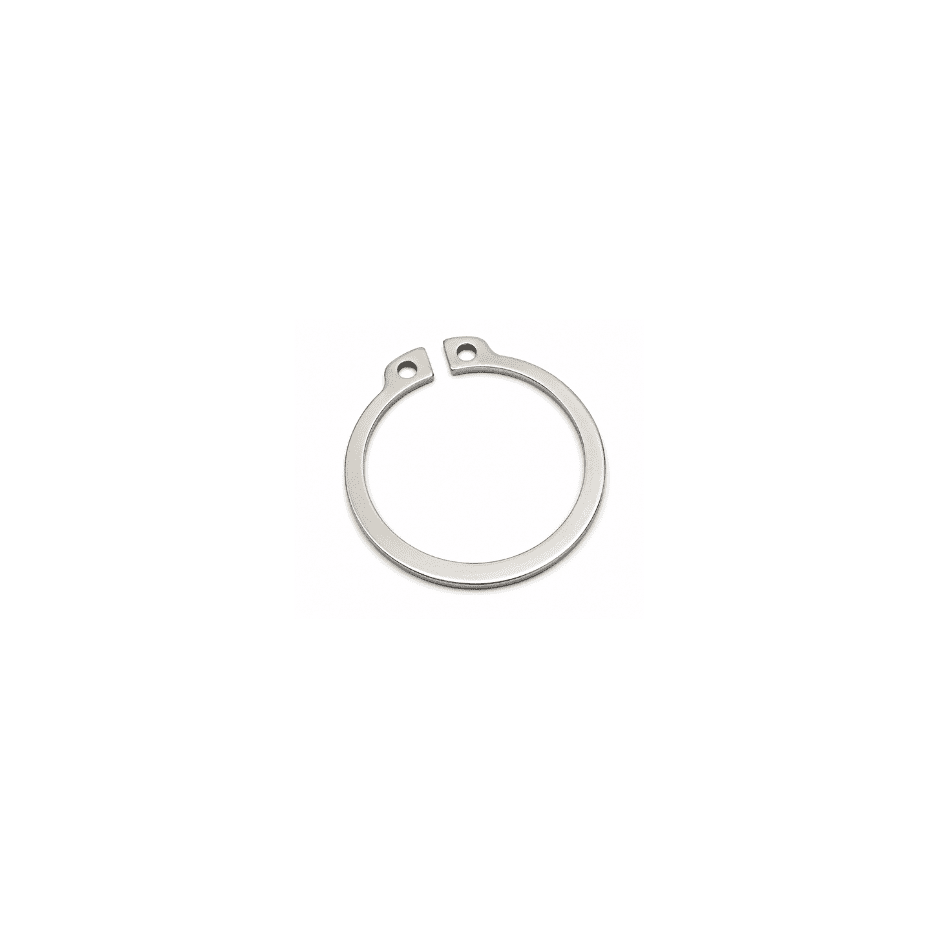
AM Steel Internal Circlips are stamped from flat spring steel strip into a C-shape, designed to seat into a circumferential groove machined on the inside diameter (ID) of a bore or housing. Manufactured under the AM Steel brand to DIN 472, once installed, the circlip sits flush or slightly proud of the bore wall, creating a positive mechanical shoulder inside the housing that prevents components — such as bearings, bushings, seals, and end caps – from sliding out of the bore, while still permitting the retained component to function normally.
A detail worth understanding clearly: DIN 472 internal circlips are specifically for bores and housings (the groove sits on the inside diameter) and should not be confused with DIN 471 external circlips, which are designed for shafts (the groove sits on the outside diameter). The correct way to specify size is always by where the groove is machined, not by the component being retained – for example, a bearing with a 25mm outer diameter fitted inside a 52mm housing bore requires a DIN 472-52 internal circlip sized to the housing bore, which has nothing to do with the bearing’s own 25mm diameter; specifying by the retained part rather than the actual groove location is a common and costly ordering mistake. On the engineering drawing, the groove diameter for a DIN 472 internal circlip is larger than the nominal bore size, the opposite of a DIN 471 external circlip, where the groove diameter is smaller than the nominal shaft size.
AM Steel internal circlips are manufactured from carbon spring steel (commonly with a phosphate and oil finish for corrosion protection) and stainless steel (AISI 301/1.4310 or AISI 316L/1.4404 for corrosion-resistant or higher-temperature applications). They are installed and removed using circlip (snap ring) pliers engaged in the small lug holes at each end of the ring. Whether you’re assembling gearboxes, pumps, electric motors, or precision machinery, AM Steel internal circlips provide a compact, cost-effective, and easily serviceable retention solution for components housed inside a bore. As with all AM Steel products, this internal circlip is available in metric sizing (typically 8mm to 300mm bore diameter and beyond per DIN 472), in multiple materials and finishes to suit both industrial-grade and precision fastening needs.
Key features:
- C-shaped spring steel design seats into a groove on the inside diameter of a bore or housing
- Manufactured to DIN 472 (internal/bore circlips – distinct from DIN 471 external/shaft circlips)
- Creates a positive shoulder inside the housing while permitting normal function of the retained component
- Available in carbon spring steel and stainless steel (AISI 301/1.4310, 316L/1.4404)
- Installed and removed with circlip (snap ring) pliers
- Backed by the quality assurance of AM Steel
Ideal For
AM Steel Internal Circlips are ideal for:
- Gearbox and transmission manufacturers retaining bearings and bushings inside housing bores
- Pump and electric motor assemblers securing bearings and seals within a bore or casing
- Precision machinery builders needing a compact, serviceable retention solution for bore-mounted components
- Automotive and industrial equipment technicians performing bearing replacement inside housings
- General rotating equipment manufacturers wherever a bore-mounted retaining ring is required
Choosing the Right Internal Circlip
Selecting the correct internal circlip from the AM Steel range depends on several factors:
- Groove Location Confirmation – Confirm the groove is machined inside a bore or housing (internal/DIN 472) rather than on the outside of a shaft (external/DIN 471) – always specify by groove location, not by the component being retained.
- Material – Stainless steel (AISI 301/1.4310 or 316L/1.4404) for corrosive or high-temperature environments; carbon spring steel (phosphate and oil finish) for general industrial use.
- Bore Diameter – Match the circlip’s nominal size to the actual bore diameter at the groove location.
- Groove Dimensions – Confirm the groove diameter, width, and depth match the circlip manufacturer’s specification for a secure, properly seated fit.
- Axial Load Requirements – Confirm the circlip’s rated axial load capacity is adequate for the specific application’s operating forces.
- Installation Access – Ensure adequate clearance for circlip pliers to engage the lug holes during installation and removal within the bore.
Strategies to Choose the Right Product
- Always specify by groove location, not retained part – Confirm whether the groove sits inside a bore (DIN 472, internal) or on a shaft (DIN 471, external) before ordering, since this is the single most common specification error.
- Match material to environment – Choose stainless steel (301/1.4310 or 316L/1.4404) for corrosive, high-temperature, or high-hygiene environments; carbon spring steel for general industrial use.
- Verify groove dimensions before production runs – Cross-check groove diameter, width, and depth against the circlip manufacturer’s specification to ensure proper seating and full load capacity.
- Remember the groove diameter relationship – For internal circlips, the groove diameter is larger than the nominal bore size (opposite of external circlips), so double-check this when reading engineering drawings.
- Buy in matched sets – Purchase internal circlips alongside the correct size circlip (snap ring) pliers for reliable, damage-free installation and removal.
- Consider bulk vs. individual packs – Bulk packs suit gearbox, pump, or machinery production runs; smaller packs suit repairs or maintenance work.
Mechanical Properties
AM Steel Internal Circlips are manufactured to meet recognized mechanical and dimensional standards, ensuring reliability across gearbox, pump, and general machinery applications:
| Property | Specification |
|---|---|
| Material Grades | Carbon Spring Steel (e.g., C60S, C75S per DIN 17222), Stainless Steel (AISI 301/1.4310, AISI 316L/1.4404), Martensitic Stainless Steel (1.4122) |
| Governing Standard | DIN 472 (Internal Retaining Rings for Bores); distinct from DIN 471 (External Retaining Rings for Shafts) |
| Hardness (Carbon Spring Steel) | Approximately HRC 40–54, varying by diameter range |
| Design | C-shaped ring with two lug holes for plier engagement |
| Groove Diameter Relationship | Larger than nominal bore size (opposite relationship to DIN 471 external circlips) |
| Size Range | Approximately 8mm to 300mm+ bore diameter (metric), per DIN 472 |
| Installation Method | Circlip (snap ring) pliers, engaged in lug holes, installed within the bore |
| Corrosion Resistance | Moderate (phosphate and oil finish, zinc-plated carbon steel) to high (301/1.4310, 316L/1.4404 stainless steel) |
| Surface Finish | Phosphate and oil, mechanical/electrolytic zinc plating, zinc flake, passivated stainless steel |
These mechanical ratings confirm that AM Steel internal circlips provide reliable retention for bore-mounted components – always confirm groove location, dimensions, and material before specifying for your application.
Frequently Asked Questions (FAQs)
1. What is an internal circlip used for? An internal circlip is used to retain components – such as bearings, bushings, seals, and end caps – inside a bore or housing, by seating into a groove and creating a positive shoulder that prevents the component from sliding out.
2. What’s the difference between an internal circlip (DIN 472) and an external circlip (DIN 471)? An internal circlip (DIN 472) seats into a groove on the inside diameter of a bore or housing, while an external circlip (DIN 471) seats into a groove on the outside diameter of a shaft – the correct choice always depends on where the groove is machined, not on what component is being retained.
3. Are AM Steel internal circlips different from generic retaining rings? AM Steel internal circlips are manufactured and quality-tested under the AM Steel brand, ensuring consistent spring force, dimensional accuracy, and finish quality across every batch, per DIN 472.
4. How do I know if I need a DIN 472 or DIN 471 circlip? Check your engineering drawing for the groove detail: if the groove is machined inside a bore or housing, you need a DIN 472 internal circlip; if the groove is machined on the outside of a shaft, you need a DIN 471 external circlip.
5. Are internal circlips corrosion-resistant? Yes, especially AM Steel stainless steel internal circlips (AISI 301/1.4310 or 316L/1.4404), which resist rust in corrosive, wet, or high-temperature environments; carbon spring steel with a phosphate and oil finish offers moderate protection for general industrial use.
6. What sizes do internal circlips come in? AM Steel internal circlips are available in a wide range of sizes, typically from 8mm to 300mm bore diameter and beyond, per DIN 472.
7. How is an internal circlip’s nominal size determined? The nominal size of a DIN 472 internal circlip equals the bore diameter at the groove – for example, a 52mm housing bore requires a DIN 472-52 circlip, regardless of the diameter of the bearing or component being retained inside it.
8. Why is the groove diameter larger than the bore size for internal circlips? Because the circlip must expand slightly to seat into a groove machined into the bore wall, the groove diameter is specified larger than the nominal bore size – this is the opposite relationship found in external (DIN 471) circlips, where the groove is smaller than the shaft size.
9. What tools do I need to install an internal circlip? Circlip (snap ring) pliers, sized appropriately for the ring’s diameter, are used to compress the ring by engaging the lug holes at each end, allowing it to be fitted into or removed from the bore groove.
10. Can internal circlips be reused? Yes, as long as the circlip isn’t deformed, overstretched, or showing signs of fatigue or cracking, it can typically be reused; a circlip that has lost its spring tension or shows damage should be replaced.
11. What’s the difference between AISI 301 and AISI 316L stainless steel internal circlips? AISI 301 (1.4310) offers good general spring properties and corrosion resistance for most industrial use, while AISI 316L (1.4404) provides superior resistance to chlorides and higher-temperature or highly corrosive environments.
12. What industries commonly use internal circlips? Common applications include gearboxes, pumps, electric motors, automotive components, and general precision machinery wherever a bore-mounted retaining ring is needed to secure bearings, bushings, or seals.
13. What’s a common mistake when ordering internal circlips? A common mistake is specifying the circlip size based on the diameter of the component being retained (such as a bearing) rather than the actual bore groove diameter of the housing – always confirm the groove location and dimension directly from the engineering drawing.
Reviews
There are no reviews yet.