


Description
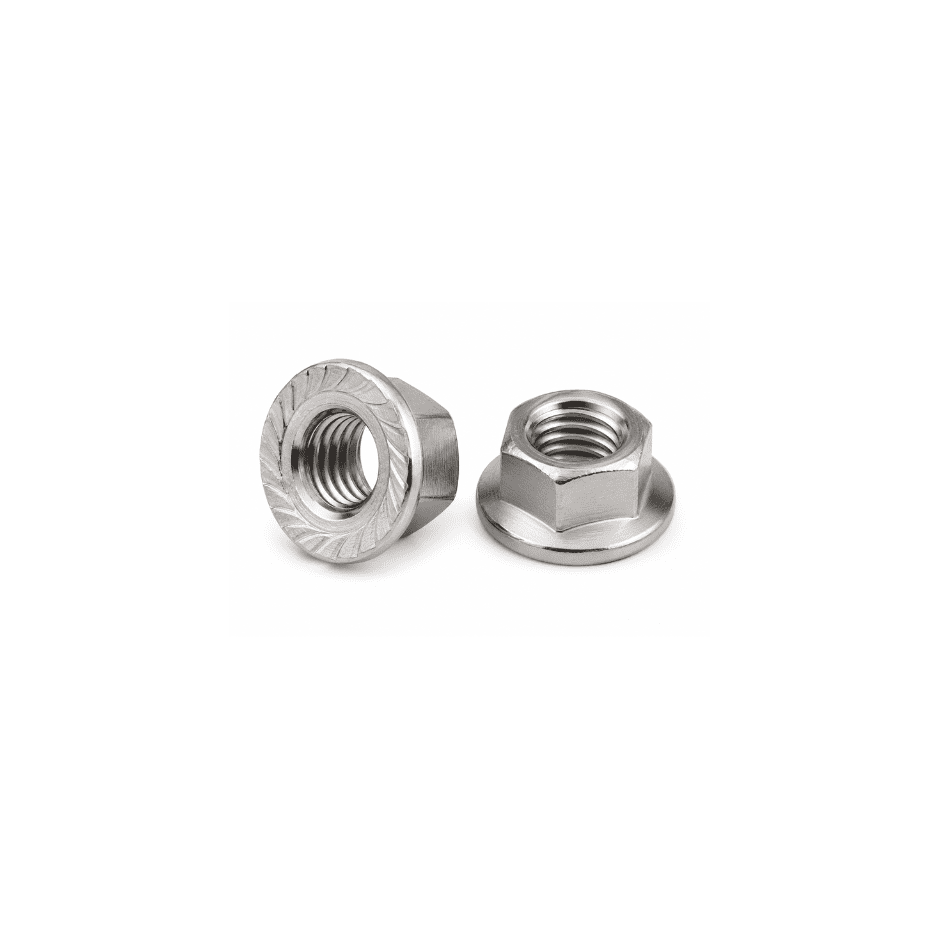
AM Steel Flange Nuts are hexagonal nuts with a built-in circular flange at their base that acts like an integrated washer, spreading the clamping load across a wider bearing surface and protecting the joint face. Manufactured under the AM Steel brand to DIN 6923 (ISO 4161), these nuts (widely known as flanged hex nuts or collar nuts) combine nut and washer in a single component – saving assembly time and reducing loose parts – and are available with either a smooth flange or a serrated flange that grips the surface to resist loosening under vibration.
Because the flange distributes load and bridges wider or slotted holes, AM Steel flange nuts are well suited to fastening onto soft materials, oversized or elongated holes, and thin sheet where a plain nut would dig in or pull through. The serrated-flange version adds a set of ratchet-like teeth on the underside that bite into the mating surface as the nut is tightened, providing built-in vibration resistance without a spring washer – making it a popular one-piece locking solution in machinery, automotive, and equipment assembly. The wide bearing face also improves clamping stability on uneven or coated surfaces. AM Steel flange nuts are available in carbon and high-tensile steel (zinc-plated or yellow-passivated) in property classes such as 8 and 10, and in stainless steel (A2/304 and A4/316, the latter considered marine-grade) for outdoor, wet, and coastal environments where corrosion resistance is critical.
Whether you’re assembling machinery, working on automotive and transport equipment, fastening onto soft or slotted materials, or handling any joint that benefits from spread load or built-in vibration resistance, AM Steel flange nuts deliver the wide bearing surface, optional serrated lock, and consistent quality needed for efficient, secure fastening. As with all AM Steel products, this flange nut is available in a range of metric sizes (typically M4 to M20 per DIN 6923), in smooth and serrated types, and in multiple grades, materials, and finishes to suit both industrial-grade and everyday fastening needs.
Key features:
- Integrated wide flange spreads clamping load and acts as a built-in washer
- Serrated-flange version bites into the surface to resist loosening under vibration
- Combines nut and washer in one component, saving assembly time and parts
- Bridges oversized, slotted, or soft-material holes to resist pull-through
- Manufactured to DIN 6923 / ISO 4161 dimensional standards
- Available in property classes 8 and 10 (steel) and stainless steel (A2/304, A4/316)
- Backed by the quality assurance of AM Steel
Ideal For
AM Steel Flange Nuts are ideal for:
- Machinery and equipment assembly needing spread load and, in the serrated type, built-in vibration resistance
- Automotive, transport, and mobile equipment connections where a one-piece locking nut speeds assembly
- Fastening onto soft materials, thin sheet, or oversized/slotted holes where load must be spread
- Production assembly where combining nut and washer in one part cuts time and loose components
- General assembly wherever a wide bearing surface improves clamping stability
Choosing the Right Flange Nut
Selecting the correct flange nut from the AM Steel range depends on several factors:
- Flange Type – Serrated flange for built-in vibration resistance; smooth flange where the nut may need to move on the surface or where a finished (non-marring) face is required.
- Material – Stainless steel (A2/304 or A4/316) for outdoor, wet, or corrosion-prone applications; carbon or high-tensile steel for general and structural work.
- Strength Class – Match the nut’s property class (e.g. class 8 or 10) to the bolt grade so the nut is never the weak point in the joint.
- Thread Size & Pitch – Choose the diameter and pitch (coarse or fine) to match the mating bolt, screw, or threaded rod exactly.
- Surface Type – Use a serrated flange on solid, uncoated surfaces where the teeth can bite; avoid serrated on soft finishes you don’t want marked, or on surfaces where marring matters.
- Load Spread Requirement – Choose flange nuts where the joint benefits from a wider bearing area – soft materials, slotted holes, or thin sheet.
Strategies to Choose the Right Product
- Use serrated flange for vibration resistance – The teeth bite into the surface as the nut tightens, giving a one-piece locking action without a separate spring washer.
- Use smooth flange where the surface must not be marked – On finished, coated, or soft show surfaces, a smooth flange spreads load without scoring the material.
- Let the flange replace a washer – Choose a flange nut to combine nut and washer in one part, cutting assembly time and eliminating a loose component.
- Match the nut class to the bolt grade – Pair the property class to the bolt (e.g. class 8 nut with an 8.8 bolt) so the joint reaches its intended strength.
- Match material to environment – Use stainless steel (A2/304 or A4/316) for outdoor, wet, or coastal work; zinc-plated or yellow-passivated steel for general dry conditions.
- Guard against galling in stainless – When threading stainless flange nuts onto stainless bolts, use an anti-seize lubricant to prevent thread galling and seizing.
Mechanical Properties
AM Steel Flange Nuts are manufactured to meet recognized mechanical and dimensional standards, ensuring reliability across machinery, automotive, and general assembly applications:
| Property | Specification |
|---|---|
| Material Grades | Carbon Steel, High-Tensile Steel (Property Class 8 / 10), Stainless Steel (A2/304, A4/316) |
| Governing Standard | DIN 6923 / ISO 4161 (Hexagon Nuts with Flange) |
| Shape | Six-sided hexagonal body with integrated circular flange |
| Flange Type | Smooth or serrated (anti-vibration) underside |
| Drive / Engagement | External hex flats — spanner, wrench, or socket |
| Thread Type | Internal metric thread (coarse or fine) per ISO 261 / ISO 262 |
| Size Range | M4 to M20 (metric) |
| Corrosion Resistance | Moderate (zinc/yellow-plated steel) to high (A2/A4 stainless steel) |
| Common Alternate Names | Flanged hex nut, collar nut, flange serrated nut |
| Typical Applications | Machinery, automotive, soft/slotted materials, production assembly |
| Surface Finish | Zinc-plated, yellow-passivated, plain or passivated stainless steel |
These mechanical ratings confirm that AM Steel flange nuts deliver spread clamping load and, in the serrated type, built-in vibration resistance suited to machinery, automotive, and general assembly – choose serrated for locking on solid surfaces and smooth where the face must not be marked.
Frequently Asked Questions (FAQs)
1. What is a flange nut used for?
A flange nut is used to clamp components with a wider bearing surface, spreading load and acting as a built-in washer – common in machinery, automotive, and assembly on soft, thin, or slotted materials, with a serrated version that also resists loosening under vibration.
2. Why does a flange nut have a flange?
The integrated flange spreads the clamping load over a larger area (like a built-in washer), protects the joint face, and bridges wider or slotted holes to resist pull-through – combining nut and washer in one component.
3. What’s the difference between a smooth and serrated flange nut?
A smooth flange spreads load without marking the surface and allows the nut to move if needed, while a serrated flange has teeth that bite into the surface as it tightens, giving built-in vibration resistance like a locking nut.
4. Are AM Steel flange nuts different from generic ones?
AM Steel flange nuts are manufactured and quality-tested under the AM Steel brand, ensuring consistent thread quality, flange dimensions, strength class, and finish across every batch, per DIN 6923 / ISO 4161.
5. Do I still need a washer with a flange nut?
Usually no – the flange acts as an integrated washer, spreading load and eliminating the need for a separate one; this is a key reason flange nuts speed up assembly and reduce loose parts.
6. Does a serrated flange nut lock like a nyloc nut?
It provides vibration resistance by biting into the mating surface, giving a one-piece locking action; unlike a nyloc it relies on the surface contact rather than a nylon insert, and it marks the surface where the teeth grip.
7. What sizes do flange nuts come in?
AM Steel flange nuts are available in a range of sizes, typically M4 to M20 in metric, in smooth and serrated types, per DIN 6923.
8. Are flange nuts corrosion-resistant?
Yes, especially AM Steel stainless steel versions (A2/304 or A4/316), which resist rust in outdoor, wet, or coastal environments; zinc-plated and yellow-passivated steel offer protection for general and dry conditions.
9. When should I not use a serrated flange nut?
Avoid the serrated type on finished, coated, or soft show surfaces you don’t want marked, since the teeth bite and score the surface; use a smooth flange nut there instead.
10. Can flange nuts be reused?
Smooth flange nuts can generally be reused if the threads are undamaged; serrated flange nuts can lose some locking effectiveness after repeated use as the teeth and mating surface wear, so inspect before reusing on critical joints.
11. What property class should my flange nut be?
Match the flange nut’s property class to the bolt grade – for example a class 8 nut with an 8.8 bolt, or class 10 with a 10.9 bolt – so the nut is never the weak point in the joint.
12. Are flange nuts good for soft or slotted materials?
Yes – the wide flange spreads clamping load and bridges oversized or slotted holes, making flange nuts a strong choice on soft materials or thin sheet where a plain hex nut would dig in or pull through.
13. What’s the difference between A2 and A4 stainless steel flange nuts?
A2 (304) stainless offers good general corrosion resistance for most indoor and outdoor use, while A4 (316), considered marine-grade, provides superior resistance to chlorides and coastal or chemical environments.
Reviews
There are no reviews yet.