


Description
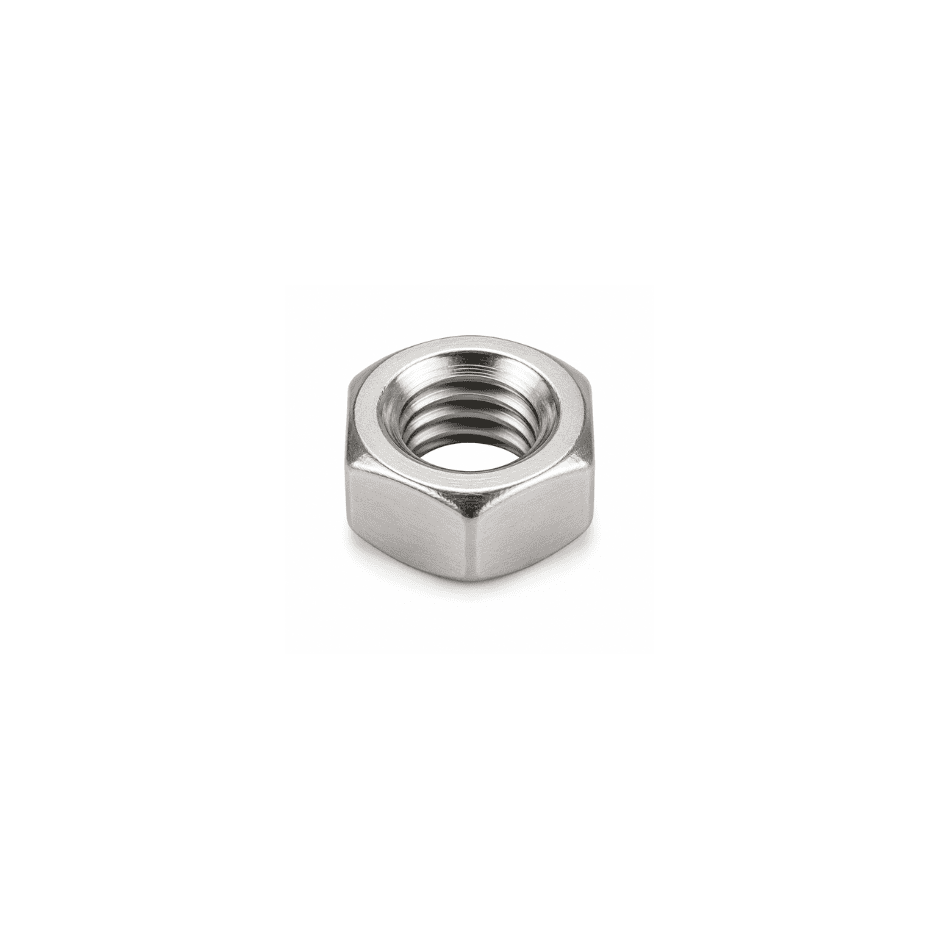
AM Steel Hex Nuts are six-sided (hexagonal) internally threaded fasteners that thread onto a matching bolt, screw, or threaded rod and are tightened with a spanner, wrench, or socket to clamp two or more parts together. Manufactured under the AM Steel brand to DIN 934 (ISO 4032), these nuts (widely known as full nuts, standard nuts, or hexagon nuts) are the most common nut in engineering and construction – the six flats providing secure, high-torque tool engagement from multiple angles, which makes them easy to drive in tight or awkward positions.
Because the hex nut is a universal mating partner for hex bolts and set screws, AM Steel hex nuts are used across virtually every fastening application – structural steel connections, machinery and equipment assembly, automotive and fabrication work, and general maintenance. They’re matched by strength class to the bolt they’re used with: steel nuts are supplied in property classes such as 8 and 10 (the higher class for high-tensile bolts), so the nut is never the weak point in the joint. Hex nuts are reusable, accept standard washers and locking devices, and are frequently paired with spring washers, nylon inserts, or thread-locking compounds where vibration resistance is needed. AM Steel hex nuts are available in carbon and high-tensile steel (zinc-plated, yellow-passivated, or hot-dip galvanized) for general and structural work, and in stainless steel (A2/304 and A4/316, the latter considered marine-grade) for outdoor, wet, and coastal environments where corrosion resistance is critical.
Whether you’re bolting structural steel, assembling machinery, fabricating equipment, or handling any general threaded connection, AM Steel hex nuts deliver the secure tool grip, matched strength, and consistent quality needed for reliable, reusable fastening. As with all AM Steel products, this hex nut is available in a full range of metric sizes (typically M3 to M36 per DIN 934, with coarse and fine thread options), in multiple grades, materials, and finishes to suit both industrial-grade and everyday fastening needs.
Key features:
- Six external flats for secure, high-torque engagement with a spanner, wrench, or socket
- Internal metric thread to mate with standard hex bolts, screws, and threaded rod
- Manufactured to DIN 934 / ISO 4032 dimensional standards
- Available in property classes 8 and 10 (steel) matched to bolt strength
- Available in carbon steel (zinc-plated, galvanized) and stainless steel (A2/304, A4/316)
- Reusable and compatible with standard washers and locking devices
- Backed by the quality assurance of AM Steel
Ideal For
AM Steel Hex Nuts are ideal for:
- Structural steel and construction connections paired with matched-grade hex bolts
- Machinery, equipment, and plant assembly requiring reliable, reusable threaded fastening
- Automotive, fabrication, and general engineering work across a wide size range
- Maintenance and repair trades needing a universal nut to mate with standard bolts and studs
- General assembly wherever components must be clamped together with a bolt-and-nut connection
Choosing the Right Hex Nut
Selecting the correct hex nut from the AM Steel range depends on several factors:
- Material – Stainless steel (A2/304 or A4/316) for outdoor, wet, or corrosion-prone applications; carbon or high-tensile steel (zinc-plated or galvanized) for general and structural work.
- Strength Class – Match the nut’s property class (e.g. class 8 or 10) to the bolt grade so the nut is never the weak point in the joint.
- Thread Size & Pitch – Choose the diameter and pitch (coarse or fine) to match the mating bolt, screw, or threaded rod exactly.
- Finish – Zinc-plated for basic indoor protection, hot-dip galvanized for outdoor durability, stainless for maximum corrosion resistance.
- Locking Requirement – For vibration-prone joints, consider a nyloc (nylon insert) nut, a spring washer, or a thread-locking compound alongside the standard hex nut.
- Compatibility – Ensure material and coating compatibility between nut and bolt to avoid galvanic corrosion or thread galling (particularly with stainless).
Strategies to Choose the Right Product
- Match the nut class to the bolt grade – Pair the property class to the bolt (e.g. class 8 nut with an 8.8 bolt) so the joint reaches its intended strength and the nut isn’t the weak link.
- Match thread size and pitch exactly – Confirm both diameter and coarse/fine pitch against the mating bolt; a mismatch will cross-thread or fail to engage properly.
- Add locking for vibration – Use a nyloc nut, spring washer, or thread locker where vibration could loosen a plain hex nut over time.
- Match material to environment – Use stainless steel (A2/304 or A4/316) for outdoor, wet, or coastal work; zinc-plated or galvanized steel for general dry or exterior construction.
- Guard against galling in stainless – When threading stainless nuts onto stainless bolts, use an anti-seize lubricant to prevent thread galling and seizing.
- Prioritize certified standards – Look for DIN 934 / ISO 4032 compliance for guaranteed dimensional and mechanical consistency.
Mechanical Properties
AM Steel Hex Nuts are manufactured to meet recognized mechanical and dimensional standards, ensuring reliability across structural, mechanical, and general assembly applications:
| Property | Specification |
|---|---|
| Material Grades | Carbon Steel, High-Tensile Steel (Property Class 8 / 10), Stainless Steel (A2/304, A4/316) |
| Governing Standard | DIN 934 / ISO 4032 (Hexagon Nuts) |
| Shape | Six-sided (hexagonal) full nut |
| Drive / Engagement | External hex flats — spanner, wrench, or socket |
| Thread Type | Internal metric thread (coarse or fine) per ISO 261 / ISO 262 |
| Size Range | M3 to M36 (metric), coarse and fine pitch |
| Corrosion Resistance | Moderate (zinc/yellow-plated steel) to high (hot-dip galvanized, A2/A4 stainless steel) |
| Common Alternate Names | Full nut, standard nut, hexagon nut, machine nut |
| Typical Applications | Structural steel, machinery, automotive, fabrication, general assembly |
| Surface Finish | Zinc-plated, yellow-passivated, hot-dip galvanized, plain or passivated stainless steel |
These mechanical ratings confirm that AM Steel hex nuts deliver secure, matched-strength fastening suited to structural, mechanical, and general assembly applications – always pair the nut’s property class to the bolt grade and match thread size and pitch for a reliable joint.
Frequently Asked Questions (FAQs)
1. What is a hex nut used for?
A hex nut is used to mate with a bolt, screw, or threaded rod and, tightened with a spanner or socket, clamp two or more components together – the most common nut across structural, mechanical, and general assembly work.
2. Why do nuts have six sides?
The six flats give a spanner or socket secure grip from multiple angles, allowing high tightening torque and easy access in tight or awkward positions – the reason the hexagon is the standard nut shape.
3. Are AM Steel hex nuts different from generic nuts?
AM Steel hex nuts are manufactured and quality-tested under the AM Steel brand, ensuring consistent thread quality, across-flats dimensions, strength class, and finish across every batch, per DIN 934 / ISO 4032.
4. What does the property class (e.g. 8, 10) mean on a nut?
The property class indicates the nut’s strength; it should be matched to the bolt grade (for example a class 8 nut with an 8.8 bolt) so the nut is never the weak point in the joint.
5. How do I match a hex nut to a bolt?
Match the diameter, the thread pitch (coarse or fine), the material, and the strength class to the bolt – all four must correspond for the nut to thread on correctly and reach the intended joint strength.
6. What sizes do hex nuts come in?
AM Steel hex nuts are available in a full range of metric sizes, typically M3 to M36, in both coarse and fine thread pitches, per DIN 934.
7. Are hex nuts corrosion-resistant?
Yes, especially AM Steel stainless steel versions (A2/304 or A4/316), which resist rust in outdoor, wet, or coastal environments; hot-dip galvanized and zinc-plated steel offer protection for general and dry conditions.
8. What’s the difference between a hex nut and a nyloc nut?
A standard hex nut relies on thread friction and correct torque to stay put, while a nyloc nut has a nylon insert that grips the bolt thread to resist loosening under vibration – use a nyloc or a locking device where vibration is a concern.
9. Can hex nuts be reused?
Yes, standard hex nuts can generally be removed and reused provided the threads are undamaged and clean; nuts with damaged, stretched, or corroded threads should be replaced.
10. What’s the difference between coarse and fine thread hex nuts?
Coarse thread is more tolerant of damage and faster to fit, suiting general use, while fine thread offers slightly higher tensile strength and finer adjustment – the nut must match the pitch of its mating bolt.
11. Why do my stainless nuts seize on stainless bolts?
Stainless-on-stainless threads are prone to galling – friction welding the threads as they’re tightened; applying an anti-seize lubricant before assembly prevents the nut and bolt from seizing together.
12. Should I use a washer with a hex nut?
A washer is often recommended to spread the clamping load, protect the surface, and (as a spring washer) help resist loosening; the choice depends on the material being fastened and the vibration environment.
13. What’s the difference between A2 and A4 stainless steel hex nuts?
A2 (304) stainless offers good general corrosion resistance for most indoor and outdoor use, while A4 (316), considered marine-grade, provides superior resistance to chlorides and coastal or chemical environments.
Reviews
There are no reviews yet.