


Description
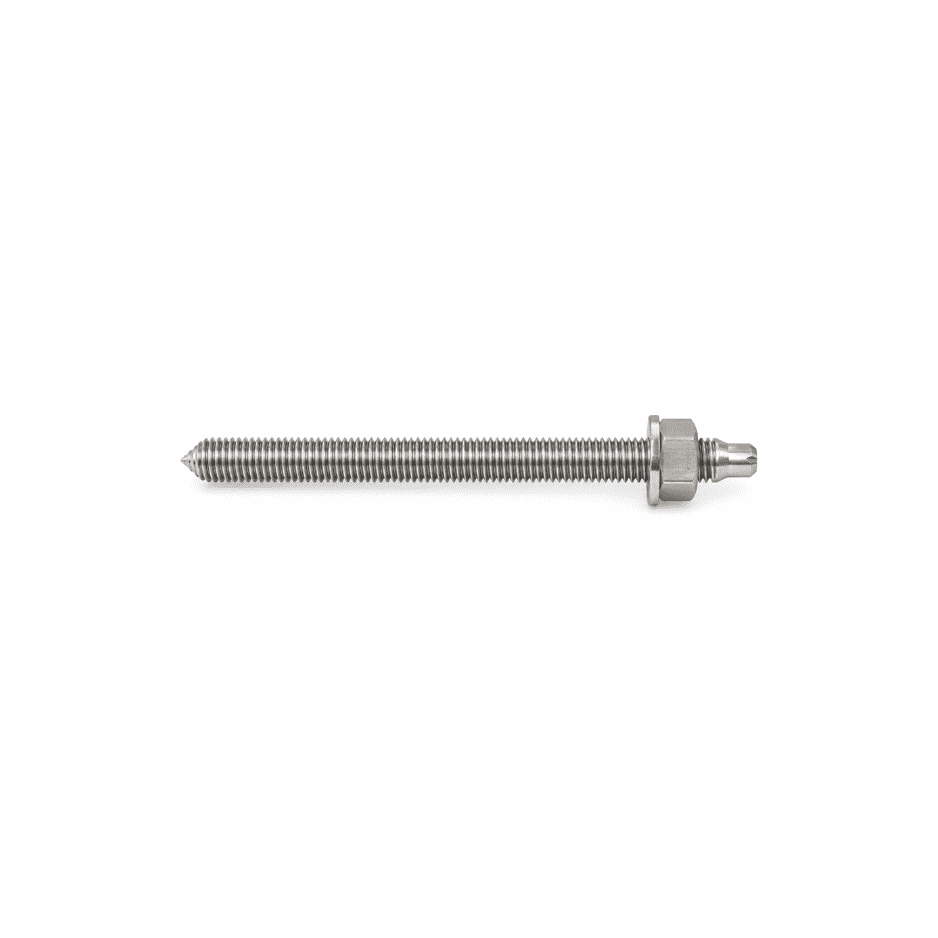
AM Steel Chemical Anchor Bolts are threaded steel studs and rods engineered to be set into a pre-drilled, cleaned hole using an injectable chemical resin – typically a polyester, vinylester, or epoxy compound – which cures to bond the bolt to the walls of the hole and transfer load into the base material. Manufactured under the AM Steel brand, these bolts (widely known as resin anchor studs, bonded anchors, or injection anchor studs) create a high-strength, stress-free fixing because, unlike mechanical anchors, they generate no expansion forces in the base material – making them ideal for close-to-edge fixings, closely spaced anchors, and high-load structural connections.
Because the resin fills the annular gap around the stud and keys into the drilled hole, AM Steel chemical anchor bolts deliver very high pull-out and shear values in solid concrete and masonry, and – when used with a mesh sleeve and appropriate resin – can also anchor into hollow brick and block where expansion anchors would fail. They’re the go-to solution for structural steelwork, column base plates, heavy machinery, safety-critical handrails and balustrades, rebar starter bars, and anchoring into cracked or seismic-rated concrete when matched with an approved resin system. The threaded stud accepts standard nuts and washers, and the fixing can be loaded once the resin has fully cured (cure time varying with resin type and temperature). AM Steel chemical anchor bolts are available in high-tensile steel (grade 5.8 or 8.8, zinc-plated or hot-dip galvanized) for general and heavy structural work, and in stainless steel (A2/304 and A4/316, the latter considered marine-grade) for outdoor, wet, and coastal environments where corrosion resistance is critical.
Whether you’re fixing structural steel and base plates, anchoring heavy machinery, installing safety-critical handrails, setting rebar starter bars, or handling any high-load or close-to-edge fixing, AM Steel chemical anchor bolts deliver the exceptional holding power, stress-free anchorage, and consistent quality needed for demanding structural connections. As with all AM Steel products, this chemical anchor bolt is available in a range of metric sizes (typically M8 to M30, with lengths and embedment depths to suit the resin system and load), in multiple grades, materials, and finishes to suit both industrial-grade and everyday fastening needs.
Key features:
- Threaded stud bonded into the hole with injectable resin for an exceptionally strong, stress-free fixing
- Generates no expansion force, allowing fixings close to edges and at close spacings
- Very high pull-out and shear performance in solid concrete and masonry
- Can anchor into hollow brick and block when used with a mesh sleeve and appropriate resin
- Accepts standard nuts and washers; loadable once the resin has fully cured
- Available in high-tensile steel (grade 5.8 / 8.8) and stainless steel (A2/304, A4/316)
- Backed by the quality assurance of AM Steel
Ideal For
AM Steel Chemical Anchor Bolts are ideal for:
- Structural steel and base-plate fixing where high pull-out and shear values are required
- Heavy machinery and equipment anchoring subject to dynamic or vibration loads
- Safety-critical handrails, balustrades, and barriers demanding a high-integrity fixing
- Close-to-edge and closely spaced fixings where expansion anchors would risk cracking the concrete
- Rebar starter bars, post-installed reinforcement, and anchoring into hollow or lower-strength masonry (with a sleeve)
Choosing the Right Chemical Anchor Bolt
Selecting the correct chemical anchor bolt from the AM Steel range depends on several factors:
- Material – Stainless steel (A2/304 or A4/316) for outdoor, wet, or corrosion-prone applications; high-tensile steel (grade 5.8 or 8.8) for general and heavy structural work.
- Resin Type – Match the stud to an appropriate resin (polyester, vinylester, or epoxy) for the base material, load, temperature, and any cracked-concrete or seismic requirement.
- Base Material – Confirm whether the base is solid concrete/masonry or hollow; hollow materials require a mesh sleeve with the resin to contain and key the bond.
- Size & Embedment – Choose the stud diameter and embedment depth to achieve the required load, following the resin system’s load and embedment tables.
- Load & Edge Distance – Size for the tension and shear load; a key advantage is performance close to edges, but still observe the system’s minimum edge and spacing values.
- Cure Conditions – Account for base-material temperature, which affects gel and cure times before the fixing can be loaded.
Strategies to Choose the Right Product
- Choose chemical fixing for high loads and close edges – When loads are high, spacings are tight, or fixings sit near an edge, the stress-free resin bond outperforms expansion anchors that could crack the concrete.
- Match resin to base and conditions – Select the resin type for the base material, load, temperature, and any cracked-concrete or seismic approval requirement, and follow its embedment tables.
- Clean the hole thoroughly – Bond strength depends on a clean hole; brush and blow out all dust and debris before injecting resin, as dust is the most common cause of failure.
- Use a sleeve for hollow materials – In hollow brick or block, fit the specified mesh sleeve so the resin forms a keyed plug rather than draining into the voids.
- Match material to environment – Use stainless steel (A2/304 or A4/316) for outdoor, wet, or coastal work; zinc-plated or galvanized high-tensile steel for general dry construction.
- Respect full cure time before loading – Do not load the fixing until the resin has fully cured for the ambient temperature, or holding values will be compromised.
Mechanical Properties
AM Steel Chemical Anchor Bolts are manufactured to meet recognized mechanical and dimensional standards, ensuring reliability across structural, heavy-machinery, and safety-critical anchoring applications:
| Property | Specification |
|---|---|
| Material Grades | High-Tensile Steel (Grade 5.8 / 8.8), Stainless Steel (A2/304, A4/316) |
| Anchor Type | Resin-bonded (chemical) anchor stud / threaded rod |
| Bonding Method | Injectable resin (polyester, vinylester, or epoxy) filling the drilled hole |
| Base Materials | Solid concrete, solid masonry; hollow brick/block (with mesh sleeve) |
| Size Range | M8 to M30 (metric threaded stud), embedment to suit resin system and load |
| Load Performance | High pull-out and shear; stress-free (no expansion force in base material) |
| Corrosion Resistance | Moderate (zinc-plated steel) to high (hot-dip galvanized, A2/A4 stainless steel) |
| Common Alternate Names | Resin anchor stud, bonded anchor, injection anchor stud, chemical stud |
| Typical Applications | Structural steel, base plates, machinery, handrails, rebar, close-to-edge fixings |
| Surface Finish | Zinc-plated, hot-dip galvanized, plain or passivated stainless steel |
These mechanical ratings confirm that AM Steel chemical anchor bolts deliver exceptional, stress-free holding power suited to structural, heavy-machinery, and safety-critical applications – clean the hole thoroughly, match the resin to the base and load, and allow full cure before loading for the best performance.
Frequently Asked Questions (FAQs)
1. What is a chemical anchor bolt used for?
It’s used for high-load and safety-critical fixings – structural steel, base plates, heavy machinery, handrails, and rebar – where a threaded stud is bonded into a drilled hole with resin to create an exceptionally strong anchorage in concrete or masonry.
2. How does a chemical anchor work?
Resin is injected into a cleaned, pre-drilled hole and the threaded stud is inserted; the resin fills the gap around the stud and keys into the hole, curing to bond the bolt to the base material and transfer load without any expansion force.
3. What’s the advantage of a chemical anchor over an expansion anchor?
A chemical anchor generates no expansion stress in the base material, so it can be fixed closer to edges and at tighter spacings, and it typically delivers higher pull-out and shear values – ideal for high-load and safety-critical work.
4. Are AM Steel chemical anchor bolts different from generic resin studs?
AM Steel chemical anchor bolts are manufactured and quality-tested under the AM Steel brand, ensuring consistent thread quality, grade, dimensions, and finish across every batch for reliable bonded performance.
5. What base materials can chemical anchors be used in?
They work in solid concrete and solid masonry, and – with a mesh sleeve and appropriate resin – can also anchor into hollow brick and block where expansion anchors would fail.
6. What resin do I use with a chemical anchor bolt?
An injectable polyester, vinylester, or epoxy resin is used, selected to suit the base material, load, temperature, and any cracked-concrete or seismic requirement – always follow the resin system’s guidance.
7. Why is cleaning the hole so important?
Bond strength depends on the resin gripping clean hole walls; dust and debris are the most common cause of chemical anchor failure, so the hole must be brushed and blown clean before injecting resin.
8. How long before I can load a chemical anchor?
The fixing can only be loaded once the resin has fully cured, and cure time varies with resin type and base-material temperature – colder conditions extend the time, so always respect the specified full cure period.
9. What sizes do chemical anchor bolts come in?
AM Steel chemical anchor bolts are available in a range of sizes, typically M8 to M30 in metric threaded stud, with embedment depths chosen to suit the resin system and required load.
10. Are chemical anchor bolts corrosion-resistant?
Yes, especially AM Steel stainless steel versions (A2/304 or A4/316), which resist rust in outdoor, wet, or coastal environments; hot-dip galvanized and zinc-plated steel offer protection for general and dry conditions.
11. Can chemical anchors be used near the edge of concrete?
Yes – because they exert no expansion force, chemical anchors are especially suited to close-to-edge and closely spaced fixings that would risk cracking the concrete with an expansion anchor, though minimum edge and spacing values still apply.
12. Can chemical anchor bolts be used for rebar?
Yes – chemical anchoring is widely used to set rebar starter bars and post-installed reinforcement into existing concrete, using an appropriate resin system and embedment depth for the connection.
13. What’s the difference between A2 and A4 stainless steel chemical anchor bolts?
A2 (304) stainless offers good general corrosion resistance for most outdoor use, while A4 (316), considered marine-grade, provides superior resistance to chlorides and coastal or chemical environments.
Reviews
There are no reviews yet.