


Description
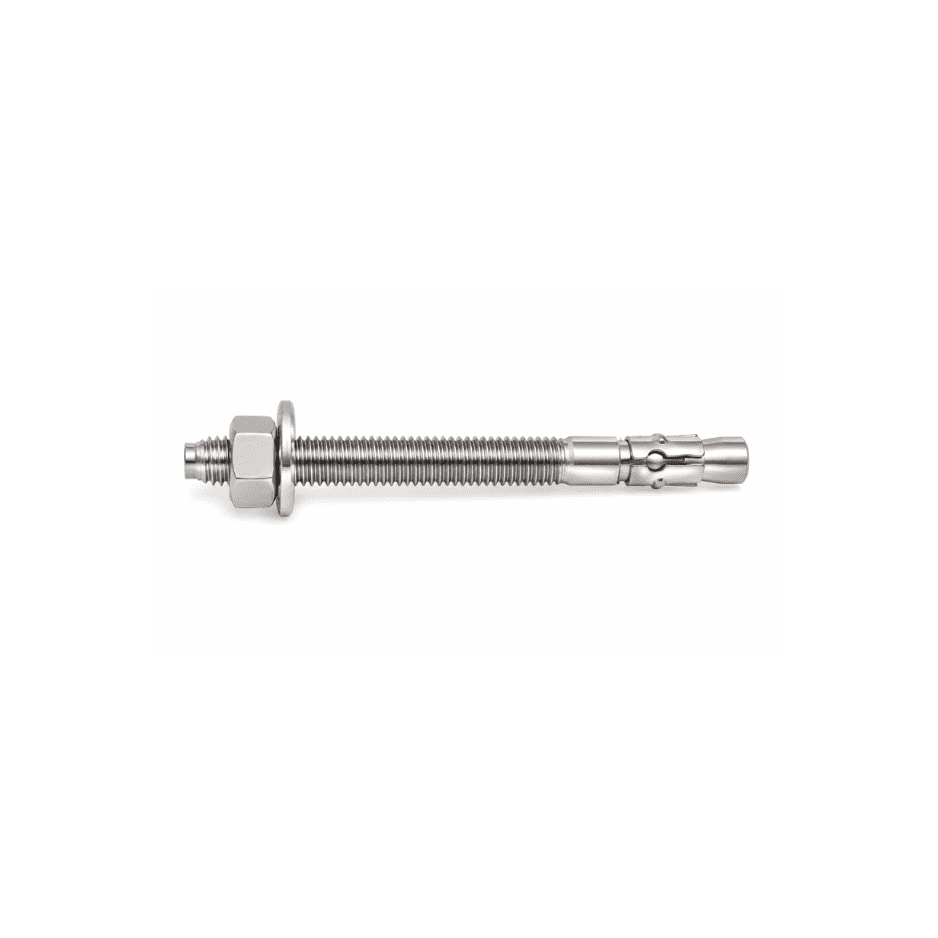
AM Steel Wedge Anchor Fasteners are mechanical expansion anchors designed for heavy-duty fastening directly into concrete and masonry. Manufactured under the AM Steel brand, each anchor consists of a threaded stud with a tapered mandrel at the embedded end, wrapped by a two-segment expansion clip that is free to rotate before installation. The anchor is set into a predrilled hole and, as torque is applied to the hex nut, the mandrel is drawn upward into the expansion clip – the clip’s segments press outward against the sides of the hole, creating a strong mechanical grip that increases (rather than loosens) under tensile load, a characteristic known as “follow-up expansion.”
AM Steel wedge anchors are evaluated for compliance with the design criteria of ACI 318 (Chapter 17 or Appendix D, depending on code edition), and installations following ICC-ES evaluation reports document performance in normal-weight and lightweight concrete with specified compressive strengths typically ranging from 2,500 psi to 8,500 psi (17.2 MPa to 58.6 MPa), covering static, wind, and seismic tension and shear loading. Due to their high resistance to vibratory loads, wedge anchors are widely specified for installing machinery, handrails, dock bumpers, storage racks, and structural connections such as beam and column anchorage.
AM Steel wedge anchors are manufactured from carbon steel (with zinc electroplating per ASTM B633, SC1, or mechanical galvanizing per ASTM B695 for added corrosion resistance) and stainless steel (AISI 304 or 316, the latter suited to exterior, damp, or corrosive environments), with expansion clips, hex nuts (ASTM A563), and washers matched to the anchor’s rated material and diameter. As with all AM Steel products, this wedge anchor is available in a range of diameters and lengths to suit both structural and general-purpose concrete anchoring needs – always confirm the correct anchor size, embedment depth, and edge/spacing requirements against the manufacturer’s published installation instructions and the governing design code before use.
Key features:
- Tapered mandrel and expansion clip design creates a mechanical grip that increases under tensile load
- Evaluated for compliance with ACI 318 design criteria (Chapter 17 / Appendix D)
- Suitable for static, wind, and seismic tension and shear loading in cracked and uncracked concrete
- Available in zinc-plated or mechanically galvanized carbon steel and stainless steel (304, 316)
- Nominal drill bit size matches the anchor diameter for straightforward installation
- Backed by the quality assurance of AM Steel
Ideal For
AM Steel Wedge Anchor Fasteners are ideal for:
- Structural steel contractors anchoring beam and column base plates to concrete foundations
- Machinery and equipment installers securing heavy machinery, motors, and industrial equipment to concrete floors
- Facilities and safety teams installing handrails, guardrails, and safety-related attachments
- Warehouse and storage system installers anchoring storage racks and dock bumpers subject to vibratory loads
- General construction contractors requiring a reliable, code-recognized concrete anchor for static, wind, or seismic loading
Choosing the Right Wedge Anchor Fastener
Selecting the correct wedge anchor from the AM Steel range depends on several factors:
- Concrete Condition – Confirm whether the application involves cracked or uncracked concrete, since anchor load ratings differ between the two per ACI 318 and the applicable ICC-ES evaluation report.
- Material – Stainless steel (304 or 316) for exterior, damp, or corrosive environments; zinc-plated or mechanically galvanized carbon steel for standard interior or low-corrosion applications.
- Diameter and Embedment Depth – Match anchor diameter and embedment depth to the calculated tension and shear loads per ACI 318 design criteria and the manufacturer’s published tables.
- Edge Distance and Spacing – Confirm the anchor’s required minimum edge distance and spacing are met at the installation location to achieve rated capacity.
- Seismic Design Category – For projects in higher seismic design categories, confirm the specific anchor and diameter are evaluated and approved for that use.
- Concrete Compressive Strength – Verify the concrete’s specified compressive strength (f’c) falls within the anchor’s evaluated range, typically 2,500 psi to 8,500 psi.
Strategies to Choose the Right Product
- Follow the ICC-ES evaluation report and ACI 318, not general assumptions – Always design and install wedge anchors per the manufacturer’s specific evaluation report and the applicable ACI 318 provisions rather than general concrete anchor “rules of thumb.”
- Match material to environment – Use stainless steel (304 or 316) for exterior, damp, or corrosive environments; zinc-plated or galvanized carbon steel for standard interior use.
- Confirm cracked vs. uncracked concrete design values – Load capacities differ meaningfully between cracked and uncracked concrete conditions, so use the correct design table for your specific application.
- Verify edge distance and spacing before installation – Anchors installed too close to an edge or to each other suffer reduced capacity; confirm minimum values from the manufacturer’s tables.
- Use special inspection where required – Structural and life-safety applications often require special inspection during installation per the applicable building code; plan for this in your project.
- Buy in matched sets – Purchase wedge anchors with the manufacturer-specified nuts and washers to maintain the anchor’s tested and rated performance.
Mechanical Properties
AM Steel Wedge Anchor Fasteners are manufactured and evaluated to recognized structural and material standards, ensuring reliability across structural, machinery, and general concrete anchoring applications:
| Property | Specification |
|---|---|
| Material Grades | Carbon Steel (zinc-plated or mechanically galvanized), Stainless Steel (AISI 304, 316) |
| Governing Design Standard | ACI 318 (Chapter 17 or Appendix D, per code edition); ICC-ES evaluation reports |
| Carbon Steel Coating | Zinc electroplating per ASTM B633 SC1, or mechanical galvanizing per ASTM B695 Class 55/65 |
| Expansion Clip Material | Carbon steel (ASTM A568) or stainless steel (ASTM A240, Grade 316), depending on anchor size |
| Hex Nut Standard | ASTM A563, Grade A (carbon steel anchors) |
| Washer Standard | ASTM F844 or ANSI/ASME B18.22.1 |
| Concrete Compressive Strength Range | Typically 2,500 psi to 8,500 psi (17.2 MPa to 58.6 MPa), per evaluation report |
| Load Types Evaluated | Static, wind, and seismic tension and shear loads; cracked and uncracked concrete |
| Drill Bit Sizing | Nominal drill bit diameter equals the nominal anchor diameter |
| Corrosion Resistance | Moderate (zinc-plated carbon steel) to high (316 stainless steel) |
These specifications confirm that AM Steel wedge anchors are engineered and evaluated for demanding structural and machinery anchoring applications – always confirm the specific anchor’s current ICC-ES evaluation report and design values before use in structural or life-safety applications.
Frequently Asked Questions (FAQs)
1. What is a wedge anchor fastener used for? A wedge anchor is used to create a strong, mechanical anchor point directly into concrete or masonry, commonly for structural connections, machinery installation, handrails, storage racks, and other heavy-duty fastening applications.
2. How does a wedge anchor work? As torque is applied to the anchor’s hex nut, a tapered mandrel is drawn into a surrounding expansion clip, forcing the clip’s segments outward against the sides of the predrilled hole to create a secure mechanical grip that increases under tensile load.
3. Are AM Steel wedge anchors different from generic wedge anchors? AM Steel wedge anchors are manufactured and quality-tested under the AM Steel brand, with material, coating, and dimensional consistency across every batch, evaluated in accordance with recognized ICC-ES and ACI 318 criteria.
4. Can wedge anchors be used in cracked concrete? Many wedge anchors are evaluated and rated for use in both cracked and uncracked concrete, but this depends on the specific anchor’s ICC-ES evaluation report – always confirm which condition applies to your specific anchor and project.
5. Are wedge anchors corrosion-resistant? Yes, especially AM Steel stainless steel wedge anchors (304 or 316), which resist rust in exterior, damp, or corrosive environments; zinc-plated or mechanically galvanized carbon steel anchors offer moderate protection for standard interior use.
6. What sizes do wedge anchors come in? AM Steel wedge anchors are available in a range of diameters and lengths suited to different load and embedment requirements – always select size based on the manufacturer’s design tables for the specific application’s tension and shear loads.
7. What size drill bit do I need for a wedge anchor? The nominal drill bit diameter should match the nominal diameter of the wedge anchor itself, per standard installation requirements.
8. Are wedge anchors suitable for seismic applications? Many wedge anchors are evaluated for use in specific Seismic Design Categories, but this varies by anchor size and manufacturer evaluation report – always confirm the anchor is approved for the seismic design category applicable to your project.
9. What concrete strength is required for a wedge anchor? Most wedge anchors are evaluated for use in concrete with a specified compressive strength (f’c) typically ranging from 2,500 psi to 8,500 psi (17.2 MPa to 58.6 MPa) – always verify against the specific anchor’s published data.
10. Do wedge anchors require special inspection during installation? For many structural and life-safety applications, periodic special inspection is required per the applicable building code, verifying anchor type, dimensions, concrete type and strength, hole cleanliness, edge distance, spacing, and installation torque.
11. Can wedge anchors be reused? Wedge anchors are generally intended as permanent fasteners once set into concrete; removal and reinstallation is not recommended for critical structural applications, since the expansion mechanism and surrounding concrete may be compromised.
12. What’s the difference between 304 and 316 stainless steel wedge anchors? 304 stainless steel offers good general corrosion resistance for most exterior and damp environments, while 316 stainless steel provides superior resistance to chlorides and marine or highly corrosive environments.
13. Do wedge anchors need to be installed with the manufacturer’s specific nuts and washers? Yes – the tested and rated performance of a wedge anchor assumes the use of the specific nut and washer standards documented in its evaluation report (such as ASTM A563 nuts and ASTM F844 washers); substituting non-matching hardware can affect rated capacity.
Reviews
There are no reviews yet.