


Description
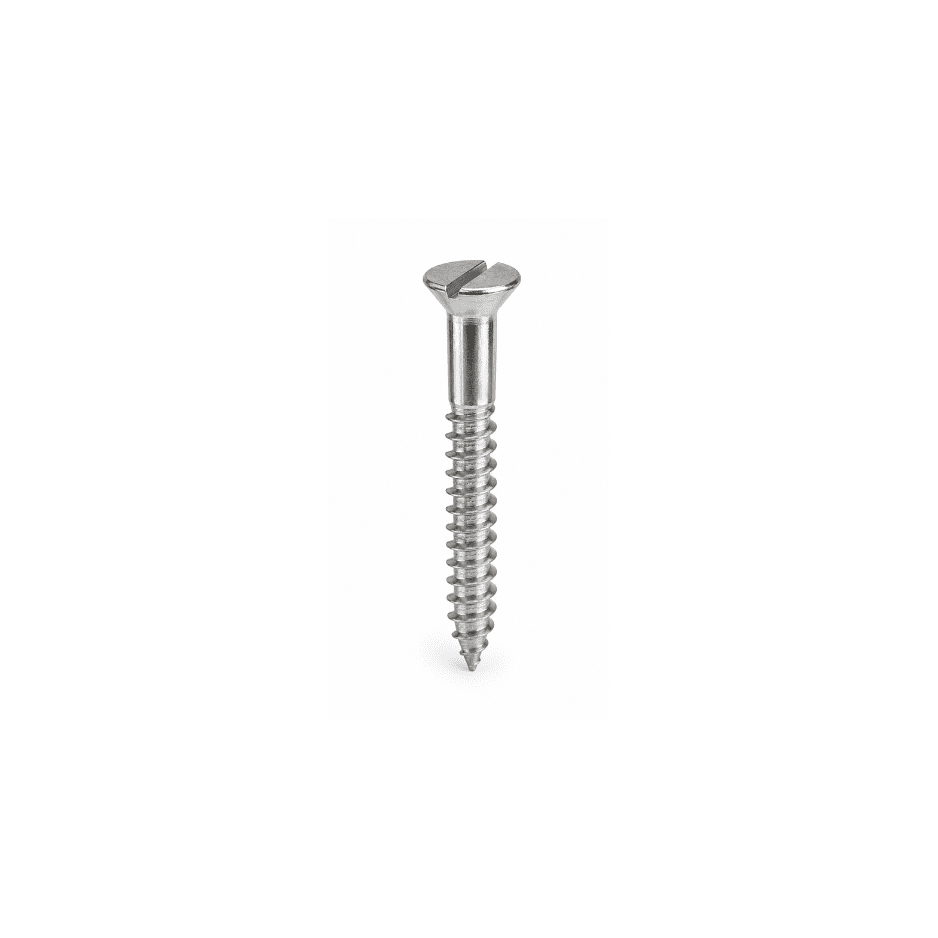
AM Steel Wood Screws are versatile, everyday fasteners featuring a coarse, single-lead thread and a sharp gimlet (pointed) tip that cuts directly into timber, drawing two pieces of wood tightly together without the need for a nut. Manufactured under the AM Steel brand to DIN 7997 (countersunk) and DIN 7996 (round head) standards, these screws are the most common fastener in joinery, cabinetry, and general carpentry – driven with a screwdriver or bit rather than a wrench, and available in a wide range of head styles, drives, and finishes.
Because the aggressive thread grips softwood and hardwood alike, AM Steel wood screws are well suited to furniture assembly, cabinet and shelf fixing, decking, fencing, door and window hardware, and countless everyday fastening jobs. They’re offered with a countersunk head that sits flush for a clean finish, a round head that clamps over thin materials and fittings, or a raised (oval) head for a neat semi-decorative look – each available in slotted, Pozidriv, Phillips, or star (Torx) drive to suit the tool and torque preferred. AM Steel wood screws are available in carbon steel (zinc-plated, yellow-passivated, or hot-dip galvanized) for general and dry-condition work, and in stainless steel (A2/304 and A4/316, the latter considered marine-grade) for outdoor, decking, and coastal environments where corrosion resistance is critical.
Whether you’re building furniture, fixing cabinets and shelving, laying decking, hanging doors, or handling any general carpentry task, AM Steel wood screws deliver the clean grip, consistent thread quality, and reliable holding power needed for wood-to-wood and fitting-to-wood connections. As with all AM Steel products, this wood screw is available in a range of metric gauges and lengths (typically 3.0mm to 6.0mm diameter, lengths from 12mm to 100mm), in multiple head styles, materials, and finishes to suit both trade-grade and everyday fastening needs.
Key features:
- Coarse, single-lead thread with a sharp gimlet point that self-starts and bites directly into timber
- Available in countersunk, round, and raised (oval) head styles for flush, clamping, or semi-decorative finishes
- Offered in slotted, Pozidriv, Phillips, and star (Torx) drives to suit any tool
- Manufactured to DIN 7997 / DIN 7996 dimensional standards
- Available in carbon steel (zinc-plated, yellow-passivated, hot-dip galvanized) and stainless steel (A2/304, A4/316)
- Backed by the quality assurance of AM Steel
Ideal For
AM Steel Wood Screws are ideal for:
- Furniture makers and cabinetmakers assembling carcasses, drawers, shelving, and fittings with a clean, flush finish
- Carpenters and joiners handling doors, windows, skirting, architrave, and general timber work
- Deck and fence builders securing boards, rails, and posts in outdoor conditions (with stainless or galvanized finishes)
- Hardware and fitting installers fixing hinges, brackets, latches, and mounts to timber
- DIY and general maintenance users needing a reliable everyday screw for wood-to-wood and fitting-to-wood connections
Choosing the Right Wood Screw
Selecting the correct wood screw from the AM Steel range depends on several factors:
- Material – Stainless steel (A2/304 or A4/316) for outdoor, marine, or treated-timber applications; carbon steel (zinc-plated or galvanized) for general indoor or dry-condition work.
- Head Style – Countersunk for a flush finish, round head to clamp over thin materials or fittings, raised (oval) head for a neat semi-decorative appearance.
- Drive Type – Choose slotted, Pozidriv, Phillips, or star (Torx) to match your driver and the torque needed; star drives resist cam-out best for power driving.
- Size & Length – Pick a gauge and length that gives adequate thread engagement into the base timber, factoring in the thickness of the material being fastened through.
- Pilot Hole Requirement – Pre-drill a pilot hole in hardwood or near edges to prevent splitting and ease driving.
- Treated Lumber Compatibility – Use hot-dip galvanized or stainless steel screws with chemically treated timber, since standard zinc coatings can corrode faster in contact with certain wood preservatives.
Strategies to Choose the Right Product
- Pre-drill in hardwood and near edges – A pilot hole sized to the screw’s root diameter reduces splitting and makes driving significantly easier.
- Match material to environment – Use stainless steel (A2/304 or A4/316) for outdoor decking, marine, or treated timber; carbon steel for general dry, indoor work.
- Pick the drive for the tool – Choose star (Torx) or Pozidriv for power-driving to reduce cam-out and bit slip; slotted suits light hand-driven work.
- Check finish for treated lumber – Chemically treated wood (e.g., ACQ-treated) requires hot-dip galvanized or stainless steel screws to prevent accelerated corrosion.
- Prioritize certified standards – Look for DIN 7997 / DIN 7996 compliance for guaranteed dimensional and thread consistency.
- Consider bulk vs. individual packs – Bulk packs suit decking, framing, and production joinery; smaller packs suit repairs or single jobs.
Mechanical Properties
AM Steel Wood Screws are manufactured to meet recognized mechanical and dimensional standards, ensuring reliability across joinery, cabinetry, and general carpentry applications:
| Property | Specification |
|---|---|
| Material Grades | Carbon Steel, Stainless Steel (A2/304, A4/316) |
| Governing Standard | DIN 7997 (countersunk), DIN 7996 (round head), DIN 7995 (raised head) |
| Head Styles | Countersunk (flat), round, raised (oval) |
| Drive Types | Slotted, Pozidriv, Phillips, star (Torx) |
| Thread Type | Coarse, single-lead wood-screw thread with sharp gimlet point |
| Size Range | 3.0mm to 6.0mm diameter (approx. gauge 4–14), lengths from 12mm to 100mm |
| Corrosion Resistance | Moderate (zinc/yellow-plated steel) to high (hot-dip galvanized, A2/A4 stainless steel) |
| Common Alternate Names | Timber screw, general-purpose screw, countersunk wood screw |
| Typical Applications | Joinery, cabinetry, furniture, decking, fencing, hardware fixing |
| Surface Finish | Zinc-plated, yellow-passivated, hot-dip galvanized (HDG), plain or passivated stainless steel |
These mechanical ratings confirm that AM Steel wood screws deliver dependable wood-holding performance suited to joinery, cabinetry, and general carpentry applications – pre-drill a pilot hole in hardwood or near edges for best results and to reduce splitting risk.
Frequently Asked Questions (FAQs)
1. What is a wood screw used for?
A wood screw is used to fasten timber connections – furniture, cabinetry, decking, and general carpentry — biting directly into wood with its coarse thread and drawing two pieces tightly together, driven with a screwdriver or bit.
2. What’s the difference between a wood screw and a coach screw?
A wood screw has a slotted or recessed head driven by a screwdriver, while a coach screw (lag screw) has an external hex head driven by a wrench or socket for much heavier structural timber connections.
3. Are AM Steel wood screws different from generic wood screws?
AM Steel wood screws are manufactured and quality-tested under the AM Steel brand, ensuring consistent thread quality, head dimensions, and finish across every batch, per DIN 7997 / DIN 7996.
4. Do I need to pre-drill a hole for a wood screw?
It’s recommended in hardwood or near the edge of timber – a pilot hole sized to the screw’s root diameter reduces the risk of splitting and makes driving significantly easier; softwood often accepts screws without pre-drilling.
5. Are wood screws corrosion-resistant?
Yes, especially AM Steel stainless steel wood screws (A2/304 or A4/316), which resist rust in outdoor, marine, or treated-timber applications; hot-dip galvanized carbon steel also offers strong outdoor protection.
6. What sizes do wood screws come in?
AM Steel wood screws are available in a range of sizes, typically 3.0mm to 6.0mm in diameter (roughly gauge 4 to 14), with lengths from 12mm to 100mm.
7. What’s the difference between countersunk, round, and raised head wood screws?
Countersunk heads sit flush with the surface for a clean finish, round heads sit proud and clamp over thin materials or fittings, and raised (oval) heads offer a neat semi-decorative appearance.
8. What drive types are wood screws available in?
AM Steel wood screws come in slotted, Pozidriv, Phillips, and star (Torx) drives – star and Pozidriv resist cam-out best for power driving, while slotted suits light hand-driven work.
9. Can wood screws be used with treated lumber?
Yes, but hot-dip galvanized or stainless steel wood screws are recommended for chemically treated timber, since standard zinc coatings can corrode faster in contact with certain wood preservatives.
10. What’s the difference between zinc-plated and stainless steel wood screws?
Zinc-plated wood screws offer basic corrosion resistance at a lower cost for indoor and dry use, while stainless steel (A2/304 or A4/316) provides superior long-term durability and rust resistance in outdoor, marine, or treated-lumber applications.
11. What’s the difference between a wood screw and a chipboard screw?
A traditional wood screw often has a partially threaded shank suited to joining solid timber, while a chipboard screw is usually fully threaded for maximum grip in particleboard and MDF – though many modern wood screws are also fully threaded for general use.
12. Can wood screws be reused?
Yes, in general carpentry they can often be removed and reinstalled, provided the original hole hasn’t been stripped; for a loose hole, a slightly larger-gauge screw or a plugged and re-drilled hole restores grip.
13. What’s the difference between A2 and A4 stainless steel wood screws?
A2 (304) stainless offers good general corrosion resistance for most outdoor use, while A4 (316), considered marine-grade, provides superior resistance to chlorides and coastal environments.
Reviews
There are no reviews yet.