


Description
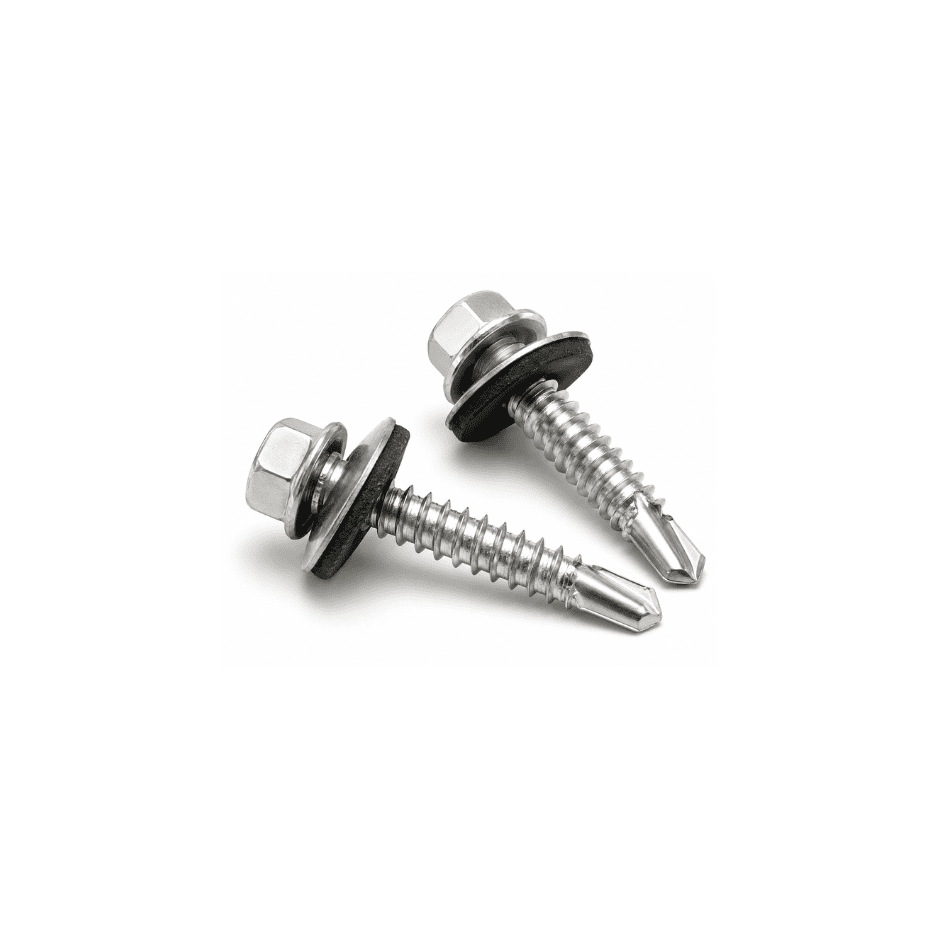
AM Steel Hex Head Self Drilling Screws combine an external hex head – driven with a socket or nut-driver rather than a screwdriver – with an integral drill-point tip that bores its own hole and taps its own thread in one continuous action, eliminating the separate drill-and-tap step entirely. Manufactured under the AM Steel brand to DIN 7504 K, these fasteners (widely known as Tek screws or self-drillers) are the go-to fixing for fast, high-volume metal fastening where a pre-drilled pilot hole would slow production and reduce accuracy.
Because the drill point cuts through steel before the thread engages, AM Steel hex head self drilling screws are well suited to metal-to-metal fixing, steel framing, roofing and cladding, purlins, decking, HVAC ductwork, and general structural sheet-metal work. The external hex head allows high driving torque and secure socket engagement – ideal for power driving with an impact or nut-runner – while the wide hex bearing surface spreads load firmly against the sheet. Self-drilling screws are specified by drill-point capacity (point sizes such as No. 2, 3, or 5), each rated for a maximum total metal thickness it can drill through, so the point must be matched to the combined gauge of the steel being fastened. Many are supplied with a bonded EPDM sealing washer for weatherproof roofing and cladding fixings. AM Steel hex head self drilling screws are available in case-hardened carbon steel (zinc-plated, with optional bonded washer) for general steel fixing, and in bi-metal or stainless steel (A2/304 and A4/316, the latter considered marine-grade) for outdoor, roofing, and coastal environments where corrosion resistance is critical.
Whether you’re fixing steel roofing and cladding, assembling light steel framing, securing HVAC ductwork, or handling any metal-to-metal connection that demands fast, one-step installation, AM Steel hex head self drilling screws deliver the drill-and-fasten speed, high driving torque, and consistent quality needed for sheet and structural steel connections. As with all AM Steel products, this self drilling screw is available in a range of sizes (typically No. 8 to No. 14 / approx. 4.2mm to 6.3mm diameter, lengths from 13mm to 100mm), in multiple drill-point capacities, materials, and finishes to suit both industrial-grade and everyday fastening needs.
Key features:
- Integral drill-point tip that drills its own hole and forms its own thread in one action — no pilot hole needed
- External hex head for high-torque driving with a socket, nut-driver, or impact driver
- Manufactured to DIN 7504 K dimensional standards
- Drill-point capacities (e.g. No. 2, 3, 5) matched to total metal thickness for reliable drilling
- Optional bonded EPDM sealing washer for weatherproof roofing and cladding fixings
- Available in zinc-plated carbon steel, bi-metal, and stainless steel (A2/304, A4/316)
- Backed by the quality assurance of AM Steel
Ideal For
AM Steel Hex Head Self Drilling Screws are ideal for:
- Roofing and cladding installers fixing steel sheet to purlins and rails, often with a bonded sealing washer for weatherproofing
- Steel framing and drywall-track fabricators making fast metal-to-metal connections in light structural steel
- HVAC and ductwork installers securing sheet, flanges, and fittings without pre-drilling
- Fabricators and metalworkers needing high-volume, one-step fixing into sheet and structural steel
- Maintenance and general trades requiring quick, reliable metal fastening driven by socket or impact tool
Choosing the Right Hex Head Self Drilling Screw
Selecting the correct hex head self drilling screw from the AM Steel range depends on several factors:
- Material – Stainless steel (A2/304 or A4/316) or bi-metal for outdoor, roofing, and coastal applications; zinc-plated carbon steel for general indoor and dry metal fixing.
- Drill-Point Capacity – Match the point number (e.g. No. 2, 3, 5) to the total combined thickness of steel being fastened; too small a point won’t drill through, too large wastes drilling travel.
- Size & Length – Choose a diameter and length that fully penetrates and grips the base steel while leaving adequate thread engagement beyond the fastened material.
- Sealing Requirement – For roofing, cladding, and outdoor sheet, choose a version with a bonded EPDM washer to seal the fixing against water ingress.
- Head Clearance – Ensure clearance for a socket or nut-driver to fully engage and tighten the external hex head.
- Corrosion Environment – For coastal, wet, or treated-steel exposure, prioritize stainless or bi-metal to resist rust and galvanic issues.
Strategies to Choose the Right Product
- Match the drill point to the steel thickness – The point number defines the maximum metal thickness the screw can drill; matching it correctly is the single most important factor for reliable self-drilling.
- Use a bonded washer for weatherproofing – For roofing and cladding, choose a bonded EPDM sealing washer version to prevent water ingress at every fixing point.
- Match material to environment – Use stainless steel (A2/304 or A4/316) or bi-metal for outdoor, roofing, and coastal work; zinc-plated carbon steel for general dry, indoor fixing.
- Drive at the right speed – Use steady, firm pressure and an appropriate driver speed so the point drills fully before the thread engages; excessive speed can burn the point or strip the thread.
- Prioritize certified standards – Look for DIN 7504 K compliance for guaranteed dimensional and drilling consistency.
- Consider bulk vs. individual packs – Bulk packs suit roofing, cladding, and production steel fixing; smaller packs suit repairs, servicing, or single jobs.
Mechanical Properties
AM Steel Hex Head Self Drilling Screws are manufactured to meet recognized mechanical and dimensional standards, ensuring reliability across roofing, cladding, steel-framing, and metal-fixing applications:
| Property | Specification |
|---|---|
| Material Grades | Case-Hardened Carbon Steel, Bi-Metal, Stainless Steel (A2/304, A4/316) |
| Governing Standard | DIN 7504 K (Hexagon Head Self-Drilling Screws) |
| Head Style | External hex head (with optional integrated flange / bonded washer seat) |
| Drive Type | External hex — socket, nut-driver, or impact driver |
| Point Type | Integral drill point, self-drilling and self-tapping (point capacity No. 2 / 3 / 5) |
| Size Range | No. 8 to No. 14 (approx. 4.2mm to 6.3mm), lengths from 13mm to 100mm |
| Corrosion Resistance | Moderate (zinc-plated carbon steel) to high (bi-metal, A2/A4 stainless steel) |
| Common Alternate Names | Tek screw, self-driller, hex head Tek, self-drilling metal screw |
| Typical Applications | Steel roofing, cladding, framing, HVAC ductwork, metal-to-metal fixing |
| Surface Finish | Zinc-plated, with optional bonded EPDM washer; plain or passivated stainless steel |
These mechanical ratings confirm that AM Steel hex head self drilling screws deliver fast, one-step drilling and fastening suited to roofing, cladding, and structural steel applications – match the drill-point capacity to the total metal thickness for reliable drilling and a secure fix.
Frequently Asked Questions (FAQs)
1. What is a hex head self drilling screw used for?
It’s used for fast metal-to-metal fixing — steel roofing, cladding, framing, and ductwork – drilling its own hole and forming its own thread in one action, driven with a socket or nut-driver rather than a screwdriver.
2. What does “self drilling” mean?
Self drilling means the screw has an integral drill-point tip that bores its own hole through metal and then taps its own thread in a single continuous driving action, so no separate pilot hole is required.
3. What’s the difference between a self drilling and a self tapping screw?
A self drilling (Tek) screw has a drill-point tip that bores its own hole and taps the thread in one step with no pilot hole, while a self tapping screw needs a pre-made pilot or punched hole and forms the thread only.
4. Are AM Steel hex head self drilling screws different from generic Tek screws?
AM Steel self drilling screws are manufactured and quality-tested under the AM Steel brand, ensuring consistent drill-point performance, thread quality, head dimensions, and finish across every batch, per DIN 7504 K.
5. Do I need to drill a pilot hole for a self drilling screw?
No – that’s the point of a self drilling screw; its integral drill tip creates the hole as it’s driven, eliminating the separate drilling step entirely.
6. What does the drill-point number (No. 2, 3, 5) mean?
The point number indicates the screw’s drilling capacity – the maximum total thickness of steel it can drill through; a higher number generally drills through thicker combined metal, so match the point to the steel being fastened.
7. What sizes do hex head self drilling screws come in?
AM Steel hex head self drilling screws are available in a range of sizes, typically No. 8 to No. 14 (approx. 4.2mm to 6.3mm in diameter), with lengths from 13mm to 100mm.
8. Are hex head self drilling screws corrosion-resistant?
Yes, especially AM Steel stainless steel (A2/304 or A4/316) and bi-metal versions, which resist rust in roofing, outdoor, and coastal environments; zinc-plated carbon steel offers basic protection for indoor and dry conditions.
9. What is a bonded washer and when do I need one?
A bonded washer has a rubber (EPDM) seal vulcanised to a metal washer; it’s used on roofing and cladding fixings to seal out water at each screw, preventing leaks and corrosion around the hole.
10. What tool do I need to install a hex head self drilling screw?
A socket, nut-driver, or hex bit matching the head size – typically fitted to a drill/driver or impact driver – is used, since these screws are driven by rotating the external hex head under firm, steady pressure.
11. Can self drilling screws go through thick steel?
Up to the limit of their drill-point capacity – each point number is rated for a maximum total metal thickness; beyond that a heavier point or a pre-drilled hole is required, as an undersized point will fail to drill through.
12. What is a bi-metal self drilling screw?
A bi-metal screw combines a hardened carbon-steel drill point (for reliable drilling into steel) with a stainless-steel body (for corrosion resistance), giving both drilling ability and rust protection in outdoor and roofing use.
13. What’s the difference between A2 and A4 stainless steel self drilling screws?
A2 (304) stainless offers good general corrosion resistance for most outdoor use, while A4 (316), considered marine-grade, provides superior resistance to chlorides and coastal or chemical environments.
Reviews
There are no reviews yet.