


Description
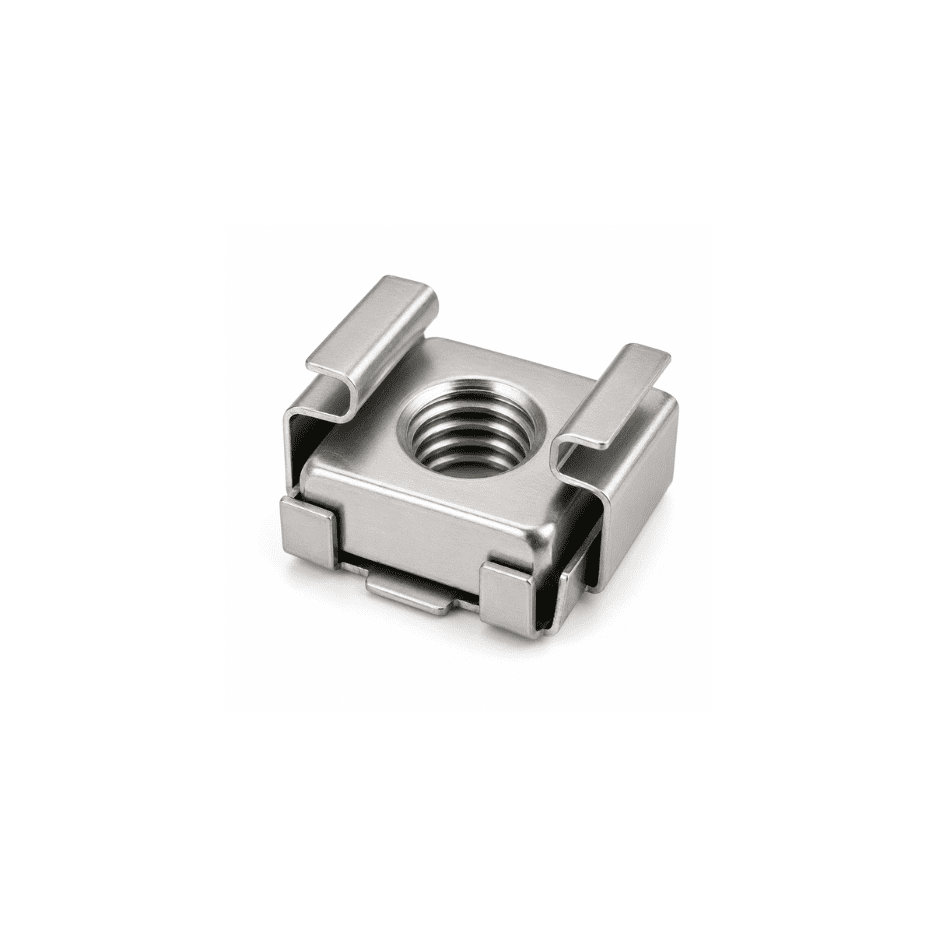
AM Steel Cage Nuts are square nuts retained within a flexible spring-steel cage, designed to snap into the square holes of a rack rail, cabinet, or sheet-metal panel and present a ready threaded hole for a mounting screw. Manufactured under the AM Steel brand, these fasteners (widely known as rack nuts, clip nuts, or server rack nuts) are the standard fixing for equipment mounting in 19-inch racks – the sprung wings compress to push the cage through the square hole, then spring outward to grip and hold the nut captive, floating slightly so it self-aligns to the screw.
Because they clip in and out by hand (or with a simple insertion tool), AM Steel cage nuts give a threaded fixing point that can be added, removed, and repositioned anywhere along a square-hole rail – a major advantage over fixed tapped holes, which can strip and can’t be relocated. They’re used throughout data centres and IT installations for mounting servers, switches, patch panels, shelves, and rack accessories, and equally in electrical cabinets, enclosures, and general sheet-metal work with square-punched holes. Cage nuts are selected to match both the square hole size and the panel (rail) thickness they clip into, and pair with matching mounting screws – commonly M5, M6, or the imperial rack threads. AM Steel cage nuts are available in zinc-plated steel (with a spring-steel cage) for general indoor rack and cabinet use, and in stainless steel (A2/304 and A4/316) for corrosion-prone or hygienic environments.
Whether you’re building out server and network racks, mounting equipment in electrical cabinets, fitting shelves and accessories, or handling any sheet-metal panel with square holes, AM Steel cage nuts deliver the clip-in convenience, repositionable threading, and consistent quality needed for rack and enclosure assembly. As with all AM Steel products, this cage nut is available in a range of thread sizes (commonly M5 and M6) and cage sizes to suit standard square-hole rails and panel thicknesses, in multiple materials and finishes for both industrial-grade and everyday needs.
Key features:
- Square nut held captive in a sprung spring-steel cage that clips into a square hole
- Adds a threaded fixing point that can be removed and repositioned anywhere on a square-hole rail
- Floats slightly in the cage to self-align with the mounting screw
- The standard fixing for 19-inch server and network racks and sheet-metal enclosures
- Selected by square hole size and panel (rail) thickness for a correct clip-in fit
- Available in zinc-plated steel and stainless steel (A2/304, A4/316)
- Backed by the quality assurance of AM Steel
Ideal For
AM Steel Cage Nuts are ideal for:
- Data centre and IT teams mounting servers, switches, patch panels, and shelves in 19-inch racks
- Network and telecom cabinet build-outs needing repositionable threaded fixing points
- Electrical enclosure and switchgear panels with square-punched holes
- Rack accessory, shelf, and blanking-panel fitting where threads must be added or relocated
- General sheet-metal assembly requiring a strong, removable thread in a square hole
Choosing the Right Cage Nut
Selecting the correct cage nut from the AM Steel range depends on several factors:
- Thread Size – Choose the thread (commonly M5 or M6, or the required imperial rack thread) to match the mounting screws for your equipment.
- Square Hole Size – Match the cage to the square hole dimension of your rail or panel so it clips in securely and holds captive.
- Panel / Rail Thickness – Confirm the cage suits the thickness of the rail or panel; cages are designed for a range of material thickness for a correct, retained fit.
- Material – Stainless steel (A2/304 or A4/316) for corrosion-prone or hygienic environments; zinc-plated steel for general indoor rack and cabinet use.
- Screw Compatibility – Pair the cage nut with matching mounting screws (and washers where used) of the correct thread and length.
- Standard Compliance – For 19-inch racks, confirm the cage nut and screws suit the rack’s standard square-hole format.
Strategies to Choose the Right Product
- Match the cage to the square hole and rail thickness – A cage nut only clips in and holds correctly when both the square hole size and the panel thickness suit the cage, so confirm both before ordering.
- Match the thread to your equipment screws – Standardize on one thread size (commonly M6) across a rack build so every screw and cage nut interchanges cleanly.
- Use an insertion tool for speed – A simple cage-nut tool makes clipping nuts in and out far faster and easier than by hand, especially when filling a full rack.
- Match material to environment – Use stainless steel (A2/304 or A4/316) for corrosion-prone or hygienic areas; zinc-plated steel for general indoor racks and cabinets.
- Keep spares to hand – Cage nuts are frequently added and moved during rack changes; keeping a stock of the matching size avoids downtime during reconfiguration.
- Pair with the right screws – Use matching mounting screws of the correct thread and length, with washers where the equipment or panel requires them.
Mechanical Properties
AM Steel Cage Nuts are manufactured to meet recognized mechanical and dimensional standards, ensuring reliability across server rack, cabinet, and sheet-metal enclosure applications:
| Property | Specification |
|---|---|
| Material Grades | Zinc-Plated Steel (spring-steel cage), Stainless Steel (A2/304, A4/316) |
| Fastener Type | Captive square nut in a sprung spring-steel cage |
| Installation Method | Clipped into a square hole by hand or with an insertion tool |
| Thread Type | Internal metric thread (commonly M5, M6) or imperial rack threads |
| Fit Selection | Matched to square hole size and panel / rail thickness |
| Nut Movement | Floats within the cage to self-align with the screw |
| Corrosion Resistance | Moderate (zinc-plated steel) to high (A2/A4 stainless steel) |
| Common Alternate Names | Rack nut, clip nut, server rack nut, cage nut |
| Typical Applications | 19-inch server/network racks, cabinets, electrical enclosures, sheet-metal panels |
| Surface Finish | Zinc-plated, plain or passivated stainless steel |
These mechanical ratings confirm that AM Steel cage nuts deliver removable, repositionable threaded fixing points suited to server rack, cabinet, and enclosure assembly – match the cage to the square hole size and panel thickness, and pair with the correct mounting screws for a secure fit.
Frequently Asked Questions (FAQs)
1. What is a cage nut used for?
A cage nut is used to provide a threaded fixing point in a square hole – most commonly in 19-inch server and network racks and electrical cabinets – letting equipment be mounted with a screw and allowing the thread to be added, removed, or repositioned anywhere along the rail.
2. How does a cage nut work?
A square nut sits inside a flexible spring-steel cage; the sprung wings are compressed to push the cage through a square hole, then spring back to grip and hold the nut captive, floating slightly so it self-aligns with the mounting screw.
3. What are the other names for a cage nut?
Cage nuts are also known as rack nuts, clip nuts, or server rack nuts, all describing the same captive square nut in a spring-steel cage that clips into a square hole.
4. Are AM Steel cage nuts different from generic ones?
AM Steel cage nuts are manufactured and quality-tested under the AM Steel brand, ensuring consistent thread quality, cage spring, and fit across every batch for reliable clip-in retention.
5. What size cage nut do I need for my rack?
Match the cage to your rail’s square hole size and thickness, and the thread to your equipment screws (commonly M6 in 19-inch racks); confirming both the hole size and panel thickness ensures a secure clip-in fit.
6. How do I install a cage nut?
Hook one edge of the cage into the square hole, compress the sprung side, and push it through until the wings spring out and grip; a simple cage-nut insertion tool makes this much faster, especially across a full rack.
7. What thread sizes do cage nuts come in?
AM Steel cage nuts are commonly available in M5 and M6 metric threads, as well as imperial rack threads, to match standard rack-mount screws.
8. Are cage nuts corrosion-resistant?
Yes, especially AM Steel stainless steel versions (A2/304 or A4/316), which resist rust in corrosion-prone or hygienic environments; zinc-plated steel suits general indoor racks and cabinets.
9. Can cage nuts be removed and reused?
Yes – a key advantage is that cage nuts clip in and out, so they can be removed and repositioned anywhere along a square-hole rail; check the spring cage isn’t distorted before reusing for a reliable grip.
10. Why use a cage nut instead of a tapped hole?
A cage nut adds a fresh, strong thread that can be relocated and replaced, whereas a fixed tapped hole in a rail can strip over time and can’t be moved – cage nuts keep a rack flexible and serviceable.
11. Do cage nuts come with matching screws?
Cage nuts are paired with matching mounting screws of the correct thread and length; standardizing on one thread size across a rack build keeps every screw and cage nut interchangeable.
12. Why does the nut move slightly in the cage?
The slight float is intentional – it lets the nut self-align to the mounting screw as it’s started, making it easier to engage the thread in a rack where holes and equipment may not line up perfectly.
13. What’s the difference between A2 and A4 stainless steel cage nuts?
A2 (304) stainless offers good general corrosion resistance for most indoor use, while A4 (316), considered marine-grade, provides superior resistance to chlorides and coastal or chemical environments.
Reviews
There are no reviews yet.