


Description
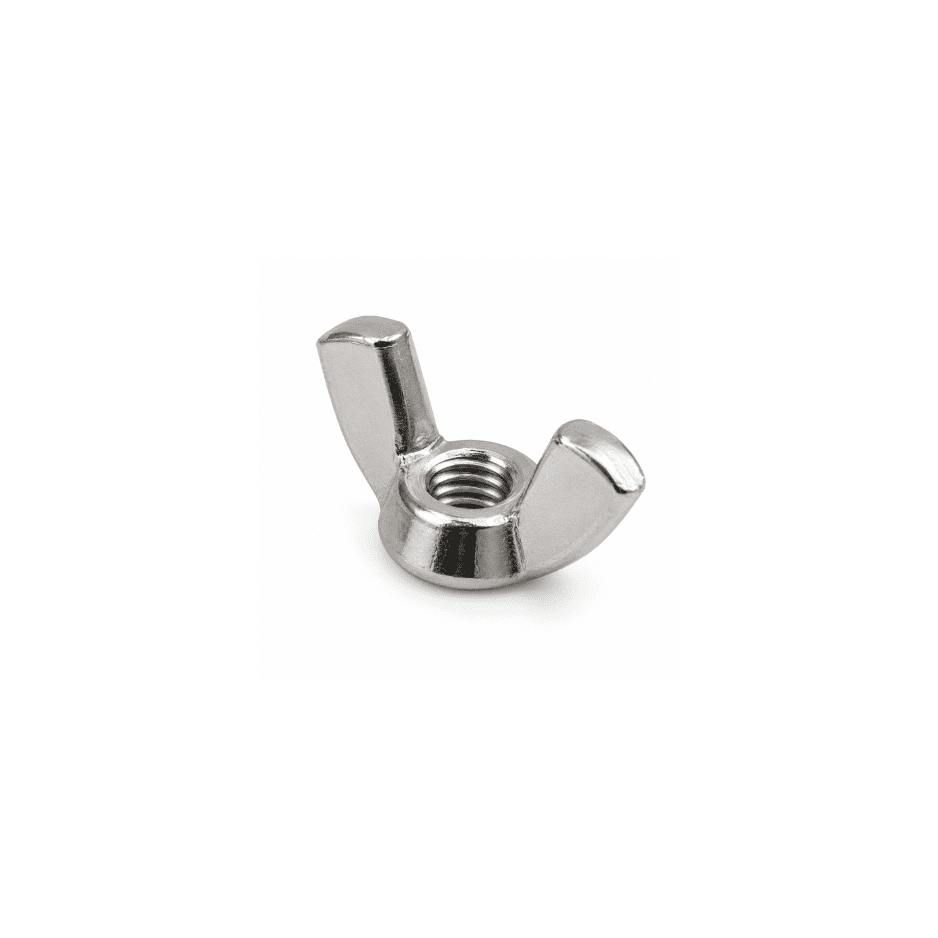
AM Steel Wing Nuts are internally threaded nuts featuring two flat, projecting wings that give the fingers leverage to tighten and loosen the nut by hand, without a spanner or socket. Manufactured under the AM Steel brand to DIN 315, these nuts (widely known as butterfly nuts or thumb nuts) are the go-to fastening wherever speed and convenience matter more than high clamping torque – allowing a fixing to be adjusted, removed, and refitted repeatedly with nothing but the hands.
Because they need no tools, AM Steel wing nuts are well suited to removable covers and access panels, machine guards, filter housings, jigs and fixtures, battery terminals, and temporary or frequently adjusted assemblies. The wings provide enough grip for firm hand-tightening, making them ideal for setups that are dismantled and reassembled often, or where a tool would be awkward to use. They deliver light-to-moderate clamping force rather than high-torque structural clamping, so they’re chosen for convenience rather than heavy load-bearing joints. AM Steel wing nuts are available in carbon steel (zinc-plated) for general indoor use, and in stainless steel (A2/304 and A4/316, the latter considered marine-grade) for outdoor, wet, and coastal environments where corrosion resistance is critical.
Whether you’re fitting removable covers and guards, setting up jigs and fixtures, wiring battery and electrical terminals, or handling any assembly that must be adjusted or dismantled by hand, AM Steel wing nuts deliver the tool-free convenience, dependable hand-grip, and consistent quality needed for quick-release fastening. As with all AM Steel products, this wing nut is available in a range of metric sizes (typically M3 to M12 per DIN 315), in multiple materials and finishes to suit both industrial-grade and everyday fastening needs.
Key features:
- Two projecting wings for fast, tool-free tightening and loosening by hand
- Ideal for covers, guards, and assemblies that are adjusted or removed frequently
- Manufactured to DIN 315 dimensional standards
- Delivers reliable light-to-moderate hand-tightened clamping
- Available in carbon steel (zinc-plated) and stainless steel (A2/304, A4/316)
- Mates with standard bolts, screws, and threaded rod
- Backed by the quality assurance of AM Steel
Ideal For
AM Steel Wing Nuts are ideal for:
- Removable covers, access panels, and machine guards that must be opened by hand without tools
- Filter housings, casings, and enclosures requiring quick, frequent removal for servicing
- Jigs, fixtures, and workshop setups that are adjusted, dismantled, and reassembled often
- Battery terminals and electrical connections needing tool-free hand-tightening
- Temporary, portable, or frequently adjusted assemblies where convenience is the priority
Choosing the Right Wing Nut
Selecting the correct wing nut from the AM Steel range depends on several factors:
- Material – Stainless steel (A2/304 or A4/316) for outdoor, wet, or corrosion-prone applications; zinc-plated carbon steel for general indoor use.
- Clamping Force Needed – Wing nuts suit light-to-moderate hand-tightened loads; for high-torque or structural clamping, a standard hex nut driven with a tool is more appropriate.
- Thread Size & Pitch – Choose the diameter and pitch (coarse or fine) to match the mating bolt, screw, or threaded rod exactly.
- Wing Size & Grip – Larger wings give more leverage and easier hand-tightening, useful where firmer grip or gloved operation is expected.
- Frequency of Use – For assemblies removed very often, confirm the material and finish resist wear and corrosion over repeated handling.
- Environment – For outdoor or wet use, choose stainless or galvanized to prevent rust that would make hand-loosening difficult over time.
Strategies to Choose the Right Product
- Choose wing nuts for tool-free, frequent access – Their key advantage is hand-tightening; use them where a cover, guard, or fixture is removed and refitted often and a tool would slow the job.
- Keep them to light-to-moderate loads – For high-torque or safety-critical structural joints, use a standard hex nut tightened with a spanner or socket instead.
- Match material to environment – Use stainless steel (A2/304 or A4/316) for outdoor, wet, or coastal work; zinc-plated steel for general dry, indoor use.
- Pick wing size for the grip needed – Larger wings give more leverage for firmer tightening, especially where the nut is operated with gloves or wet hands.
- Prioritize certified standards – Look for DIN 315 compliance for guaranteed dimensional consistency.
- Match thread size and pitch exactly – Confirm both diameter and coarse/fine pitch against the mating bolt for correct engagement.
Mechanical Properties
AM Steel Wing Nuts are manufactured to meet recognized mechanical and dimensional standards, ensuring reliability across cover, guard, jig, and quick-release fastening applications:
| Property | Specification |
|---|---|
| Material Grades | Carbon Steel, Stainless Steel (A2/304, A4/316) |
| Governing Standard | DIN 315 (Wing Nuts) |
| Shape | Internally threaded body with two projecting wings |
| Drive / Engagement | Hand-tightened via the wings — no tools required |
| Thread Type | Internal metric thread (coarse or fine) per ISO 261 / ISO 262 |
| Size Range | M3 to M12 (metric) |
| Clamping Level | Light to moderate (hand-tightened) |
| Corrosion Resistance | Moderate (zinc-plated steel) to high (A2/A4 stainless steel) |
| Common Alternate Names | Butterfly nut, thumb nut, hand nut |
| Typical Applications | Removable covers, guards, filter housings, jigs, battery terminals |
| Surface Finish | Zinc-plated, plain or passivated stainless steel |
These mechanical ratings confirm that AM Steel wing nuts deliver convenient, tool-free hand-tightened fastening suited to covers, guards, jigs, and frequently adjusted assemblies — for high-torque or structural joints, choose a standard hex nut instead.
Frequently Asked Questions (FAQs)
1. What is a wing nut used for?
A wing nut is used wherever a fixing must be tightened or removed by hand without tools — removable covers, guards, filter housings, jigs, and battery terminals — its two wings giving the fingers grip for quick, tool-free fastening.
2. Why is it also called a butterfly nut or thumb nut?
“Butterfly nut” describes the two wings that resemble a butterfly’s wings, and “thumb nut” refers to tightening it with finger and thumb – both are common alternate names for the same hand-operated nut.
3. How does a wing nut differ from a standard hex nut?
A standard hex nut is tightened with a spanner or socket for high torque, while a wing nut has projecting wings for tool-free hand-tightening, trading maximum clamping force for speed and convenience.
4. Are AM Steel wing nuts different from generic ones?
AM Steel wing nuts are manufactured and quality-tested under the AM Steel brand, ensuring consistent thread quality, wing dimensions, and finish across every batch, per DIN 315.
5. How much clamping force can a wing nut provide?
Wing nuts deliver light-to-moderate clamping suited to hand-tightening; for high-torque or structural joints, a standard hex nut tightened with a tool is the better choice.
6. What sizes do wing nuts come in?
AM Steel wing nuts are available in a range of sizes, typically M3 to M12 in metric, per DIN 315.
7. Are wing nuts corrosion-resistant?
Yes, especially AM Steel stainless steel versions (A2/304 or A4/316), which resist rust in outdoor, wet, or coastal environments; zinc-plated steel offers protection for general indoor use.
8. Can wing nuts be used outdoors?
Yes – for outdoor, wet, or coastal use, stainless steel (A2/304 or A4/316) versions are recommended, as corrosion on a carbon-steel wing nut can make hand-loosening difficult over time.
9. Can wing nuts be tightened with a tool?
They’re designed for hand-tightening, but light assistance with pliers can be used to snug or free a wing nut; excessive tool torque risks bending the wings, so they shouldn’t be used for high-torque clamping.
10. Can wing nuts be reused?
Yes – wing nuts are well suited to repeated removal and refitting, which is their main purpose; check that the wings aren’t bent and the thread is undamaged for reliable ongoing use.
11. What bolt do I use with a wing nut?
A wing nut mates with a standard metric bolt, screw, or threaded rod of the matching diameter and pitch, letting it be hand-tightened onto the same fixings a hex nut would use.
12. Are wing nuts suitable for vibration-prone joints?
Not on their own – because they’re hand-tightened to moderate torque, they can loosen under vibration; where vibration is a concern, a locking nut or additional locking device is more suitable.
13. What’s the difference between A2 and A4 stainless steel wing nuts?
A2 (304) stainless offers good general corrosion resistance for most indoor and outdoor use, while A4 (316), considered marine-grade, provides superior resistance to chlorides and coastal or chemical environments.
Reviews
There are no reviews yet.