


Description
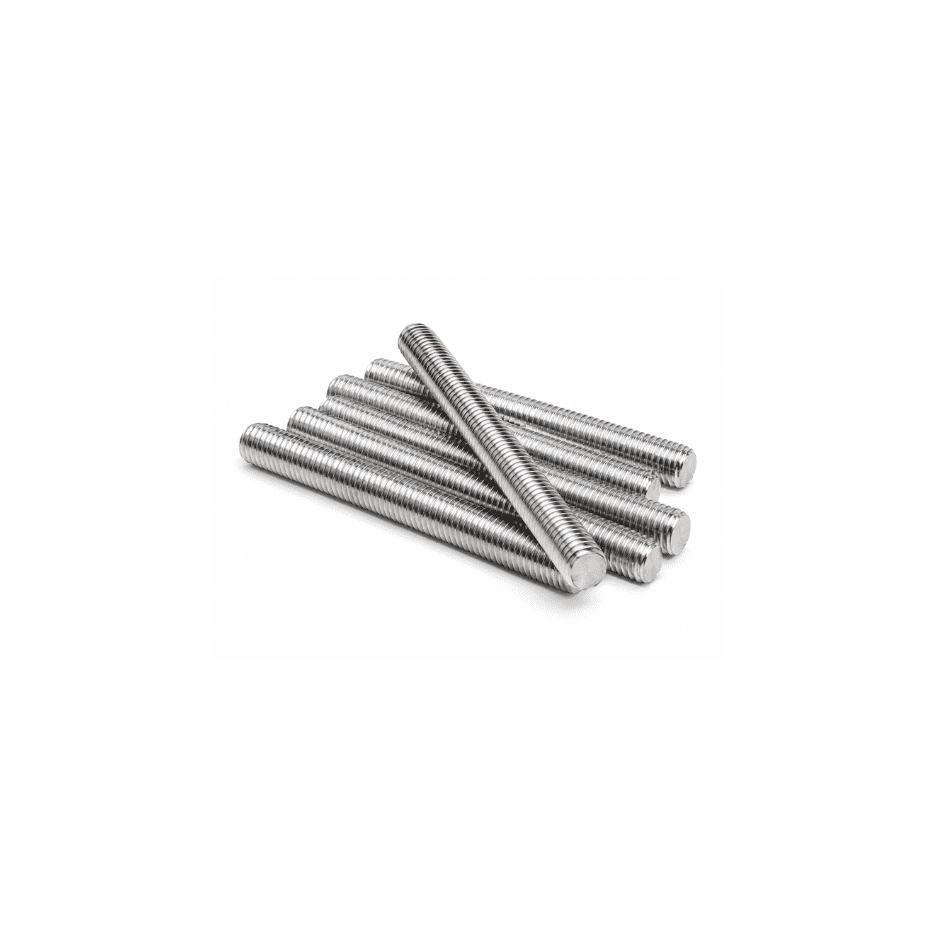
AM Steel Threaded Rods (also called studs or all-thread) are long, fully threaded, headless rods designed to be cut to length and paired with nuts (and typically washers) at one or both ends to create a custom bolted connection. Manufactured under the AM Steel brand to DIN 975 and DIN 976 – the primary metric standards governing threaded rod dimensions – these rods are a flexible alternative to a fixed-length bolt wherever a connection needs to span a variable or non-standard distance, such as suspending ductwork, anchoring equipment, or forming a through-bolt connection across thick material.
For general construction, machinery, and fabrication use, AM Steel offers threaded rod in property classes 4.6, 4.8, 5.6, and 5.8 carbon steel, along with stainless steel (A2/304, A4/316) for corrosion resistance. For high-temperature or high-pressure service – such as pressure vessels, valves, flanges, and pipeline fittings – AM Steel also offers threaded rod (stud bolts) manufactured to ASTM A193 Grade B7, a heat-treated chromium-molybdenum alloy steel with a minimum tensile strength of 100 ksi and yield strength of 75 ksi, rated for continuous service up to approximately 450°C (840°F). Grade B7 studs are typically paired with ASTM A194 nuts and are commonly used in flanged piping connections across oil, gas, and process industries.
One detail worth understanding: DIN 975 is generally considered a legacy standard, with newer designs typically specified to DIN 976, which offers more complete dimensional and tolerance coverage; both standards, however, remain widely manufactured and available. Whether you’re anchoring machinery, suspending pipework, connecting structural steel, or working on a high-pressure piping project, AM Steel threaded rod provides the flexibility and strength needed for a custom-length bolted connection. As with all AM Steel products, this threaded rod is available in metric and imperial (UNC/UNF) sizing, in multiple grades, materials, and finishes to suit both industrial-grade and everyday fastening needs.
Key features:
- Fully threaded, headless rod for custom-length bolted connections
- Manufactured to DIN 975/976 (general use) and ASTM A193 Grade B7 (high-temp/high-pressure)
- Available in property classes 4.6, 4.8, 5.6, 5.8 carbon steel, plus A2/304, A4/316 stainless steel
- Grade B7 alloy steel rated for continuous service up to ~450°C (840°F)
- Cut-to-length flexibility for non-standard connection distances
- Backed by the quality assurance of AM Steel
Ideal For
AM Steel Threaded Rods (Studs) are ideal for:
- Construction and structural contractors anchoring machinery, suspending ductwork, or bracing structural elements
- Oil, gas, and process industry engineers requiring ASTM A193 Grade B7 stud bolts for high-temperature, high-pressure piping and flanges
- HVAC and electrical contractors creating custom-length hanger and support systems
- General fabrication and machine shops needing a flexible, cut-to-length fastening solution
- Marine and outdoor equipment builders using stainless steel threaded rod for corrosion resistance
Choosing the Right Threaded Rod (Stud)
Selecting the correct threaded rod from the AM Steel range depends on several factors:
- Application Type – General construction/fabrication for standard property class carbon steel rod; high-temperature/high-pressure service (pressure vessels, valves, flanges) for ASTM A193 Grade B7 alloy steel.
- Material – Stainless steel (A2/304 or A4/316) for corrosion resistance; carbon steel for general strength at lower cost; Grade B7 alloy steel for heat and pressure resistance.
- Grade/Property Class – Class 4.6/4.8 for general-purpose use; Class 5.6/5.8 for moderately higher strength; Grade B7 for demanding thermal/pressure applications.
- Length and Cutting – Confirm the required length and whether field-cutting is needed, since threaded rod is typically supplied in standard stock lengths (e.g., 1m, 3m) for cutting to size.
- Nut Compatibility – Pair with correctly rated nuts (e.g., ASTM A194 for Grade B7 stud bolts) matching the rod’s strength and temperature requirements.
- Standard Compliance – Specify DIN 976 for modern designs where full dimensional coverage is needed; DIN 975 remains available but is generally considered a legacy reference.
Strategies to Choose the Right Product
- Match grade to application demands – Use standard property class carbon steel rod for general construction and fabrication; specify ASTM A193 Grade B7 for high-temperature or high-pressure piping and flange connections.
- Match material to environment – Choose stainless steel (A2/304 or A4/316) for corrosive, outdoor, or marine environments; carbon steel for general indoor or cost-sensitive use.
- Pair Grade B7 rod with correctly rated nuts – Use ASTM A194 nuts (or the grade specified by your piping/pressure vessel code) alongside Grade B7 threaded rod for a properly matched, code-compliant connection.
- Plan for cutting and thread damage – When field-cutting threaded rod, use a proper die or thread-protecting method to avoid damaged threads at the cut end.
- Buy in matched sets – Purchase threaded rod alongside compatible nuts and washers sized to the correct diameter and grade.
- Consider bulk vs. individual packs – Bulk stock lengths suit large construction, HVAC, or piping projects; smaller cut lengths suit repairs or single connections.
Mechanical Properties
AM Steel Threaded Rods (Studs) are manufactured to meet recognized mechanical and dimensional standards, ensuring reliability across construction, industrial piping, and general fabrication applications:
| Property | Specification |
|---|---|
| Material Grades | Carbon Steel (Property Class 4.6, 4.8, 5.6, 5.8), Alloy Steel (ASTM A193 Grade B7), Stainless Steel (A2/304, A4/316) |
| Governing Standards | DIN 975, DIN 976 (metric general use); ASTM A193 Grade B7 (high-temp/high-pressure); ASME B18.31.3/B18.31.4M |
| Grade B7 Tensile Strength | Minimum 100 ksi (approx. 690 MPa) |
| Grade B7 Yield Strength | Minimum 75 ksi (approx. 515 MPa) |
| Grade B7 Maximum Hardness | 35 HRC |
| Grade B7 Max. Service Temperature | Approximately 450°C (840°F) |
| Standard Carbon Steel Tensile Strength | Approximately 400–520 MPa (Class 4.6–5.8, depending on grade) |
| Thread Standard | ISO metric coarse/fine (DIN 975/976); UNC/UNF/metric per ASME B1.1/B1.13M |
| Recommended Nut Pairing (Grade B7) | ASTM A194 (e.g., Grade 2H) |
| Corrosion Resistance | Low to moderate (plain/plated carbon steel, Grade B7) to high (A2/A4 stainless steel) |
| Surface Finish | Plain, zinc-plated, hot-dip galvanized, passivated stainless steel |
These mechanical ratings confirm that AM Steel threaded rod covers both general-purpose fastening and demanding high-temperature/high-pressure service – always confirm the correct grade and nut pairing for your specific application’s code requirements.
Frequently Asked Questions (FAQs)
1. What is a threaded rod (stud) used for? A threaded rod is used to create custom-length bolted connections, anchor points, and suspension systems – commonly for anchoring machinery, suspending ductwork, structural bracing, and high-pressure piping flange connections.
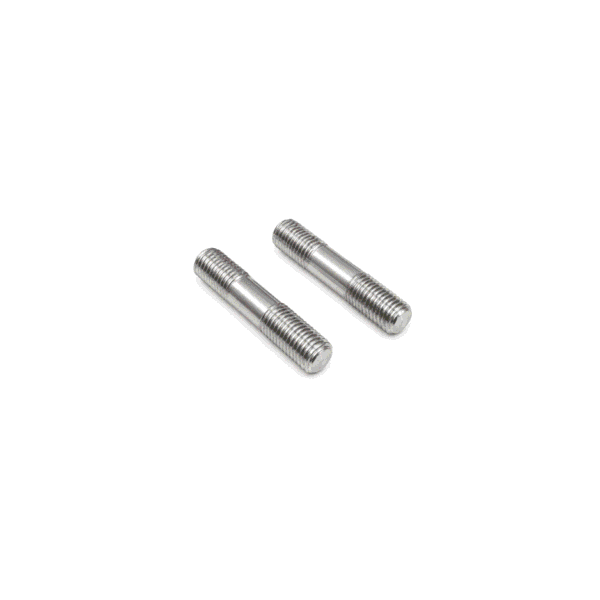
2. What’s the difference between a threaded rod and a stud bolt? The terms are often used interchangeably, though “stud bolt” more specifically refers to a fully threaded rod cut and finished to a defined length for a particular bolted connection, such as in piping and pressure vessel applications, while “threaded rod” or “all-thread” often refers to longer stock lengths intended for field cutting.
3. Are AM Steel threaded rods different from generic threaded rod? AM Steel threaded rods are manufactured and quality-tested under the AM Steel brand, ensuring consistent thread quality, grade compliance, and dimensional accuracy across every batch, per DIN 975/976 and ASTM A193.
4. What’s the difference between DIN 975 and DIN 976? DIN 975 is generally considered a legacy standard for threaded rod, while DIN 976 is the more current, complete standard typically specified for new designs; both remain widely manufactured and available.
5. What is ASTM A193 Grade B7 threaded rod used for? ASTM A193 Grade B7 is a heat-treated chromium-molybdenum alloy steel threaded rod specifically designed for high-temperature and high-pressure service, commonly used in pressure vessels, valves, flanges, and pipeline fittings.
6. What temperature can Grade B7 threaded rod withstand? ASTM A193 Grade B7 threaded rod is typically rated for continuous service up to approximately 450°C (840°F), though specific design codes may set different limits for a given application.
7. Are threaded rods corrosion-resistant? Yes, especially AM Steel stainless steel threaded rods (A2/304 or A4/316), which resist rust in outdoor, marine, or corrosive environments; carbon steel and Grade B7 alloy steel offer moderate protection depending on plating or coating.
8. What sizes do threaded rods come in? AM Steel threaded rods are available in a wide range of sizes and standard stock lengths, in both metric (per DIN 975/976) and imperial (UNC/UNF) thread types.
9. What nuts should I use with Grade B7 threaded rod? Grade B7 threaded rod is typically paired with ASTM A194 nuts (such as Grade 2H), which are matched for strength and temperature compatibility with Grade B7 studs.
10. Can threaded rod be cut to length on-site? Yes, threaded rod is commonly supplied in standard stock lengths for field cutting; care should be taken to avoid damaging the threads at the cut end, and a thread-chasing die can help clean up the cut threads if needed.
11. Can threaded rod be reused? Yes, as long as the threads aren’t damaged, stripped, or corroded, threaded rod can typically be reused in non-critical applications; safety-critical or high-temperature/pressure applications should follow the relevant code’s inspection and reuse guidance.
12. What’s the difference between A2 and A4 stainless steel threaded rod? A2 (304) stainless offers good general corrosion resistance for most indoor and outdoor use, while A4 (316) stainless provides superior resistance to chlorides and marine or offshore environments.
13. What is the difference between property class 4.6/4.8 and 5.6/5.8 threaded rod? Property class 5.6/5.8 offers modestly higher tensile and yield strength than 4.6/4.8, making it suitable for applications with slightly greater mechanical demand, while 4.6/4.8 remains sufficient for general-purpose, lower-stress connections.
Reviews
There are no reviews yet.