


Description
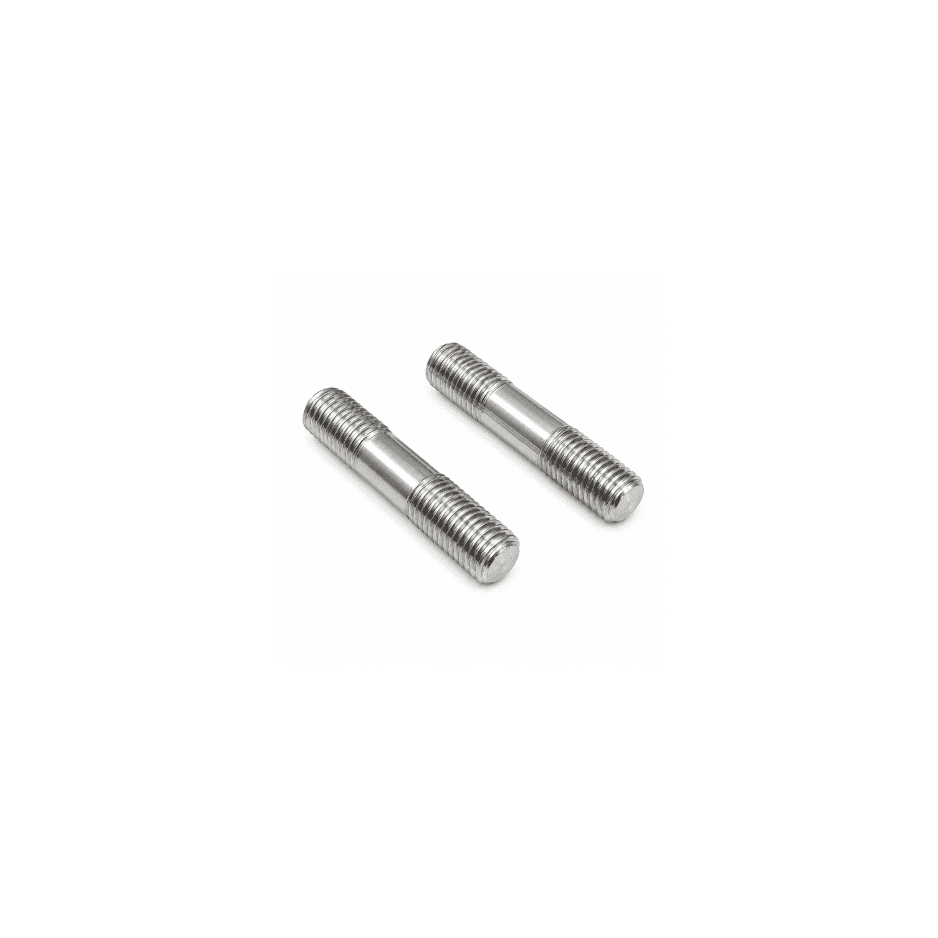
AM Steel Half Threaded Studs – also known as double-end studs or tap end studs – are threaded fasteners with two threaded sections, one at each end, separated by a plain, unthreaded shank in the middle. Manufactured under the AM Steel brand, one end (the “tap end”) is designed to be screwed permanently into a tapped hole in a machine component, while the opposite end (the “nut end”) accepts a hex nut to clamp a fixture, bracket, or additional part onto the surface the stud is anchored into.
The tap end and nut end typically differ in thread length, and AM Steel offers this configuration to three common metric standards: DIN 938 (tap end thread length equal to 1x the stud diameter), DIN 939 (tap end thread length equal to 1.25x the diameter), and DIN 835 (tap end thread length equal to 2x the diameter) – the appropriate choice depends on the depth of the tapped hole and the strength of the base material being threaded into, with a longer tap end generally providing greater engagement and holding power in softer materials. Because the stud is threaded permanently into the base component and only the nut is removed during disassembly, half threaded studs reduce wear on the base material’s threads compared to repeatedly threading and unthreading a standard bolt.
AM Steel half threaded studs are manufactured in steel (property class 5.8 as standard) and stainless steel (A2/304, A4/316), and are widely used in machine assembly, equipment mounting, flange bolting, and any application requiring a fixed, reusable anchor point in a component. Whether you’re assembling machinery, mounting brackets and fixtures, or building flanged connections, AM Steel half threaded studs provide a durable, repeatable fastening solution. As with all AM Steel products, this half threaded stud is available in metric sizing (M3 to M52 per DIN 835/938/939), in multiple grades, materials, and finishes to suit both industrial-grade and everyday fastening needs.
Key features:
- Double-end threading with a plain, unthreaded shank in between
- Tap end screws permanently into a tapped hole; nut end takes a hex nut
- Available to DIN 938, DIN 939, and DIN 835 tap-end length configurations
- Reduces wear on base material threads compared to repeated bolt removal
- Available in steel (property class 5.8) and stainless steel (A2/304, A4/316)
- Backed by the quality assurance of AM Steel
Ideal For
AM Steel Half Threaded Studs are ideal for:
- Machine and equipment assemblers creating a fixed, reusable anchor point in machinery components
- Flange and piping technicians using double-end studs for flange bolting connections
- Maintenance teams needing to repeatedly remove and reinstall brackets or fixtures without wearing base material threads
- General fabrication and machine shops requiring a dual-threaded fastener for mounting components
- Automotive and industrial equipment builders anchoring covers, brackets, and mounting plates
Choosing the Right Half Threaded Stud
Selecting the correct half threaded stud from the AM Steel range depends on several factors:
- Tap End Length (Standard) – DIN 938 (1x diameter) for standard steel components; DIN 939 (1.25x diameter) for improved engagement; DIN 835 (2x diameter) for softer materials like cast iron or aluminum needing deeper engagement.
- Material – Stainless steel (A2/304 or A4/316) for corrosion resistance; steel (property class 5.8) for general industrial use.
- Size & Overall Length – Match the stud diameter and overall length to the tapped hole depth and the thickness of the component being clamped by the nut.
- Base Material Compatibility – Choose a longer tap end (DIN 835) when threading into softer or more brittle base materials to ensure sufficient thread engagement and holding strength.
- Nut Selection – Pair with a compatible hex nut sized to the nut-end thread diameter and pitch.
- Finish – Select a corrosion-resistant finish or stainless material where the stud will be exposed to moisture or repeated disassembly.
Strategies to Choose the Right Product
- Match tap end length to base material hardness – Use DIN 835 (longer tap end) for softer materials like aluminum or cast iron, and DIN 938/939 for standard steel components, to ensure adequate holding strength.
- Match material to environment – Choose stainless steel (A2/304 or A4/316) for corrosive, outdoor, or washdown environments; steel for general indoor industrial use.
- Use half threaded studs to protect base material threads – Favor this stud type over a standard bolt where a fixture or bracket needs to be removed and reinstalled repeatedly, since the tap end stays permanently seated.
- Buy in matched sets – Purchase half threaded studs alongside compatible hex nuts and washers sized to the nut-end thread.
- Prioritize certified standards – Look for DIN 835/938/939 compliance for guaranteed tap-end length consistency and dimensional accuracy.
- Consider bulk vs. individual packs – Bulk packs suit machine production or flange bolting projects; smaller packs suit repairs or single installations.
Mechanical Properties
AM Steel Half Threaded Studs are manufactured to meet recognized mechanical and dimensional standards, ensuring reliability across machine assembly, flange bolting, and equipment mounting applications:
| Property | Specification |
|---|---|
| Material Grades | Steel (Property Class 5.8), Stainless Steel (A2/304, A4/316) |
| Governing Standards | DIN 938 (tap end = 1×d), DIN 939 (tap end = 1.25×d), DIN 835 (tap end = 2×d) |
| Design | Double-end (tap end + nut end) threading with plain unthreaded shank between |
| Tap End Function | Permanently installed into a tapped hole in the base component |
| Nut End Function | Accepts a hex nut to clamp a fixture, bracket, or additional part |
| Size Range | M3 to M52 (metric), lengths from 16mm to 400mm |
| Length Measurement Note | Tap end thread length is generally excluded from the stud’s nominal length in metric standards |
| Corrosion Resistance | Moderate (plated steel) to high (A2/A4 stainless steel) |
| Surface Finish | Plain, zinc-plated, black oxide, passivated stainless steel |
These mechanical ratings confirm that AM Steel half threaded studs provide dependable, reusable anchor points for machine and flange assembly – always match the tap end length standard to your base material’s hardness and required engagement depth.
Frequently Asked Questions (FAQs)
1. What is a half threaded stud used for? A half threaded stud (double-end or tap end stud) is used to create a fixed anchor point in a machine component – the tap end screws permanently into a tapped hole, while the nut end accepts a hex nut to clamp a bracket, cover, or fixture in place.
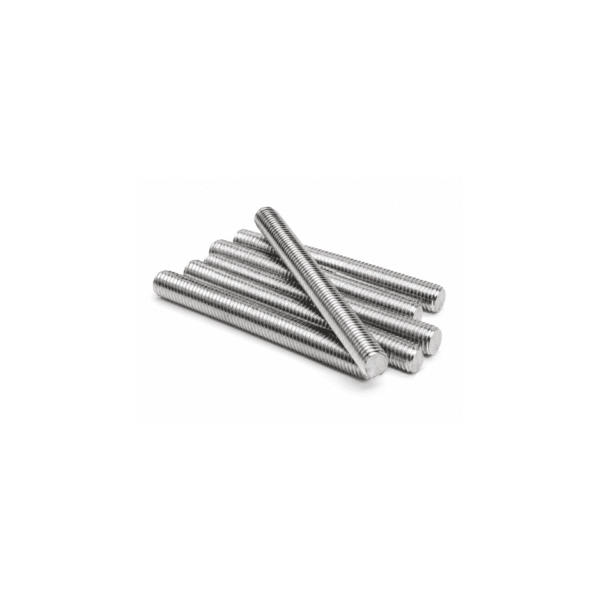
2. What’s the difference between a half threaded stud and a fully threaded rod? A half threaded stud has threading only at each end with a plain, unthreaded shank in between, while a fully threaded rod (all-thread) is threaded continuously along its entire length.
3. Are AM Steel half threaded studs different from generic double-end studs? AM Steel half threaded studs are manufactured and quality-tested under the AM Steel brand, ensuring consistent tap-end length, thread quality, and dimensional accuracy across every batch, per DIN 835/938/939.
4. What’s the difference between DIN 938, DIN 939, and DIN 835? These standards differ in tap end thread length relative to the stud diameter – DIN 938 uses 1× diameter, DIN 939 uses 1.25× diameter, and DIN 835 uses 2× diameter, with longer tap ends generally providing greater engagement in softer base materials.
5. Why would I choose a half threaded stud over a standard bolt? A half threaded stud stays permanently seated in the tapped hole, so repeated removal and reinstallation of a fixture (via the nut) doesn’t wear the base material’s threads the way repeatedly threading and unthreading a standard bolt would.
6. Are half threaded studs corrosion-resistant? Yes, especially AM Steel stainless steel half threaded studs (A2/304 or A4/316), which resist rust in outdoor, washdown, or corrosive environments; steel versions offer moderate protection when plated.
7. What sizes do half threaded studs come in? AM Steel half threaded studs are available in a range of sizes, typically M3 to M52 in metric, with lengths from 16mm to 400mm, per DIN 835/938/939.
8. How do I choose the right tap end length for my application? Choose a longer tap end (such as DIN 835’s 2× diameter) when threading into softer or more brittle base materials like aluminum or cast iron, and a shorter tap end (DIN 938’s 1× diameter) for standard steel components with adequate thread strength.
9. What tools do I need to install a half threaded stud? Installation typically uses a stud driver, double-nut method, or specialized stud installation tool to thread the tap end into the base component without damaging the nut-end threads.
10. Is the tap end included in the stud’s overall length measurement? For metric double-end studs, the tap end thread length is generally excluded from the stud’s nominal length, meaning the overall length is greater than the nominal length specified — always confirm this when ordering.
11. Can half threaded studs be reused? The nut-end connection can typically be disassembled and reassembled repeatedly using the nut; the tap end itself is designed to remain permanently installed in the base component and is not intended for repeated removal.
12. What’s the difference between A2 and A4 stainless steel half threaded studs? A2 (304) stainless offers good general corrosion resistance for most indoor and outdoor use, while A4 (316) stainless provides superior resistance to chlorides and marine or washdown environments.
13. Are half threaded studs used in flange bolting? Yes, double-end studs (including half threaded configurations) are commonly used in flange bolting applications, particularly where torquing from both ends of the connection is necessary or desirable.
Reviews
There are no reviews yet.