


Description
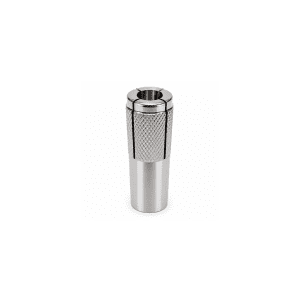
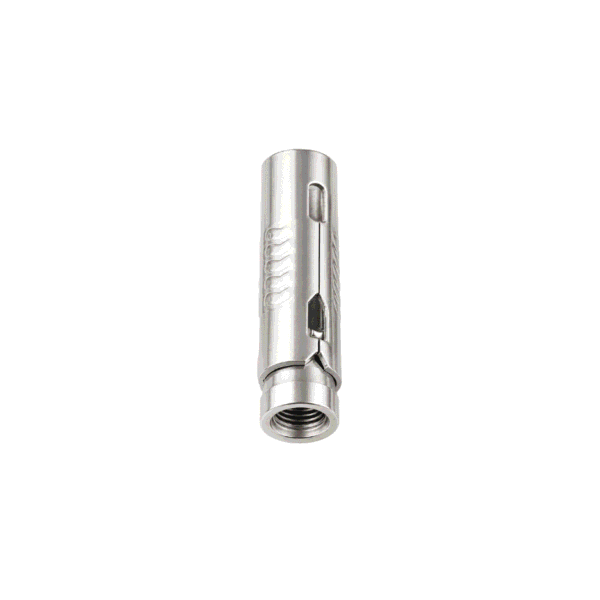
AM Steel Drop In Anchors – commonly called Bullet Anchors – are internally threaded expansion anchors designed to sit flush in a pre-drilled hole in solid concrete, expanded into place by driving a matching setting tool (setting punch) into the anchor. Manufactured under the AM Steel brand, these anchors (widely known as drop in anchors, bullet anchors, internally threaded anchors, or flush anchors) work by forcing an internal expander cone or plug up into the slotted body as the setting tool is struck – expanding the walls outward to lock the anchor firmly into the hole before any bolt is fitted.
Because the anchor carries an internal metric thread and sits flush with the concrete surface, AM Steel drop in anchors accept a standard bolt or threaded rod that can be fitted and removed without disturbing the anchor – making them the go-to fixing for overhead and soffit work, threaded-rod suspension of services, and any application where the fixture may need to be detached and re-fixed. The flush-set body is ideal where nothing can protrude before the fixture is fitted, and the pre-set expansion (completed with the setting tool) gives a reliable, consistent hold independent of how tightly the final bolt is torqued. They’re best suited to solid concrete and are widely used for suspending pipework, cable trays, ducting, and strut channel, as well as fixing brackets and machinery. AM Steel drop in anchors are available in carbon steel (zinc-plated) for general indoor construction, and in stainless steel (A2/304 and A4/316, the latter considered marine-grade) for outdoor, wet, or corrosion-prone environments.
Whether you’re suspending services from a soffit, fixing brackets and strut channel, mounting equipment, or handling any concrete fixing that needs a flush, removable-bolt anchor, AM Steel drop in anchors deliver the pre-set expansion grip, flush finish, and consistent quality needed for reliable concrete anchorage. As with all AM Steel products, this drop in anchor is available in a range of metric sizes (typically M6 to M20 internal thread, with matching drill diameters and embedment depths), in multiple materials and finishes to suit both industrial-grade and everyday fastening needs.
Key features:
- Internally threaded body that sits flush with the concrete surface for a clean, non-protruding set
- Pre-set expansion completed with a matching setting tool for a reliable, consistent hold
- Accepts a standard bolt or threaded rod that can be fitted and removed without disturbing the anchor
- Ideal for overhead, soffit, and threaded-rod suspension work
- Suited to solid concrete base material
- Available in zinc-plated carbon steel and stainless steel (A2/304, A4/316)
- Backed by the quality assurance of AM Steel
Note: This product, along with all other products in this catalog, is manufactured and supplied by AM Steel, a trusted name in industrial-grade fasteners and steel components.
Ideal For
AM Steel Drop In Anchors (Bullet Anchors) are ideal for:
- Mechanical and electrical trades suspending pipework, cable trays, ducting, and strut channel from concrete soffits with threaded rod
- Overhead and soffit fixings where a flush anchor and a removable bolt are needed
- Bracket, support, and equipment mounting into solid concrete floors, walls, and ceilings
- Fit-out and services installers needing a consistent, pre-set anchor independent of final bolt torque
- General construction and maintenance requiring a flush, reusable-bolt fixing into concrete
Choosing the Right Drop In Anchor / Bullet Anchor
Selecting the correct drop in anchor from the AM Steel range depends on several factors:
- Material – Stainless steel (A2/304 or A4/316) for outdoor, wet, or corrosion-prone applications; zinc-plated carbon steel for general indoor and dry construction.
- Base Material – Drop in anchors are designed for solid concrete; confirm the base is solid and of adequate strength, as they are not suited to hollow or lightweight block.
- Thread Size – Choose the internal thread (e.g. M6 to M20) to match the bolt or threaded rod that will secure the fixture.
- Drill Diameter & Embedment – Match the drill bit to the anchor’s specified diameter and drill to the correct embedment depth so the anchor sits flush and expands fully.
- Setting Tool – Use the correct matching setting tool (setting punch) for the anchor size to ensure full, proper expansion.
- Load Requirement – Size the anchor to the tension and shear load of the fixture, allowing appropriate safety margins, edge distances, and spacing.
Strategies to Choose the Right Product
- Always use the correct setting tool – Drop in anchors only reach their rated hold when fully expanded with the matching setting punch; under-setting leaves the anchor loose and unreliable.
- Drill to the right diameter and depth – Use the specified drill size and depth, and clean the hole of dust so the anchor sits flush and expands correctly against solid concrete.
- Match material to environment – Use stainless steel (A2/304 or A4/316) for outdoor, wet, or coastal work; zinc-plated carbon steel for general dry, indoor construction.
- Choose the thread to suit the fixing – Select the internal thread size to match the bolt or threaded rod your fixture or suspension requires.
- Respect embedment and edge distances – Follow recommended embedment depth, edge distance, and spacing to achieve rated holding values and avoid cracking the concrete.
- Consider bulk vs. individual packs – Bulk packs suit services suspension and repeat construction fixings; smaller packs suit repairs or single installations.
Mechanical Properties
AM Steel Drop In Anchors (Bullet Anchors) are manufactured to meet recognized mechanical and dimensional standards, ensuring reliability across suspension, bracket, and equipment-anchoring applications in solid concrete:
| Property | Specification |
|---|---|
| Material Grades | Carbon Steel, Stainless Steel (A2/304, A4/316) |
| Anchor Type | Internally threaded, pre-set expansion anchor (flush-set) |
| Fixing Method | Standard bolt or threaded rod fitted into the internal thread after setting |
| Setting Method | Expanded in place with a matching setting tool (setting punch) |
| Base Material | Solid concrete |
| Thread Size Range | M6 to M20 (internal metric thread) |
| Installation | Flush with the concrete surface |
| Corrosion Resistance | Moderate (zinc-plated steel) to high (A2/A4 stainless steel) |
| Common Alternate Names | Bullet anchor, internally threaded anchor, flush anchor, drop-in expansion anchor |
| Typical Applications | Threaded-rod suspension, cable tray, strut channel, brackets, equipment mounting |
| Surface Finish | Zinc-plated, plain or passivated stainless steel |
These mechanical ratings confirm that AM Steel drop in anchors deliver reliable, flush-set expansion anchorage suited to overhead suspension, bracket, and equipment fixing in solid concrete – always expand the anchor fully with the correct setting tool and observe embedment and edge distances for the best hold.
Frequently Asked Questions (FAQs)
1. What is a drop in anchor used for?
A drop in anchor is used to fix into solid concrete with a flush, internally threaded body that accepts a standard bolt or threaded rod – commonly for overhead suspension of pipework, cable tray, and ducting, and for mounting brackets and equipment.
2. Why is it called a bullet anchor?
“Bullet anchor” is a common alternate name for the drop in anchor, referring to its compact cylindrical body; the terms describe the same internally threaded, flush-set expansion anchor.
3. How does a drop in anchor work?
After the anchor is inserted into a pre-drilled hole, a matching setting tool is driven into it, forcing an internal cone or plug up into the body and expanding its walls outward to lock it firmly into the concrete before any bolt is fitted.
4. Do I need a setting tool for a drop in anchor?
Yes – a drop in anchor must be expanded with the correct matching setting tool (setting punch) to reach its rated hold; without proper setting the anchor will not grip reliably.
5. Are AM Steel drop in anchors different from generic ones?
AM Steel drop in anchors are manufactured and quality-tested under the AM Steel brand, ensuring consistent expansion performance, thread quality, body dimensions, and finish across every batch.
6. What base material can drop in anchors be used in?
Drop in anchors are designed for solid concrete of adequate strength; they are not suitable for hollow or lightweight block, brick with voids, or soft base materials where the body cannot expand against solid material.
7. What bolt or rod do I use with a drop in anchor?
The anchor’s internal thread accepts a standard metric bolt or threaded rod of the matching size (e.g. M6 to M20), which can be fitted and removed without disturbing the set anchor.
8. What sizes do drop in anchors come in?
AM Steel drop in anchors are available in a range of sizes, typically M6 to M20 internal thread, each with its own specified drill diameter and embedment depth.
9. Can the bolt be removed and refitted?
Yes – a key advantage of the drop in anchor is that once set, the bolt or threaded rod can be removed and refitted without disturbing the anchor, making it ideal where fixtures may need detaching.
10. Are drop in anchors corrosion-resistant?
Yes, especially AM Steel stainless steel versions (A2/304 or A4/316), which resist rust in outdoor, wet, or coastal environments; zinc-plated carbon steel suits general indoor and dry conditions.
11. Do I need to pre-drill a hole for a drop in anchor?
Yes – a correctly sized hole must be drilled to the specified diameter and depth, then cleaned of dust so the anchor sits flush and expands fully when set with the tool.
12. Can drop in anchors be reused?
The anchor body is set permanently in the concrete once expanded and is not designed to be relocated; however, the bolt or threaded rod fitted into it can be removed and reused freely.
13. What’s the difference between A2 and A4 stainless steel drop in anchors?
A2 (304) stainless offers good general corrosion resistance for most indoor and outdoor use, while A4 (316), considered marine-grade, provides superior resistance to chlorides and coastal or chemical environments.
Reviews
There are no reviews yet.