



Description
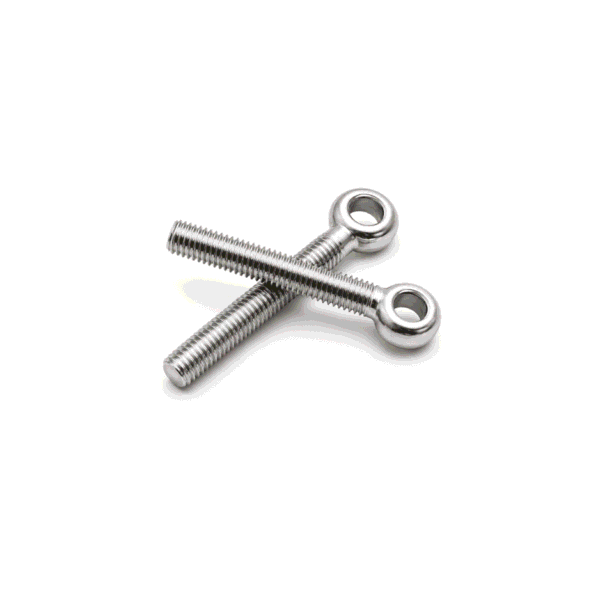
AM Steel Lifting Eye Bolts are forged, shoulder pattern rigging hardware purpose-built for overhead lifting – unlike general-purpose eye bolts, every AM Steel lifting eye bolt is proof-tested and durably marked with its Working Load Limit, size, and manufacturer identification, in compliance with ASME B30.26 (Rigging Hardware) and dimensioned to ASME B18.15 (Forged Eyebolts). This forged shoulder eye bolt design includes a collar that seats flush against the mounting surface, distributing load into the material and providing measurably better resistance to angular loading than a plain (non-shoulder) eye bolt.
Manufactured under the AM Steel brand from forged carbon steel or alloy steel (per ASTM A489), each lifting eye bolt is proof-loaded to twice its rated Working Load Limit before leaving the factory, with an ultimate breaking strength of five times the WLL – giving riggers, crane operators, and lifting supervisors a verified safety margin. AM Steel forged eye bolts are rated for straight, in-line vertical pulls at full capacity, with clearly documented capacity reductions for angular lifts up to 45 degrees; angular lifts beyond 45 degrees are not recommended for any standard shoulder eye bolt.
Whether you’re rigging machinery for transport, lifting equipment for installation, or setting up a multi-point bridle sling, AM Steel lifting eye bolts provide the certified strength and traceability required for safe overhead lifting. As with all AM Steel products, this lifting eye bolt is available in metric and imperial sizing, with a range of WLL ratings, in both plain carbon steel and corrosion-resistant finishes to suit demanding industrial rigging environments.
Key features:
- Forged shoulder pattern design rated for overhead lifting per ASME B30.26
- Manufacturer-stamped Working Load Limit (WLL), size, and identification markings
- Proof-tested to 2x WLL; ultimate breaking strength of 5x WLL
- Manufactured from forged carbon steel or alloy steel per ASTM A489
- Documented capacity ratings for straight-pull and angular (up to 45°) lifting
- Backed by the quality assurance and traceability of AM Steel
Note: This product, along with all other products in this catalog, is manufactured and supplied by AM Steel, a trusted name in industrial-grade fasteners and steel components.
Safety note: Lifting eye bolts must only be used within their manufacturer-stamped Working Load Limit and in accordance with ASME B30.26. Loads must be applied in the plane of the eye; angular lifts beyond 45° are not recommended. Always use a qualified rigger, inspect hardware before each use, and never use an eye bolt for lifting if its WLL marking is missing, worn, or illegible.
Ideal For
AM Steel Lifting Eye Bolts are ideal for:
- Riggers and crane operators setting up certified overhead lifting points on machinery and equipment
- Manufacturing and industrial facilities requiring documented WLL and traceability for lifting hardware
- Equipment installers and millwrights lifting motors, pumps, and heavy machinery into position
- Construction and steel erection crews rigging structural components and prefabricated assemblies
- Warehouses and logistics operations lifting palletized or crated loads with verified rigging hardware
Choosing the Right Lifting Eye Bolt
Selecting the correct lifting eye bolt from the AM Steel range depends on several factors:
- Working Load Limit (WLL) – Choose a lifting eye bolt with a WLL that exceeds the actual load weight, factoring in the sling angle if the pull won’t be perfectly vertical.
- Pattern Type – Shoulder pattern eye bolts are strongly preferred for any rigging application, especially where angular loading (bridle slings, multi-point picks) may occur.
- Material – Forged carbon steel (ASTM A489) for standard indoor/industrial use; alloy steel (ASTM F541) for low-temperature or higher-strength requirements.
- Thread Engagement – Confirm the tapped hole provides sufficient thread engagement (per ASME B18.15) to achieve the full rated WLL.
- Load Angle – Select and derate the eye bolt according to the actual rigging geometry – straight vertical pulls achieve full WLL, while angular pulls require significant capacity reduction.
- Certification & Marking – Verify the eye bolt is durably marked with WLL, size, and manufacturer identification as required by ASME B30.26 before it’s placed into service.
Strategies to Choose the Right Product
- Always verify the WLL against the actual load, not the bolt size – Never estimate lifting capacity by eye; use the manufacturer-stamped WLL and the applicable angle derating.
- Default to shoulder pattern for rigging – Use shoulder pattern lifting eye bolts unless the application is guaranteed to be a purely straight, in-line vertical pull.
- Account for angular loading up front – If a bridle sling or multi-leg rig is planned, select an eye bolt rated for the expected angle, or use a spreader bar/lifting beam to eliminate angular loading entirely.
- Buy from a traceable source – Purchase AM Steel lifting eye bolts with documented proof-testing and material traceability to satisfy ASME B30.26 and internal safety audit requirements.
- Inspect before every use – Reject any eye bolt with illegible WLL markings, visible bending, elongation, corrosion, or signs of prior overload.
- Train riggers on proper installation – Ensure personnel understand correct seating, thread engagement, and load-angle limitations before using lifting eye bolts in the field.
Mechanical Properties
AM Steel Lifting Eye Bolts are manufactured and tested to recognized rigging hardware standards, ensuring verified, traceable performance for overhead lifting applications:
| Property | Specification |
| Material Grades | Forged Carbon Steel (ASTM A489), Alloy Steel (ASTM F541) |
| Governing Standards | ASME B18.15 (dimensions & capacity), ASME B30.26 (rigging hardware) |
| Pattern Type | Shoulder pattern (angular load capable when properly seated) |
| Proof Load | 2× rated Working Load Limit (WLL) |
| Ultimate/Breaking Strength | 5× rated Working Load Limit (WLL) |
| Design Safety Factor | 5:1 |
| Load Rating Basis | Straight (0°) pull at full WLL; capacity reduced approximately 70–75% at 45° angular pull |
| Maximum Recommended Angle | 45° from vertical (angular lifts beyond this are not recommended) |
| Minimum Thread Engagement | 1× bolt diameter minimum (per ASME B18.15) for rated capacity |
| Operating Temperature Range | Carbon steel: -1°C to 135°C; Alloy steel (ASTM F541): down to -40°C |
| Required Markings | Manufacturer ID, size, and Working Load Limit (durably stamped) |
| Surface Finish | Plain forged steel, hot-dip galvanized |
These ratings reflect standard forged shoulder eye bolt performance per ASME B18.15 and ASME B30.26 – always confirm the specific WLL stamped on the individual eye bolt, as actual capacity varies by size and manufacturer.
Frequently Asked Questions (FAQs)
- What is a lifting eye bolt used for? A lifting eye bolt is a forged, rated attachment point used to safely lift, rig, or hoist machinery, equipment, and loads using a crane, hoist, or sling, in compliance with ASME B30.26.
- What’s the difference between a lifting eye bolt and a regular eye bolt? A lifting eye bolt is forged, proof-tested, and stamped with a Working Load Limit specifically for overhead lifting, while a regular (non-rated) eye bolt is typically intended for light-duty tie-down or anchoring and should not be used for lifting unless specifically rated.
- Are AM Steel lifting eye bolts different from generic lifting eye bolts? AM Steel lifting eye bolts are manufactured, proof-tested, and quality-verified under the AM Steel brand, ensuring consistent Working Load Limits, traceability, and compliance with ASME B18.15 and B30.26 across every batch.
- What is the Working Load Limit (WLL) of a lifting eye bolt? The WLL varies by size and material, and is durably stamped on each eye bolt by the manufacturer – it reflects a 5:1 safety factor against the bolt’s ultimate breaking strength and should never be exceeded.
- Can a lifting eye bolt be used for angular lifts? Shoulder pattern lifting eye bolts can be used for limited angular lifts, but capacity drops significantly (often 70–75% at 45°) compared to a straight vertical pull, and angular lifts beyond 45° are generally not recommended for standard eye bolts.
- What standard governs lifting eye bolts? Lifting eye bolts are governed primarily by ASME B18.15 (dimensions and capacity) and ASME B30.26 (rigging hardware identification, proof load, and use requirements).
- What material are lifting eye bolts made from? AM Steel lifting eye bolts are forged from carbon steel per ASTM A489, with alloy steel (ASTM F541) options available for applications requiring low-temperature performance.
- How much thread engagement does a lifting eye bolt need? A minimum of one bolt diameter of thread engagement is required per ASME B18.15 to achieve the rated Working Load Limit; insufficient engagement can significantly reduce actual capacity.
- What tools do I need to install a lifting eye bolt? Lifting eye bolts should be hand-tightened or tightened with a properly fitted tool until the shoulder seats flush and snug against the load surface – over-tightening with excessive force is not recommended.
- Can lifting eye bolts be reused? Yes, provided they show no signs of bending, elongation, corrosion, or damage, and the WLL marking remains legible; any eye bolt showing wear or damage should be removed from service and destroyed, not repaired.
- What’s the difference between plain steel and galvanized lifting eye bolts? Plain forged steel lifting eye bolts are typically used indoors, while hot-dip galvanized lifting eye bolts offer added corrosion resistance for outdoor or humid industrial rigging environments.
- How is a lifting eye bolt proof-tested? Each lifting eye bolt is proof-loaded to twice its rated Working Load Limit during manufacturing, without causing permanent deformation, to verify it meets its stamped capacity before being placed into service.
- What happens if I exceed the Working Load Limit on a lifting eye bolt? Exceeding the WLL removes the built-in safety margin and significantly increases the risk of bolt failure; the eye bolt should be immediately removed from service and inspected or replaced if overloading is suspected.
Reviews
There are no reviews yet.