



Description
AM Steel J-Bolts are bent, hook-shaped fasteners with a single threaded leg, designed to be embedded in concrete or hooked around an object to provide a secure anchor point. Manufactured under the AM Steel brand, these J-bolts (sometimes called L-bolts depending on the bend angle) are widely used as bent anchor bolts for anchoring structural supports – such as light poles, sign structures, and equipment bases – to concrete foundations, as well as for general hook-and-hang applications like fence posts, gutter straps, and tie-downs.
For structural anchoring applications, AM Steel offers J-bolts manufactured to ASTM F1554, the primary specification for anchor bolts connecting structural supports to concrete foundations. This specification defines three grades by minimum yield strength – Grade 36 (36 ksi, general-purpose and weldable), Grade 55 (55 ksi, higher load capacity), and Grade 105 (105 ksi, heavy industrial and high-stress applications such as wind turbine foundations) – with color-coded ends (blue, yellow, and red respectively) for easy field identification. For lighter-duty, non-structural hook and tie-down applications, AM Steel also offers general-purpose J-bolts in standard carbon steel and stainless steel.
Whether you’re anchoring a structural column, setting a highway sign post, securing a fence rail, or creating a simple hook-style attachment point, AM Steel J-bolts provide dependable holding power backed by recognized industry standards where structural use is required. As with all AM Steel products, this J-bolt is available in metric and imperial sizing, in multiple grades, lengths, and finishes to suit both industrial-grade structural anchoring and everyday fastening needs.
Key features:
- J-shaped (hook) bend for concrete embedment or hook-style attachment
- Structural-grade J-bolts available to ASTM F1554 Grade 36, 55, and 105
- Color-coded ends (blue/yellow/red) for quick grade identification in the field
- General-purpose carbon steel and stainless steel J-bolts for non-structural hook and tie-down use
- Available with hot-dip galvanized or mechanically deposited zinc coating for corrosion resistance
- Backed by the quality assurance of AM Steel
Ideal For
AM Steel J-Bolts are ideal for:
- Structural steel contractors anchoring building columns and structural supports to concrete foundations
- Municipalities and utility contractors anchoring light poles, traffic signals, and highway sign structures
- Renewable energy installers anchoring wind turbine foundation cages with Grade 55/105 J-bolts
- Fence and post installers securing fence posts and rails with general-purpose hook bolts
- Homeowners and DIY builders creating simple hook or tie-down attachment points for gutters, straps, and light hardware
Choosing the Right J-Bolt
Selecting the correct J-bolt from the AM Steel range depends on several factors:
- Application Type – Structural anchoring (concrete foundations, poles, signs) requires ASTM F1554-graded J-bolts; general hook or tie-down use can use standard carbon or stainless steel J-bolts.
- Grade (Structural Use) – Grade 36 for general-purpose and weldable applications; Grade 55 for higher load capacity; Grade 105 for heavy industrial and high-stress structures.
- Material – Stainless steel J-bolts for corrosive or outdoor environments; hot-dip galvanized or zinc-coated carbon steel for standard construction use.
- Size & Embedment Depth – Match bolt diameter, length, and embedment depth to the engineering specification or structural load requirement – never estimate for structural anchoring.
- Weldability – If the J-bolt will be welded to an embed plate or cage, confirm Grade 36 (inherently weldable) or Grade 55 with the S1 supplementary weldable requirement.
- Coating Requirements – Hot-dip galvanized per ASTM F2329/F2329M or mechanically deposited zinc per ASTM B695 Class 55, depending on project specification.
Strategies to Choose the Right Product
- Always follow engineering specifications for structural use – Never substitute grade or size on a structural anchoring project without confirming against the project’s engineering drawings.
- Use color coding to verify grade on-site – Check for blue (Grade 36), yellow (Grade 55), or red (Grade 105) markings to confirm the correct anchor bolt is being installed.
- Match material to environment – Choose stainless steel or hot-dip galvanized J-bolts for outdoor, coastal, or corrosive environments; standard carbon steel for indoor or protected use.
- Confirm weldability needs early – If the design calls for welded anchor cages, specify Grade 36 or Grade 55 with the S1 weldable supplementary requirement at time of order.
- Buy in matched sets – Purchase J-bolts with compatible nuts and washers sized to the diameter, and consider pre-assembled anchor bolt/cage kits for large structural projects.
- Consider bulk vs. individual packs – Bulk packs suit foundation and pole-anchoring projects with multiple bolts; smaller packs suit fence repairs or single hook attachments.
Mechanical Properties
AM Steel J-Bolts are manufactured to meet recognized mechanical and dimensional standards, ensuring reliability across structural anchoring and general fastening applications:
| Property | Specification |
| Material Grades | Carbon Steel, Medium Carbon Boron Steel, Alloy/High-Strength Low-Alloy Steel, Stainless Steel |
| Governing Standard (Structural) | ASTM F1554 (Anchor Bolts, Steel, 36/55/105-ksi Yield Strength) |
| Yield Strength | Grade 36: 36 ksi min.; Grade 55: 55 ksi min.; Grade 105: 105 ksi min. |
| Tensile Strength | Grade 36: 58–80 ksi; Grade 55: 75–95 ksi; Grade 105: 125–150 ksi |
| Minimum Elongation | Grade 36: 23%; Grade 55: 21%; Grade 105: 15% |
| Minimum Reduction of Area | Grade 36: 40%; Grade 55: 30%; Grade 105: 45% |
| Weldability | Grade 36: weldable by default; Grade 55: weldable with S1 supplementary requirement; Grade 105: generally not weldable |
| Color Coding | Blue (Grade 36), Yellow (Grade 55), Red (Grade 105) |
| Thread Standard | UNC and UNF (two thread classes per F1554); ISO metric available |
| Corrosion Resistance | Moderate (mechanically deposited zinc) to high (hot-dip galvanized, stainless steel) |
| Surface Finish | Hot-dip galvanized (ASTM F2329/F2329M), mechanically deposited zinc (ASTM B695 Class 55), plain steel, stainless steel |
These mechanical ratings reflect ASTM F1554 requirements for structural anchor bolts — always confirm the correct grade and configuration against project engineering specifications before installation, since F1554 covers material properties only, not bolt configuration or galvanizing requirements by default.
Frequently Asked Questions (FAQs)
- What is a J-bolt used for? A J-bolt is used to anchor structural supports (such as columns, poles, and sign structures) to concrete foundations, or as a general hook-style fastener for fence posts, tie-downs, and hanging applications.
- What’s the difference between a J-bolt and an L-bolt? The terms are often used based on the bend angle and hook shape – a J-bolt has a rounded hook bend, while an L-bolt has a sharper right-angle bend; both fall under the same anchor bolt specifications and applications.
- Are AM Steel J-bolts different from generic J-bolts? AM Steel J-bolts are manufactured and quality-tested under the AM Steel brand, ensuring consistent bend geometry, grade compliance, and finish quality across every batch, including ASTM F1554-graded structural options.
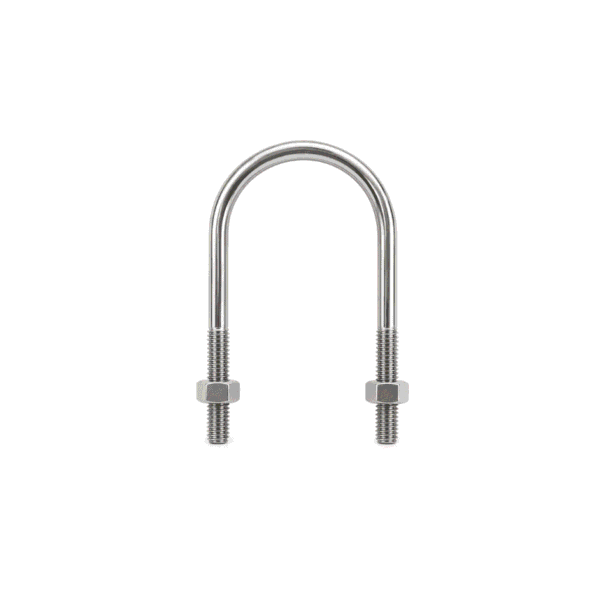
- What’s the difference between a J-bolt and a U-bolt? A J-bolt has a single threaded leg and hooks around or embeds into the material on one side, while a U-bolt has two threaded legs and requires a bearing plate and two nuts, providing greater clamping force for structural applications.
- What grade of J-bolt should I use for anchoring a structural column? This depends on the project’s engineering specification – Grade 36 is common for general-purpose structural anchoring, Grade 55 for higher-load applications, and Grade 105 for heavy industrial or high-stress structures like wind turbine foundations.
- Are J-bolts weldable? Grade 36 J-bolts are inherently weldable due to their carbon content; Grade 55 is not weldable by default but can be made weldable with the S1 supplementary requirement; Grade 105 is generally not intended for welding.
- How do I identify the grade of a J-bolt on-site? ASTM F1554 J-bolts are color-coded on the projecting end – blue for Grade 36, yellow for Grade 55, and red for Grade 105 – with optional permanent stamping available under supplementary requirements.
- Are J-bolts corrosion-resistant? Yes, especially AM Steel stainless steel J-bolts, or those with hot-dip galvanized or mechanically deposited zinc coatings, which protect against rust in outdoor or below-grade concrete applications.
- What sizes do J-bolts come in? AM Steel J-bolts are available in a range of sizes and lengths – structural anchor bolts commonly run from small diameters up to several inches, with overall lengths from about 4 inches to 39 inches or more depending on the application; the most common structural size is 5/8″ diameter by 12″ long.
- Can J-bolts be used for non-structural applications like fencing? Yes, general-purpose carbon steel or stainless steel J-bolts (without a specific structural grade requirement) are commonly used for fence posts, gutter straps, and light-duty hook or tie-down applications.
- Can J-bolts be reused? General-purpose J-bolts can typically be reused if undamaged; however, structural anchor bolts embedded in concrete are generally not designed for removal and reuse once installed.
- What’s the difference between hot-dip galvanized and mechanically deposited zinc J-bolts? Hot-dip galvanizing (per ASTM F2329/F2329M) provides a thicker, more durable coating suited to long-term outdoor or below-grade exposure, while mechanically deposited zinc (per ASTM B695 Class 55) offers a thinner protective layer suited to less demanding environments.
- What is the tensile strength of a structural J-bolt? Tensile strength depends on the ASTM F1554 grade: Grade 36 ranges from 58–80 ksi, Grade 55 from 75–95 ksi, and Grade 105 from 125–150 ksi – always confirm the specific grade required by the project’s engineering specification.

Reviews
There are no reviews yet.