


Description
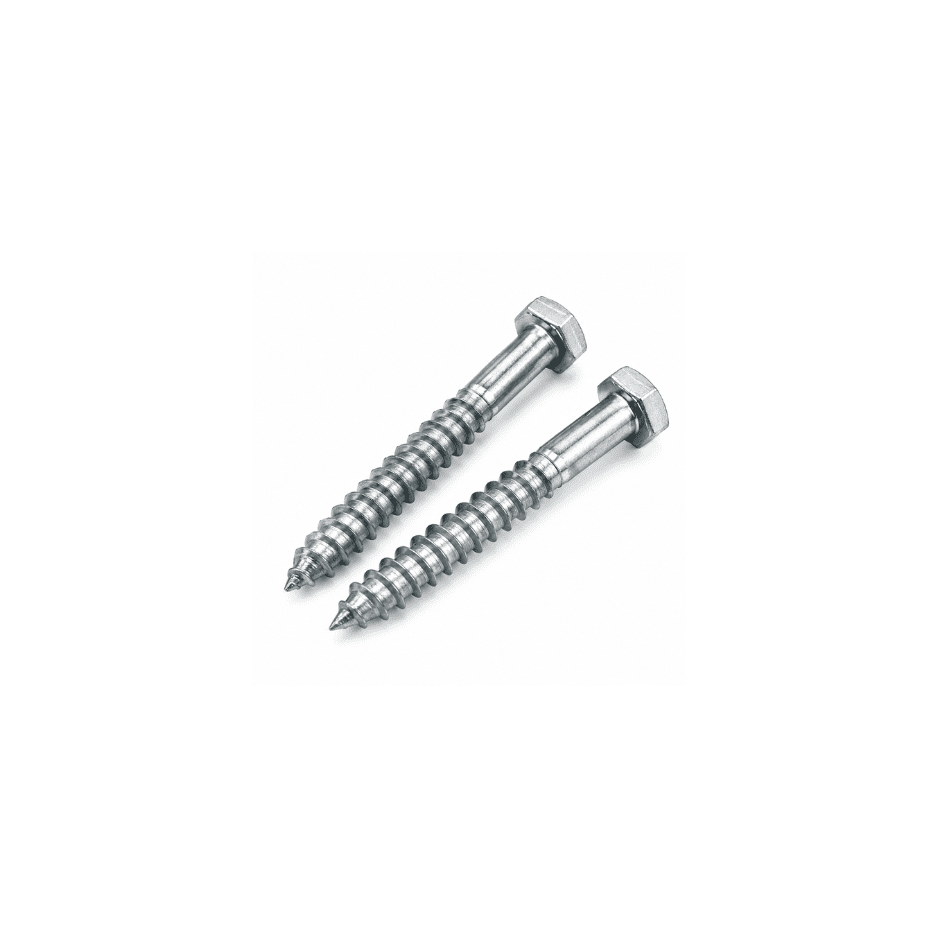
AM Steel Hex Coach Screws are heavy-duty fasteners combining an external hex head – driven with a wrench or socket rather than a screwdriver – with a coarse, aggressive wood-screw thread that cuts directly into timber, eliminating the need for a nut on the opposite side. Manufactured under the AM Steel brand to DIN 571, these coach screws (widely known as lag screws or lag bolts, particularly in North America) are a go-to fastener wherever a standard wood screw isn’t strong enough and a through-bolt isn’t practical or accessible.
Because the hex head allows for high driving torque via a wrench, socket, or impact driver, AM Steel coach screws are well suited to dense hardwood, heavy structural timber, and framing connections where significant clamping force is needed. They’re also commonly used in masonry applications when paired with a lag shield or wall plug, allowing the same aggressive thread to anchor securely into brick or concrete. AM Steel hex coach screws are available in carbon steel (zinc-plated, yellow-plated, or hot-dip galvanized) for general construction, and stainless steel (A2/304 and A4/316, the latter considered marine-grade) for decking, outdoor structures, and coastal environments where corrosion resistance is critical.
Whether you’re building a deck, securing heavy timber framing, anchoring equipment to masonry, or completing general heavy carpentry, AM Steel hex coach screws deliver the holding power and driving torque needed for demanding wood and masonry connections. As with all AM Steel products, this hex coach screw is available in metric sizing (M4 to M20 per DIN 571, lengths from 20mm to 400mm), in multiple grades, materials, and finishes to suit both industrial-grade and everyday fastening needs.
Key features:
- External hex head for high-torque driving with a wrench, socket, or impact driver
- Aggressive, coarse wood-screw thread that self-taps directly into timber
- Manufactured to DIN 571 dimensional standards
- Available in carbon steel (zinc-plated, galvanized) and stainless steel (A2/304, A4/316)
- Works with lag shields for secure anchoring into masonry
- Backed by the quality assurance of AM Steel
Ideal For
AM Steel Hex Coach Screws are ideal for:
- Deck and outdoor structure builders securing heavy timber joists, beams, and ledger boards
- Framing and structural carpentry requiring high clamping force in dense or heavy timber
- Masonry and equipment anchoring when used with a lag shield or wall plug in brick or concrete
- Agricultural and outdoor equipment builders fastening heavy wood-to-wood or wood-to-metal connections
- General construction and heavy carpentry wherever a standard wood screw lacks sufficient strength
Choosing the Right Hex Coach Screw
Selecting the correct hex coach screw from the AM Steel range depends on several factors:
- Material – Stainless steel (A2/304 or A4/316) for outdoor, marine, or treated lumber applications; carbon steel (zinc-plated or galvanized) for general indoor or dry-condition construction.
- Size & Length – Choose a diameter and length that provides adequate thread engagement into the timber or masonry anchor, factoring in the thickness of any material being fastened through.
- Pilot Hole Requirement – Pre-drill a pilot hole sized to the screw’s root diameter (particularly in hardwood) to prevent splitting and ease installation.
- Masonry Use – Confirm compatibility with the specific lag shield or wall plug size if anchoring into brick or concrete.
- Head Clearance – Ensure adequate clearance for a wrench, socket, or impact driver to fully engage and tighten the hex head.
- Treated Lumber Compatibility – Use hot-dip galvanized or stainless steel coach screws with chemically treated lumber, since standard zinc coatings can corrode faster in contact with certain wood preservatives.
Strategies to Choose the Right Product
- Always pre-drill a pilot hole – Especially in hardwood or near the edge of timber, pre-drilling reduces the risk of splitting and makes driving significantly easier.
- Match material to environment – Use stainless steel (A2/304 or A4/316) for outdoor decking, marine, or treated lumber applications; carbon steel for general dry, indoor construction.
- Check finish for treated lumber – Chemically treated wood (e.g., ACQ-treated) requires hot-dip galvanized or stainless steel coach screws to prevent accelerated corrosion.
- Buy in matched sets – Purchase coach screws with compatible lag shields or wall plugs when anchoring into masonry.
- Prioritize certified standards – Look for DIN 571 compliance for guaranteed dimensional and mechanical consistency.
- Consider bulk vs. individual packs – Bulk packs suit decking, framing, or large timber construction projects; smaller packs suit repairs or single connections.
Mechanical Properties
AM Steel Hex Coach Screws are manufactured to meet recognized mechanical and dimensional standards, ensuring reliability across construction, decking, and heavy carpentry applications:
| Property | Specification |
|---|---|
| Material Grades | Carbon Steel, Stainless Steel (A2/304, A4/316) |
| Governing Standard | DIN 571 (Hexagon Head Wood Screws / Lag Screws) |
| Head Style | External hex head |
| Thread Type | Coarse, aggressive wood-screw thread per DIN 7998, with pointed tip |
| Size Range | M4 to M20 (metric), lengths from 20mm to 400mm |
| Corrosion Resistance | Moderate (zinc/yellow-plated steel) to high (hot-dip galvanized, A2/A4 stainless steel) |
| Common Alternate Names | Coach screw, lag screw, lag bolt, heavy wood screw |
| Typical Applications | Heavy timber framing, decking, masonry anchoring (with lag shield) |
| Surface Finish | Zinc-plated, yellow-plated, hot-dip galvanized (HDG), plain or passivated stainless steel |
These mechanical ratings confirm that AM Steel hex coach screws deliver strong wood-holding performance suited to heavy structural timber and masonry anchoring applications – always pre-drill a pilot hole for best results and to reduce splitting risk.
Frequently Asked Questions (FAQs)
1. What is a hex coach screw used for? A hex coach screw is used to fasten heavy timber connections, decking, and framing directly into wood, or to anchor into masonry when paired with a lag shield, using a wrench or socket instead of a screwdriver.
2. What’s the difference between a coach screw and a lag screw? These terms describe the same fastener – “coach screw” is more common in the UK, Europe, and Australia, while “lag screw” or “lag bolt” is the more common term in North America.
3. Are AM Steel hex coach screws different from generic coach screws? AM Steel hex coach screws are manufactured and quality-tested under the AM Steel brand, ensuring consistent thread quality, head dimensions, and finish across every batch, per DIN 571.
4. Do I need to pre-drill a hole for a hex coach screw? Yes, especially in hardwood or near the edge of timber – a pilot hole sized to the screw’s root diameter reduces the risk of splitting and makes driving significantly easier.
5. Are hex coach screws corrosion-resistant? Yes, especially AM Steel stainless steel coach screws (A2/304 or A4/316), which resist rust in outdoor, marine, or treated lumber applications; hot-dip galvanized carbon steel also offers strong outdoor protection.
6. What sizes do hex coach screws come in? AM Steel hex coach screws are available in a range of sizes, typically M4 to M20 in metric, with lengths from 20mm to 400mm, per DIN 571.
7. Can hex coach screws be used with masonry? Yes, when paired with a compatible lag shield or wall plug, the coach screw’s aggressive thread can securely anchor into brick or concrete.
8. What tools do I need to install a hex coach screw? A wrench, socket, or impact driver matching the hex head size is used, since coach screws are driven by rotating the external hex head rather than using a screwdriver.
9. Can hex coach screws be used with treated lumber? Yes, but hot-dip galvanized or stainless steel coach screws are recommended for chemically treated lumber, since standard zinc coatings can corrode faster in contact with certain wood preservatives.
10. What’s the difference between zinc-plated and stainless steel hex coach screws? Zinc-plated coach screws offer basic corrosion resistance at a lower cost, while stainless steel (A2/304 or A4/316) coach screws provide superior long-term durability and resistance to rust in outdoor, marine, or treated-lumber applications.
11. Can hex coach screws be reused? Generally not recommended for critical structural connections, since removing and reinstalling a coach screw can strip or loosen its grip in the original wood; a slightly larger diameter screw is often used if a hole needs to be reused.
12. What’s the difference between A2 and A4 stainless steel hex coach screws? A2 (304) stainless offers good general corrosion resistance for most outdoor use, while A4 (316), considered marine-grade, provides superior resistance to chlorides and coastal environments.
13. How much thread engagement does a hex coach screw need? Thread engagement should generally be sufficient to reach well into solid timber beyond any material being fastened through – consult span and connection tables or a structural reference for load-bearing applications to confirm adequate engagement depth.
micals and moisture can corrode SS 304 over time.
Reviews
There are no reviews yet.