


Description
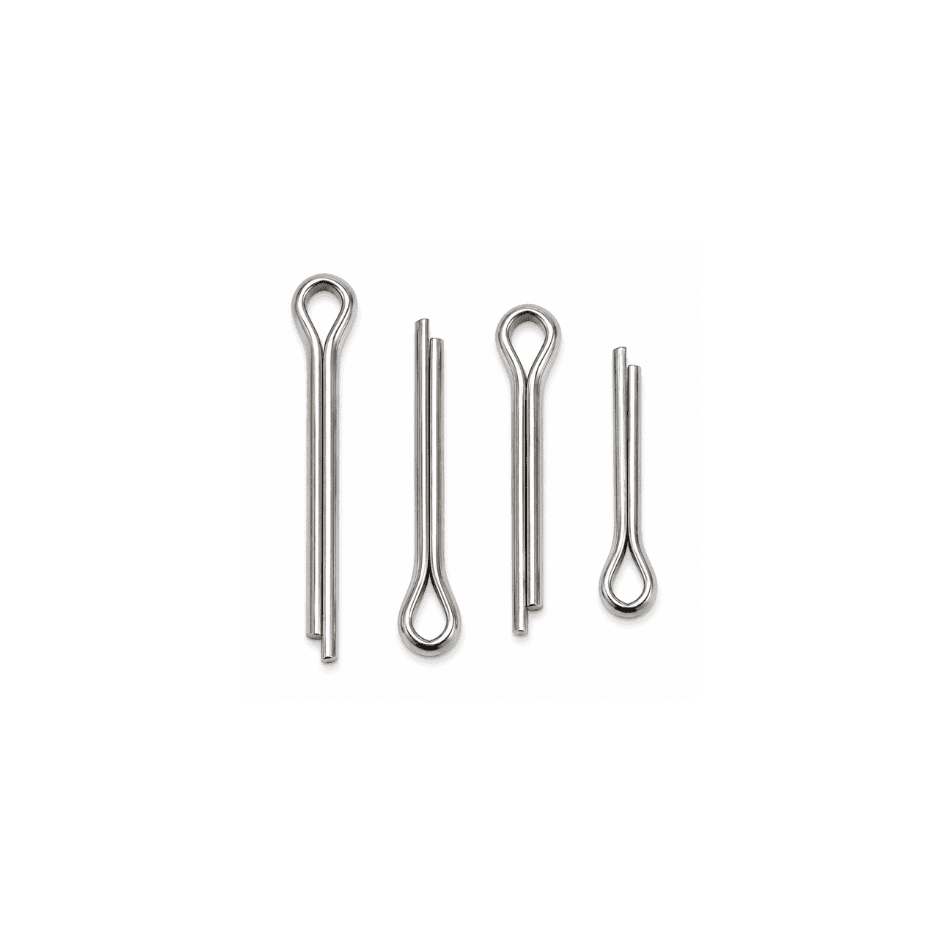
AM Steel Cotter Pins, also known as split pins, are simple safety fasteners consisting of a looped (eye) head and two prongs formed from a single length of half-round wire. Manufactured under the AM Steel brand to DIN 94 (equivalent to ISO 1234), one prong is intentionally slightly longer than the other, making the pin easier to open once installed. The pin is inserted through a pre-drilled hole – commonly through a castellated (slotted) nut, clevis pin, or shaft – and the two prongs are then splayed apart, typically bent back against the surface, to lock the pin securely in place and prevent it from working loose or falling out.
Cotter pins serve a critical safety function across many mechanical assemblies: securing castle nuts on wheel bearings, wing nuts, and axle assemblies; locking clevis pins in linkages and yokes; and preventing shafts, agricultural implement pins, and rigging hardware from disconnecting under vibration or operational movement. Unlike a spring dowel pin, which relies on outward spring pressure inside a hole, a cotter pin is a genuinely self-locking mechanical device – its splayed prongs create a physical barrier that must be manually straightened before the pin can be removed, making it a simple but highly reliable safety-retention component.
AM Steel cotter pins are manufactured in steel (zinc-plated, per DIN 94 standard finish) and stainless steel (A2/304 for general corrosion resistance, A4/316 – functionally equivalent to marine-grade 0- for saltwater or highly corrosive environments), and are easy to install and remove without special tools, using only pliers and, if needed, a hammer for final adjustment. Whether you’re securing wheel bearing assemblies, agricultural machinery pins, clevis and yoke connections, or general rigging hardware, AM Steel cotter pins provide a dependable, low-cost safety-locking solution. As with all AM Steel products, this cotter pin is available in metric sizing (approximately M0.6 to M20 diameter per DIN 94/ISO 1234), in multiple materials and finishes to suit both industrial-grade and everyday fastening needs.
Key features:
- Looped head and two splayable prongs (one slightly longer for easier opening)
- Manufactured to DIN 94 / ISO 1234 dimensional standards
- Genuinely self-locking once installed – prongs must be manually straightened for removal
- Available in steel (zinc-plated) and stainless steel (A2/304, A4/316 marine-grade)
- Reusable in many applications, provided the pin isn’t fatigued or damaged
- Backed by the quality assurance of AM Steel
Ideal For
AM Steel Cotter Pins (Split Pins) are ideal for:
- Automotive technicians securing castle nuts on wheel bearings, tie rods, and axle assemblies
- Agricultural equipment operators locking implement pins and hitch connections against vibration
- Machinery and equipment assemblers securing clevis pins in linkages, yokes, and pivot connections
- Rigging and lifting equipment technicians using cotter pins as a safety-retention component
- General maintenance and repair work wherever a simple, reliable locking pin is needed
Choosing the Right Cotter Pin (Split Pin)
Selecting the correct cotter pin from the AM Steel range depends on several factors:
- Material – Stainless steel (A2/304 or A4/316 marine-grade) for corrosive, outdoor, or wet environments; zinc-plated steel for general indoor or dry-condition use.
- Diameter – Match the pin diameter to the drilled hole size in the nut, clevis pin, or shaft being secured.
- Length – Choose a length that allows both prongs to fully clear the hole and be splayed apart securely, without excessive protrusion.
- Application Type – Confirm whether the pin is securing a castellated nut, clevis pin, or through-hole connection, since hole placement and required length may vary.
- Safety-Critical Use – For safety-critical applications (wheel bearings, rigging hardware), always use a properly sized new pin rather than an improvised substitute.
- Reusability – Inspect a removed cotter pin for straightness, fatigue, or metal fatigue cracking before considering reuse; replace if any damage is present.
Strategies to Choose the Right Product
- Never substitute an undersized or improvised pin for safety-critical connections – Always match the correct DIN 94/ISO 1234 diameter and length to the application, particularly for wheel bearings and rigging hardware.
- Match material to environment – Choose stainless steel (A2/304 or A4/316) for corrosive, wet, or outdoor environments; zinc-plated steel for general indoor use.
- Inspect before reuse – Check a removed cotter pin for straightness and signs of metal fatigue before reinstalling; replace if bent excessively, cracked, or weakened.
- Buy in matched sets – Purchase cotter pins in a range of common sizes to have on hand for castle nuts, clevis pins, and general machinery maintenance.
- Prioritize certified standards – Look for DIN 94/ISO 1234 compliance for guaranteed dimensional consistency and reliable prong strength.
- Consider bulk vs. individual packs – Bulk packs suit automotive, agricultural, or machinery maintenance operations; smaller packs suit occasional repairs.
Mechanical Properties
AM Steel Cotter Pins (Split Pins) are manufactured to meet recognized dimensional standards, ensuring reliability across automotive, agricultural, and general machinery applications:
| Property | Specification |
|---|---|
| Material Grades | Steel (zinc-plated), Stainless Steel (A2/304, A4/316) |
| Governing Standards | DIN 94, ISO 1234 (equivalent) |
| Design | Looped head with two prongs, one slightly longer for ease of opening |
| Locking Mechanism | Genuinely self-locking; prongs splayed apart after installation, must be manually straightened for removal |
| Size Range | Approximately M0.6 to M20 diameter (metric), per DIN 94/ISO 1234 |
| Common Alternate Names | Split pin, cotter pin (not to be confused with rolled/spring split pins) |
| Corrosion Resistance | Moderate (zinc-plated steel) to high (A2/A4 stainless steel) |
| Common Applications | Castellated nuts, clevis pins, shaft retention, rigging hardware |
| Surface Finish | Zinc-plated, uncoated/passivated stainless steel |
These specifications confirm that AM Steel cotter pins provide a reliable, genuinely self-locking safety retention solution – always match diameter and length precisely to the application, particularly for safety-critical connections.
Frequently Asked Questions (FAQs)
1. What is a cotter pin (split pin) used for? A cotter pin is used to lock a castellated nut, clevis pin, or shaft in place, preventing it from loosening or disconnecting due to vibration or operational movement – common in automotive, agricultural, and general machinery applications.
2. How does a cotter pin lock in place? After being inserted through a hole, the two prongs of the cotter pin are splayed apart (typically bent back against the surface), physically preventing the pin from sliding back out until the prongs are manually straightened for removal.
3. Are AM Steel cotter pins different from generic split pins? AM Steel cotter pins are manufactured and quality-tested under the AM Steel brand, ensuring consistent prong strength, dimensional accuracy, and finish across every batch, per DIN 94/ISO 1234.
4. What’s the difference between a cotter pin and a spring (roll) pin? A cotter pin is a split-prong pin that locks by being physically splayed apart after installation, while a spring pin relies on internal spring pressure from a slotted or coiled tube shape to create a friction fit – the two use fundamentally different locking mechanisms and are not interchangeable.
5. Are cotter pins corrosion-resistant? Yes, especially AM Steel stainless steel cotter pins (A2/304 or A4/316 marine-grade), which resist rust in outdoor, wet, or corrosive environments; zinc-plated steel offers moderate protection for general indoor use.
6. What sizes do cotter pins come in? AM Steel cotter pins are available in a range of sizes, typically from M0.6 to M20 in diameter, per DIN 94/ISO 1234.
7. What tools do I need to install a cotter pin? Pliers are typically used to splay the prongs apart after insertion; a hammer may be used for final adjustment or to bend the prongs flush against the surface.
8. Why is one prong of a cotter pin longer than the other? The slightly longer prong makes the pin easier to grip and open with pliers when it’s time to splay the prongs apart or remove the pin later.
9. Can cotter pins be reused? Yes, in many applications a removed cotter pin can be reused, provided it isn’t bent excessively, cracked, or showing signs of metal fatigue – for safety-critical applications, using a new pin is generally recommended.
10. What’s the difference between A2 and A4 stainless steel cotter pins? A2 (304) stainless offers good general corrosion resistance for most indoor and outdoor use, while A4 (316), functionally equivalent to marine-grade stainless, provides superior resistance to chlorides and saltwater environments.
11. What happens if the wrong size cotter pin is used? An undersized cotter pin may not adequately fill the hole or provide sufficient prong strength, while an oversized pin may not insert properly – either situation compromises the pin’s ability to reliably secure the connection, which is especially important in safety-critical applications like wheel bearings.
12. What industries commonly use cotter pins? Common applications include automotive wheel bearing and axle assemblies, agricultural machinery and implement connections, general mechanical linkages and clevis pins, and rigging or lifting hardware.
13. Are cotter pins considered a safety-critical fastener? Yes, in many applications – such as securing castellated nuts on wheel bearings – a cotter pin plays a genuinely safety-critical role, so correct sizing, installation, and periodic inspection are important rather than optional details.
Reviews
There are no reviews yet.