


Description
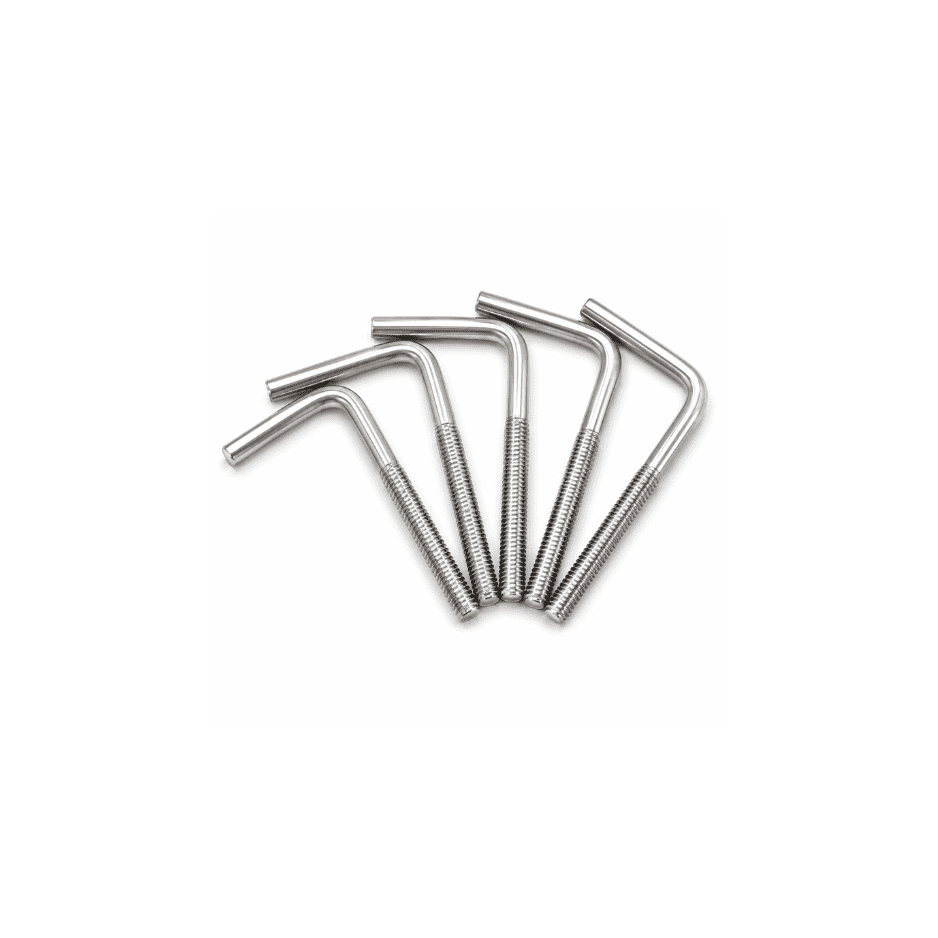
AM Steel L-Bolts are bent anchor bolts featuring a 90-degree bend at the embedded end, forming an “L” shape, with a threaded section extending above the concrete surface for attaching nuts, washers, and plates. Manufactured under the AM Steel brand, these L-bolts are embedded in wet concrete or set into drilled holes, where the perpendicular leg bears against the hardened concrete to resist pullout and provide anti-rotation stability once the nut is tightened down.
L-bolts are widely used for anchoring wood-frame sill plates to concrete slabs and foundations, securing lightweight post bases, and connecting structural beams or columns in residential and light-to-mid-sized commercial construction. For structural applications, AM Steel offers L-bolts manufactured to ASTM F1554 – the same governing specification used for J-bolts and other bent anchor bolts – available in Grade 36 (general-purpose, weldable), Grade 55 (higher load capacity, often specified in seismic zones), and Grade 105 (high-strength, critical applications), with the standard color-coded ends for field identification.
Compared to the curved hook of a J-bolt, the L-bolt’s simpler 90-degree bend is generally easier and less costly to fabricate, and its shape does not require a specific rotational orientation during installation. Sources in the fastener industry differ on which geometry provides superior pullout resistance in a given application – some note the L-bolt’s bearing leg can offer strong resistance, while others describe J-bolts as better suited to higher-load or seismic conditions. Because performance depends on embedment depth, concrete condition, and load direction, the applicable building code or engineering specification should always determine which bolt type and grade is required for a given project. As with all AM Steel products, this L-bolt is available in metric and imperial sizing, in multiple grades and finishes to suit both residential and industrial-grade anchoring needs.
Key features:
- 90-degree bend design for concrete embedment with anti-rotation stability
- Available in ASTM F1554 Grade 36, 55, and 105 for structural applications
- Simpler fabrication than hook-style anchors, with no critical installation orientation
- Available in carbon steel, hot-dip galvanized, and stainless steel L-bolt finishes
- Suitable for sill plate anchoring, post bases, and general structural connections
- Backed by the quality assurance of AM Steel
Note: This product, along with all other products in this catalog, is manufactured and supplied by AM Steel, a trusted name in industrial-grade fasteners and steel components.
Safety note: For structural anchoring (sill plates, columns, poles, foundations), always confirm the required grade, diameter, and embedment depth from the project’s engineering drawings or applicable building code – do not substitute an L-bolt for a J-bolt (or vice versa) without engineering approval, since pullout performance depends on the specific application and concrete conditions.
Ideal For
AM Steel L-Bolts are ideal for:
- Residential and light commercial builders anchoring wood-frame sill plates to concrete foundations and slabs
- Contractors installing post bases for decks, fences, and lightweight structures
- Municipal and utility contractors anchoring light poles and small sign structures
- Structural steel installers connecting beams and columns in small to mid-sized buildings
- General construction projects requiring a cost-effective, easy-to-install anchor bolt with anti-rotation performance
Choosing the Right L-Bolt
Selecting the correct L-bolt from the AM Steel range depends on several factors:
- Application Type – Structural anchoring (sill plates, columns, poles) requires ASTM F1554-graded L-bolts sized per engineering specification; general light-duty use can use standard carbon or stainless steel L-bolts.
- Grade (Structural Use) – Grade 36 for general-purpose, weldable applications; Grade 55 for higher load or seismic-zone requirements; Grade 105 for high-strength, critical structures.
- Material – Stainless steel L-bolts for corrosive or outdoor environments; hot-dip galvanized or zinc-coated carbon steel for standard construction use.
- Size & Embedment Depth – Match bolt diameter, leg length, and embedment depth to the structural load and applicable building code – never estimate for structural anchoring.
- Installation Orientation – Confirm whether the design requires the 90-degree bend to sit flush with the concrete surface, as specified in project drawings.
- Weldability – If the L-bolt will be welded to an embed plate, confirm Grade 36 (inherently weldable) or Grade 55 with the S1 supplementary weldable requirement.
Strategies to Choose the Right Product
- Follow the engineering specification, not assumptions about strength – Since fastener industry sources differ on relative pullout performance between L-bolts and J-bolts, always defer to the project’s structural engineering documents or applicable building code.
- Match grade to seismic and load requirements – Use Grade 55 or higher in seismic zones or high-load applications per ACI 318 and project specifications.
- Match material to environment – Choose stainless steel or hot-dip galvanized L-bolts for outdoor, coastal, or corrosive environments; standard carbon steel for indoor or protected use.
- Confirm weldability needs early – If the design calls for welded anchor plates, specify Grade 36 or Grade 55 with the S1 weldable supplementary requirement at time of order.
- Buy in matched sets – Purchase L-bolts with compatible nuts, washers, and plates sized to the diameter for consistent, code-compliant anchoring.
- Consider bulk vs. individual packs – Bulk packs suit sill plate anchoring across a full foundation perimeter; smaller packs suit single post bases or repairs.
Mechanical Properties
AM Steel L-Bolts are manufactured to meet recognized mechanical and dimensional standards, ensuring reliability across residential, commercial, and general structural anchoring applications:
| Property | Specification |
| Material Grades | Carbon Steel, Medium Carbon Boron Steel, Alloy/High-Strength Low-Alloy Steel, Stainless Steel |
| Governing Standard (Structural) | ASTM F1554 (Anchor Bolts, Steel, 36/55/105-ksi Yield Strength) |
| Yield Strength | Grade 36: 36 ksi min.; Grade 55: 55 ksi min.; Grade 105: 105 ksi min. |
| Tensile Strength | Grade 36: 58–80 ksi; Grade 55: 75–95 ksi; Grade 105: 125–150 ksi |
| Minimum Elongation | Grade 36: 23%; Grade 55: 21%; Grade 105: 15% |
| Minimum Reduction of Area | Grade 36: 40%; Grade 55: 30%; Grade 105: 45% |
| Weldability | Grade 36: weldable by default; Grade 55: weldable with S1 supplementary requirement; Grade 105: generally not weldable |
| Color Coding | Blue (Grade 36), Yellow (Grade 55), Red (Grade 105) |
| Typical Diameter Range | 1/2″ to 1″ (imperial); comparable metric sizes available |
| Thread Standard | UNC and UNF (two thread classes per F1554); ISO metric available |
| Corrosion Resistance | Moderate (mechanically deposited zinc) to high (hot-dip galvanized, stainless steel) |
| Surface Finish | Hot-dip galvanized (ASTM F2329/F2329M), mechanically deposited zinc (ASTM B695 Class 55), plain steel, stainless steel |
These mechanical ratings reflect ASTM F1554 requirements for structural anchor bolts – always confirm the correct grade, size, and embedment depth against project engineering specifications and applicable building codes before installation.
Frequently Asked Questions (FAQs)
- What is an L-bolt used for? An L-bolt is used to anchor structures to concrete – most commonly for securing wood-frame sill plates to foundations and slabs, as well as post bases, small sign structures, and light structural connections.
- What’s the difference between an L-bolt and a J-bolt? An L-bolt has a single 90-degree bend at the embedded end, while a J-bolt has a curved, roughly 180-degree hook — both are bent anchor bolts embedded in concrete, but the shape affects installation orientation and how each interacts with the surrounding concrete.
- Are AM Steel L-bolts different from generic L-bolts? AM Steel L-bolts are manufactured and quality-tested under the AM Steel brand, ensuring consistent bend geometry, grade compliance, and finish quality across every batch, including ASTM F1554-graded structural options.
- Which is stronger, an L-bolt or a J-bolt? Fastener industry sources differ on this – some describe J-bolts as offering greater pullout resistance for heavy-duty or seismic applications due to their hook shape, while others note the L-bolt’s bearing leg performs well in many standard applications; the appropriate choice depends on the specific engineering design, embedment depth, and load conditions, so project specifications should always be followed rather than a general rule of thumb.
- What grade of L-bolt should I use for anchoring a sill plate? This depends on the local building code and project engineering requirements – Grade 36 is common for general residential and light commercial sill plate anchoring, with higher grades specified where seismic or high-wind loads apply.
- Are L-bolts weldable? Grade 36 L-bolts are inherently weldable due to their carbon content; Grade 55 is not weldable by default but can be made weldable with the S1 supplementary requirement; Grade 105 is generally not intended for welding.
- How do I identify the grade of an L-bolt on-site? ASTM F1554 L-bolts are color-coded on the projecting end – blue for Grade 36, yellow for Grade 55, and red for Grade 105 – with optional permanent stamping available under supplementary requirements.
- Are L-bolts corrosion-resistant? Yes, especially AM Steel stainless steel L-bolts, or those with hot-dip galvanized or mechanically deposited zinc coatings, which protect against rust in outdoor or below-grade concrete applications.
- What sizes do L-bolts come in? AM Steel L-bolts are commonly available from 1/2″ to 1″ in diameter (imperial), with comparable metric sizes, and lengths selected based on the required embedment depth for the specific application.
- Does the orientation matter when installing an L-bolt? Yes – the 90-degree bend should be installed so it seats flush and properly embedded within the concrete as specified in the project drawings, since correct orientation affects both anchoring performance and anti-rotation stability.
- Can L-bolts be reused? General-purpose L-bolts can sometimes be reused if undamaged; however, structural anchor bolts embedded in concrete are generally not designed for removal and reuse once installed.
- What’s the difference between hot-dip galvanized and mechanically deposited zinc L-bolts? Hot-dip galvanizing (per ASTM F2329/F2329M) provides a thicker, more durable coating suited to long-term outdoor or below-grade exposure, while mechanically deposited zinc (per ASTM B695 Class 55) offers a thinner protective layer suited to less demanding environments.
- What is the tensile strength of a structural L-bolt? Tensile strength depends on the ASTM F1554 grade: Grade 36 ranges from 58–80 ksi, Grade 55 from 75–95 ksi, and Grade 105 from 125–150 ksi – always confirm the specific grade required by the project’s engineering specification.
Reviews
There are no reviews yet.